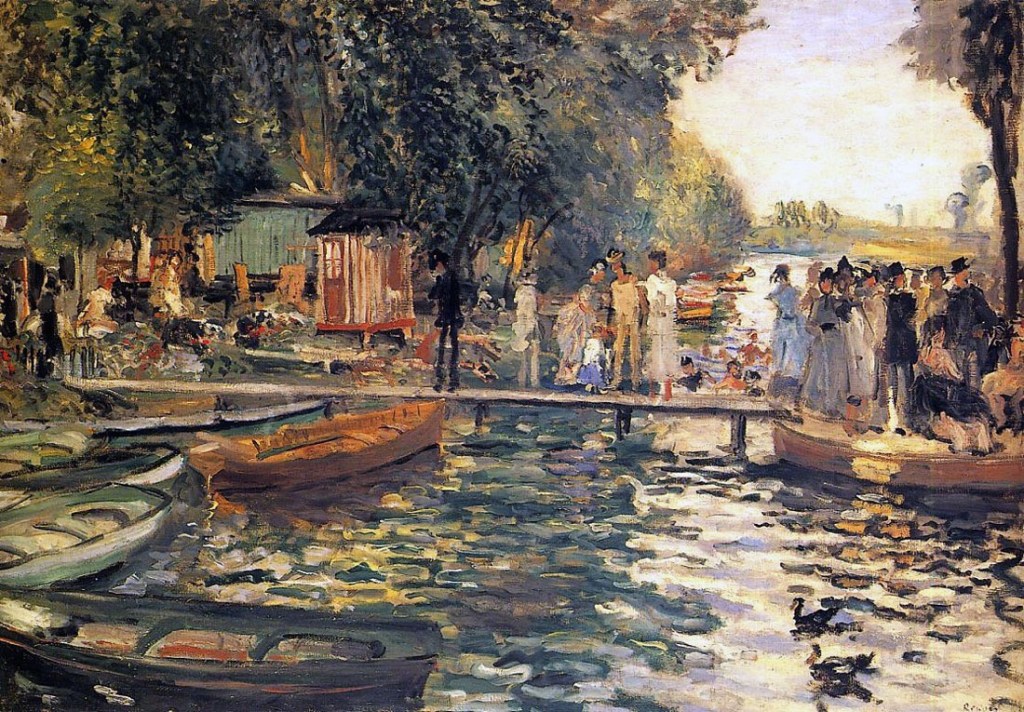
I have come across La Grenouillère by Pierre-Auguste Renoir many times before. Recently, I found myself returning to it once again.
Every time I encounter it, a different detail seems to call for my attention. Yet each encounter reveals something even more interesting: I am no longer the same person who stood before it the last time.
The painting itself has never changed. I have.
Sometimes, all it takes is a piece of art.
But then again, what is a piece of art, anyway?
Is it a classical painting hanging in a museum? A musical composition? A novel? A flower you planted in your garden? A journal filled with your own thoughts? Or perhaps even a phonk track that unexpectedly speaks to you on an ordinary afternoon?
Maybe art is simply whatever awakens something within you.
Whatever makes you pause for a moment, fuels your energy for the day, or quietly catches your attention and asks you to look a little closer.
I often think that art reveals itself in far more places than we usually allow it to. Why did that particular song catch your ear? Why does that brand appeal to your taste? Why did you choose that print for your wall instead of countless others? What made you plant that particular flower?
Those choices may seem insignificant, but they are rarely random.
And perhaps spending time with our tastes is one of the simplest ways to get to know ourselves. Not because our preferences define us completely, but because they leave small clues behind. They reveal what draws us in, what comforts us, what we long for, and what we instinctively notice before anything else.
In the rush of everyday life, many of these choices become automatic. We consume, choose, scroll, decorate, listen, and move on without ever asking ourselves why.
But what if we did ask?
What if we paid a little more attention to the things that consistently catch our eye?
For me, looking at La Grenouillère this time felt strangely similar to opening an old journal and realizing how quietly my identity has evolved over the years.
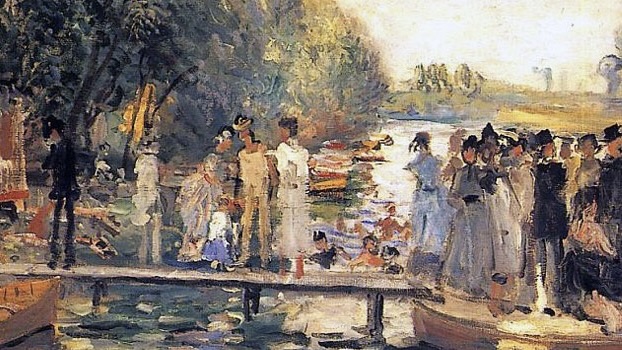
The first time I truly paid attention to the painting, my eyes were drawn to the crowd. I could almost hear the conversations, the movement on the bridge, the liveliness—perhaps even an unrefined rush—of people making their way home.
This time, however, I noticed something entirely different.
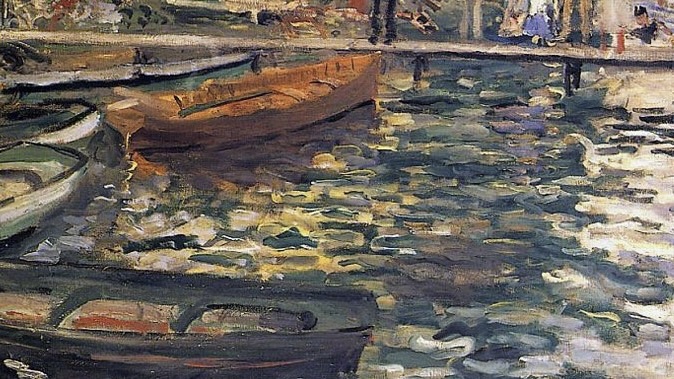
I heard the gentle movement of the water. I noticed the small boats floating peacefully.
Instead of the noise of the crowd, I imagined the quiet humming that might have existed within each person. I could almost smell the mossy air surrounding the river. Rather than focusing on the people themselves, I found myself absorbed by the serenity holding the entire scene together.
The painting had not changed. The story I found within it had.
Whenever I read analyses of La Grenouillère, they often describe something entirely different from what it awakens in me. And perhaps that is exactly the point.
I am less interested in discovering what Renoir intended than in understanding what the painting reveals about me.
Art, to me, has never been about finding the correct interpretation. It is about witnessing the quiet dialogue between the artwork and the person standing before it.
And this may be why some forms of art feel distant or even cold to us. Not because they lack meaning, but because they are speaking a language that is not ours. They still move someone, inspire someone, or reveal something to someone. They simply may not be speaking to us—or at least not to the version of us standing before them today.
And this may be where many people lose their connection with art. We often assume that art must look a certain way, belong in certain places, or require a particular kind of knowledge to be appreciated. But art does not have to hang in a museum to be art.
The issue may not be that we do not understand art. Perhaps we simply have not yet discovered the forms of it that speak to us.
Nowadays, we constantly feel the urge to produce, to be seen, to improve ourselves, to turn every experience into something useful. We often approach the world expecting every book, conversation, trip, or hobby to teach us something immediately.
But how often do we simply allow ourselves to experience something?
To pause. To notice. To absorb.
To let something exist for the simple experience of being present, of feeling alive, of meeting ourselves where we are.
Perhaps that is why paying attention to what we call art matters. Not because art will tell us who we are, but because it often shows us where our attention naturally goes.
Perhaps that is why art keeps finding us.
Not because it changes. But because we do.
To relax, to realize, to pause, to awaken our senses, to quiet the talkative fairies in our heads, to meet ourselves—sometimes, all it takes is a piece of art.


Leave a Reply