Who has the ruler and decides the geometrical shape of our paths? What does it even mean, seriously?
Your life is not meant to be linear. So, is this the new way to feel “extraordinary”, “different”, or maybe “special”?
What makes a life linear, first of all? Society’s stigmatic life cycle — be born, grow up, start studying, complete your studies, find a job, find a spouse, have some babies, raise your offspring, retire, and die?
Is life considered some kind of Jenga game, where pulling out or skipping one piece makes the whole structure collapse, leaving you to say, “Well, my life is not meant to be linear”?
Why do we need to fit our lives into these kinds of indicators? Does it really help us understand who we truly are and what we are supposed to do here? Or is it all about the linearity surrounding this so-called non-linearity?
In my life, I have had the chance and privilege to learn “not to compare” at a very young age, thanks to my parents’ occupations, my hometown, and my field.
I was born in a city completely different from my home culture. I spent some of my teenage years in a kind of “foreign” environment, and I experienced my young adulthood in yet another place, with a different climate from where I started.
I have been lucky enough to be found worthy of being invited to what I consider one of the most sacred places: people’s dinner tables.
I have been lucky enough to enjoy warm soup from an antique silver-carved spoon, to experience mashed potatoes and beef from a Dutch-style porcelain plate, or to try some kind of wonder-kebab around a floor table — and so many other great memories I can still feel and smell even when I am writing about them.
Why am I conveying all of this here?
Because these experiences significantly shaped the way I perceive the life we are supposed to lead.
In our daily lives, we encounter “life is not linear” preaches all the time. But I do not think the matter is about whether “life is linear or not to be”, honestly.
I somehow see our lives as universes in unique bubbles.
Aren’t you aware of the fact that even where we are living, the whole culture, the whole set of expectations, the whole diet, and perhaps even whole phenotypes can vary enormously — not even from city to city, but from neighborhood to neighborhood?
One way or another, we all start from a certain neighborhood and become a citizen of that neighborhood. Then we acquire the mental map of that neighborhood, and our way of navigating those streets may help us fit into other neighborhoods, other bubbles, other universes. What works in one bubble may mean nothing in another bubble.
I think we should put our thinking cap on and consider where we started, who we encountered, what kind of mental map we needed to come this far, what our expectations are, who we would like to be, what we consider normal and abnormal, and what we want to see when we look in the mirror.
We and our lives should not be reduced to suppositions, or to something to be measured with a ruler. I do not think we should compare our life paths according to the most basic concepts.
There may be more than that. There may be less than that.
In my opinion, there is no right or wrong in it.
We were not given a prescription and placed it into our hands when we were born. But we learn to hold a pen and paper and create something meaningful, or just useful, on it. Maybe, in this way, we learn to draw our own mental map of where we are and where we are heading.
This may be as simple as that. Or this may be as complex as that.
Who or what is the measurement here?
You?
Expectations?
Dogmas?
Stigmas?
Diplomas?
Designer clothes in your basement?
Signed football shirts?
A few thousand followers?
What could or could not be?
There is a lot to think about.
Sometimes I feel like, “I understand what I am supposed to be.” This sudden enlightenment gives me great resilience at first. Then I start feeling the weight of it on my shoulders, as I recall how many times I have had to bury a “previous” version of myself and give birth to a “novel” version of myself.
I start thinking: how many funerals of mine have I had to participate in so far? Where are the souls and bodies? Where are the emotions of them?
What did this acceptance and realization cost me — even which version of me was the subject here?
Would I still carry the very essence of each of them? Are they even them or me? Or would I carry the whole person they created, essence by essence?
What would I be then?
A patchwork?
Or a concentration of all the versions, of all the essences of myself?
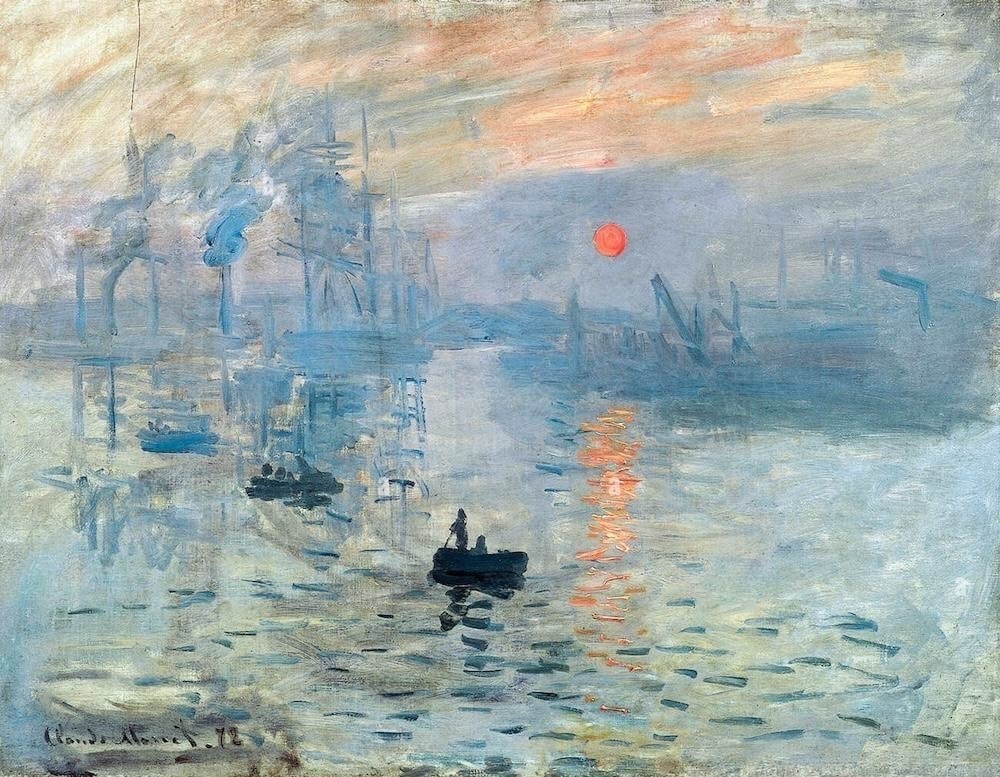
So, when I try to understand my life path and mission, it has all been the color gray and the smell of fume for me.
Then I felt like there was something wrong with this dullness. Although the scene before my eyes was very serene, the metamorphosis I was going through did not feel this serene at all. So, I tried to learn to focus on the very present instead of mourning for the ghosts of my previous selves, because what else could be more logical?
To be able to understand and create the scene of my past, I needed to understand what I was at that very moment. The more I focused on the present, the less gray started appearing before my eyes. This was kind of a miracle for me, as I had stuck myself between “what happened?”, “what will happen?”, and “what could happen between them?”
Instead of a cemetery, the image changes into a garden inside my mind. I was not a regular visitor of that cemetery, but the gardener of those beautiful, partly thorny plants. I was both passive and active. I was both resting and working hard. I could shine just by staying as myself in my own soil and pot. The grays started to shine as the color of the petals of my plants, and from then on, I started smelling something woody, too.
Looking back, I realize that I had been seeing the time between one version of myself and the next as a funeral reception. It turns out, all that was happening was that the seeds I had planted were growing. The seeds were actually an acceptance that I could not control anything and everything, and that something would happen despite or thanks to my efforts.
Where are we now?
A cemetery?
A garden?
A change of perspective?
Mars?
Something gray?
A pool, maybe?
Maybe nowhere and just void.
I have come to believe that, even though we are far from truly understanding or accepting our mission, the “shape” of our path is actually whatever exists between our past and future.
The very present.
What comes to our minds, what appears before our eyes, what resonates in our ears, what smells before our nose, what gives us goosebumps, what gives us the feature we are most proud of, what puts distance between us and the version of ourselves we were not very fond of, honestly.
And so on.
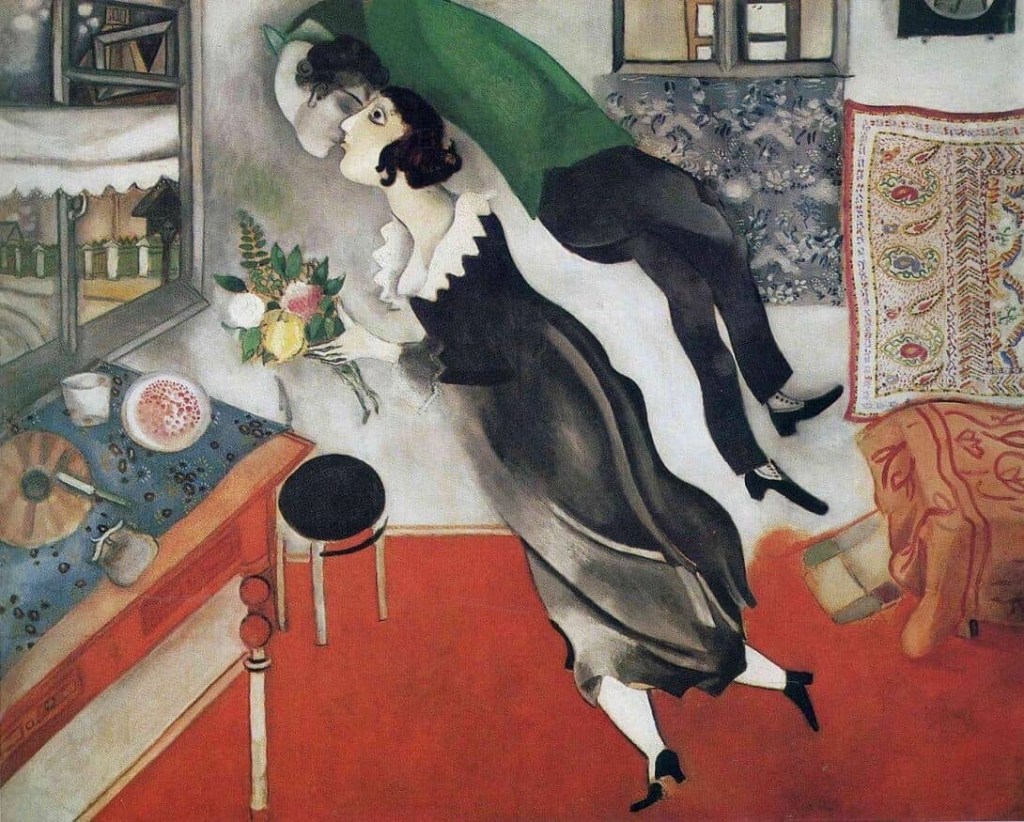
Artwork: The Birthday, Marc Chagall



Leave a Reply