Between Everywhere and Nowhere

  • My Life Had Stood a Loaded Gun

    My Life Had Stood a Loaded Gun

    There are certain sentences that feel less like literature and more like recognition. You do not simply read them; you recognize something that has been quietly living within you all along.

    This is how I feel whenever I truly pause at Emily Dickinson’s My Life Had Stood a Loaded Gun. Words written by a stranger, perhaps centuries ago, can suddenly become mirrors for thoughts I had never managed to articulate myself.

    My Life Had Stood – a Loaded Gun –.

    The metaphor has stayed with me ever since.

    What if my life has stood like a loaded gun, and every experience I have lived has become another bullet?

    But then another question followed.

    What are these bullets really made of?

    Could words themselves become my bullets in this lifetime?

    Who decides where they are aimed?

    Am I truly capable of deciding what this gun will yield, or am I merely the one carrying it?

    For a long time now, I have been trying not to resist what people often call the flow. Yet before surrendering to an idea, I cannot help questioning it.

    Can we truly persuade ourselves that such a thing exists?

    We speak of flow as though it were self-evident. We encourage one another to trust it, surrender to it, and stop resisting it. Yet if there truly is a flow, why am I being carried into this one and not another? Could its mystery lie in never knowing its direction, its contents, or the story into which it has already placed us?

    Despite these questions, I still believe in free will. I believe in planning, determination, responsibility, and conscious decisions. Yet I cannot ignore that life continually confronts us with boundaries we never chose ourselves: the things that happen, the things that never happen, the opportunities that quietly appear, the ones that disappear despite every effort, and the unexpected situations into which we somehow find ourselves being pulled.

    If there truly is a flow, perhaps we do not simply believe in it—we eventually recognize it through the shape our lives take.

    For as long as I can remember, I have believed that nothing happens in vain.

    And for me, it has never been Why me?

    It has always been Why this?

    Life simply keeps happening to everyone.

    Beautiful things. Painful things.

    Ordinary things. Life-changing things.

    None of them belong exclusively to us.

    What fascinates me is not that these things happen.

    It is how differently they continue to exist after they have happened.

    The very same event may quietly dissolve into one person’s memory while becoming another person’s identity.

    A conversation, a rejection, a delayed train, a city, a diagnosis, a book, a success, or even a stranger encountered only for a brief moment may continue living within someone for years—not because the event itself was extraordinary, but because of the meaning gradually woven around it.

    Perhaps this is also why I have never felt comfortable with how easily we reduce life’s turning points to heartbreak.

    Is that really the case?

    Perhaps we call it heartbreak because every outcome eventually finds its way into the heart. Every ending, every disappointment, every unanswered question seems to leave something behind there.

    But does everyone truly carry life in the heart?

    Or do some carry it somewhere else? Or nowhere at all?

    Perhaps that is another question altogether.

    There are heartbreaks, certainly.

    But along with heartbreaks, there are also mind-breaks.

    Dream-breaks. Ideal-breaks. Identity-breaks.

    And countless quieter fractures that rarely have a name.

    Sometimes what changes us is not the loss of a person, but the loss of an idea. A certainty. A future we had already begun living inside our minds. A version of ourselves that never came into existence.

    Perhaps these are the bullets.

    Not the events themselves, but the meanings we slowly forge from them.

    The bullet is not the rejection, the city, the illness, the book, the success, or the heartbreak. Those belong to life.

    The bullet is what remains after they pass through us—the meaning that quietly settles within us, gradually shaping how we understand ourselves and, eventually, how we move through the world.

    Maybe that is why nothing happens in vain.

    Not because every event carries an objective purpose waiting to be discovered, but because meaning is never entirely contained within the event itself. It comes into existence in the encounter between life and the person living it.

    Perhaps this is also why I have never been interested only in asking what happened.

    I find myself asking a different question nowadays.

    Who did it happen to?

    Because perhaps that is where meaning truly begins.

    The event may be ordinary. The person who carries it never is.

    That ordinary event may eventually become a painting, a piece of writing, a photograph, a melody, a conversation remembered years later, or even a small pin attached to someone’s bag.

    The event belongs to life.

    The meaning gradually becomes part of the person.

    So why am I here, thinking these thoughts and sharing them?

    And why are you here, reading and witnessing my possible bullets?

    Out of all the places in this virtual universe and out of all the words ever written, why would our paths happen to cross here, in this particular moment?

    Maybe there is no answer.

    Or perhaps there never needed to be one.

    Perhaps what we spend a lifetime carrying is not the weight of our experiences, but the meanings we create from them.

    And perhaps what this loaded gun ultimately yields has never depended solely on what happened to us, but on who we became while carrying every bullet.

    Artwork: Expectations, Sir Lawrence Alma-Tadema

    Leave a Reply

    💌hello@betweeneverywhereandnowhere.com

  • Mind Your Own Mind

    Mind Your Own Mind

    What makes you who you are?

    Your name?

    Your nationality?

    Your profession?

    Your family?

    They all tell a part of your story. But if someone were to quietly remove every label attached to you, I believe there would still be one thing left.

    Your mind.

    Not simply your thoughts, but your way of perceiving, interpreting, remembering, imagining, fearing, and hoping. The invisible place through which every experience must pass before it becomes yours.

    If I had to describe the mind in one sentence, I would say this:

    It is the ultimate digestion of our lives.

    Some experiences are unavoidable—the main course served to every one of us. Others are chosen deliberately, like the appetizers we pick ourselves: the books we read, the people we love, the conversations we revisit, the fears we rehearse, the songs that become memories, and the ideas we repeatedly feed ourselves.

    Our minds digest all of them.

    Eventually, they become us.

    Perhaps this is why I find it difficult to separate myself from my mind. Knowing my own mind feels remarkably close to knowing myself.

    We spend remarkable amounts of time protecting what matters to us.

    We monitor our blood pressure, check our cholesterol, apply sunscreen, lock our doors, and create increasingly complicated passwords. We have become more willing than ever to talk about mental health, and I am genuinely glad we do.

    Yet I sometimes wonder whether we have become so focused on repairing the mind that we forget to become acquainted with it.

    Most conversations begin only after something goes wrong.

    Stress.

    Burnout.

    Anxiety.

    Depression.

    Exhaustion.

    Only then that we ask what the mind needs.

    But perhaps there is another question worth asking long before that.

    What kind of mind do I actually have?

    Not the ideal mind promoted by productivity books.

    Not the perfectly balanced mind described on social media.

    Not someone else’s mind.

    Mine.

    What calms it?

    What overwhelms it?

    What makes it curious?

    What quietly exhausts it?

    Perhaps the healthiest relationship with our minds begins not by trying to optimize them, but by learning their language.

    Have you ever noticed what almost every horror story has in common?

    Before the monster attacks the body, it attacks the mind.

    The victim begins doubting reality.

    They stop trusting their memories.

    They question what is real.

    Long before physical danger arrives, the real battlefield has already moved inward.

    The greatest horror has never been seeing a monster.

    It has always been losing confidence in your own perception.

    Ghosts, haunted houses, and demons become frightening only after they convince someone that their own mind is no longer a trustworthy place to live.

    That idea has always fascinated me.

    Even the creatures we imagine existing beyond human understanding somehow know the shortest path to defeating us.

    Not through the body. Through the mind.

    Perhaps horror stories remind us of something we rarely acknowledge.

    The mind is where reality first takes shape.

    Stress alone can produce genuine physical symptoms. Health anxiety can persuade someone that ordinary bodily sensations signal serious illness. A person may continue feeling pain in a limb that no longer exists because the brain still carries its map. There are even neurological conditions in which someone may no longer recognize a perfectly healthy part of their own body as belonging to them.

    These examples are very different from one another.

    Yet they all point toward the same conclusion.

    Reality is not merely something that happens to us.

    It is also something interpreted by the mind.

    That realization makes the mind both our greatest strength and our greatest vulnerability.

    It shapes how we see ourselves.

    How we respond to uncertainty.

    How we regulate anger.

    How we trust.

    How we love.

    How we forgive.

    How we decide whether to continue—or finally stop.

    If there is a remote control for our lives, I suspect it is the mind.

    This is why I have become increasingly interested in paying attention to my own.

    Not improving it. Not optimizing it. Simply getting to know it.

    I have no formal education in psychology or neuroscience, apart from a few unforgettable psycholinguistics courses that first made me realize how mysterious the mind truly is.

    I am simply an ordinary person who depends on it every single day.

    As someone who works with languages and translation, I know what it feels like for the mind to continue working long after the laptop has been closed. Sentences quietly keep rewriting themselves while I make coffee or walk down the street.

    Over time, I have realized that my mind has preferences just as individual as my personality.

    Perhaps yours does too.

    Maybe your mind genuinely enjoys crowded cafés.

    Maybe mine prefers silence.

    Maybe someone else’s mind settles after running five kilometers.

    Maybe mine simply wants to spend an hour beneath the warm glow of a floor lamp with a novel while the rest of the world quietly waits outside.

    No article can tell us these things.

    No expert can answer them for us.

    Only our own minds can.

    Perhaps learning to know them is a form of respect we rarely speak about.

    Our minds accompany every second of our existence without ever introducing themselves. 

    We usually notice them only when something begins to fail. 

    Maybe we should become familiar with them before that moment.

    Not because every uncomfortable feeling needs fixing.

    Not because we should become obsessed with protecting our minds.

    But because they are irreplaceable.

    We spend a lifetime trying to understand the world.

    Perhaps we should also spend some time understanding the only place from which we will ever experience it.

    Our own mind.

    Perhaps mind your own business was never the advice we needed.

    Perhaps we should begin somewhere even closer.

    Mind your own mind.

    Because every experience in your life will pass through only one place before it becomes yours.

    Your own mind.

    And perhaps knowing that mind is the closest you will ever come to knowing yourself.

    Artwork: The Sun, Edvard Munch

    Leave a Reply

    💌hello@betweeneverywhereandnowhere.com

  • Ears Are Calling for Attention

    Ears Are Calling for Attention

    When our eyes get tired, we close them.

    When our skin is exposed to the sun, we protect it.

    When our muscles ache, we slow down and let them recover.

    But when was the last time you thought about your ears?

    To be honest, most of us probably never do.

    Perhaps because they rarely complain. They don’t become visibly red after a long day. They don’t ask us to blink or stretch. They simply keep listening.

    And maybe that is exactly why we expect so much from them.

    Ironically, every time we try to give our eyes a break, we ask our ears to work even harder.

    We replace books with audiobooks. We switch from scrolling to podcasts. We wear headphones while working, exercising, commuting, studying—even while trying to fall asleep. Earphones have become part of our outfits as much as our accessories.

    Without realizing it, we’ve turned listening into a full-time job.

    Yet our ears do far more than deliver sounds.

    They help us stay balanced, literally. They constantly collect information about our surroundings, allowing us to locate danger, recognize familiar voices, enjoy music, learn languages, and communicate with one another. Every sound we hear is translated into electrical signals before our brain turns them into something meaningful.

    They quietly connect us with the world.

    And they have always meant more than anatomy alone.

    Across different cultures, ears symbolize attention, wisdom, obedience, and the willingness to receive truth. Protective earrings have been worn for centuries, believed to ward off harmful spirits. In my own culture, when we hear something unpleasant, we gently pull one of our earlobes—as if hoping those words never become part of our reality.

    Perhaps people have always understood that ears deserve a certain kind of respect.

    Time, however, reminds us how fragile they are.

    Every passing year changes what we can hear. Our ability to detect high frequencies gradually fades, often so slowly that we never notice it happening. Somewhere around us, a bird may still be singing exactly the same song it always has. The sound hasn’t disappeared. Our ears have simply become unable to meet it.

    Perhaps that is one of the reasons I enjoy listening to classical music now rather than saving it for later.

    People around me often say, “I’ll appreciate classical music when I’m older. Right now is the time for louder, livelier things.” I understand what they mean. But I sometimes wonder if we assume our ears will always be waiting for us.

    The truth is, they won’t.

    The ears I have today are not the ears I will have twenty or thirty years from now. The delicate overtones of a violin, the quiet resonance of a piano, the subtle layers hidden inside an orchestra—some of them may gradually become harder to hear. Not because the music has changed, but because I have.

    It reminds me of how easily we adapt to volume. A new pair of headphones can seem overwhelmingly loud at first, yet after a while the same setting feels perfectly normal. We keep turning the volume up, rarely noticing that our hearing has quietly adapted—or quietly faded.

    Perhaps some sounds are not meant to be postponed.

    Maybe that is also why silence is not an absence at all.

    It is a form of care.

    Research suggests that intentional periods of silence may reduce stress hormones, support emotional regulation, improve attention, and even encourage changes in the brain associated with learning and memory. We often think of silence as something empty, but perhaps it is one of the richest gifts we can offer our minds—and our ears.

    We spend our lives asking our ears to listen.

    To conversations.

    To notifications.

    To traffic.

    To music.

    To the endless soundtrack of modern life.

    Yet we rarely ask what they need in return.

    Perhaps they ask for two things.

    Moments of silence.

    And beautiful sounds while they are still able to hear them in all their richness.

    Don’t save them for another season of your life.

    Your ears are growing older, too.

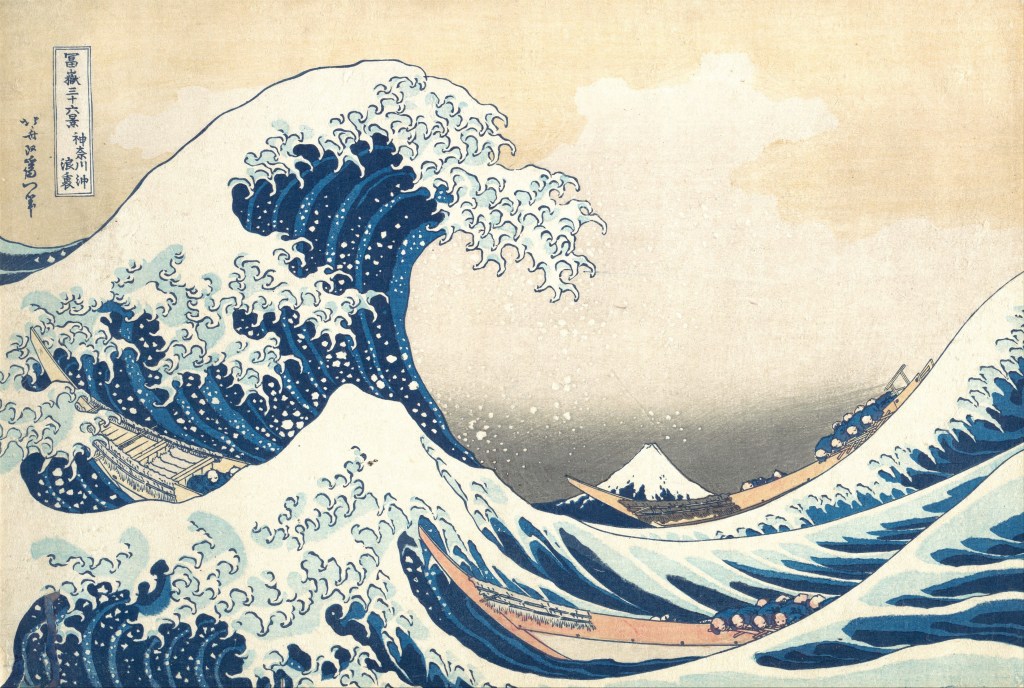
    Artwork: The Great Wave off Kanagawa, Katsushika Hokusai.

    Additional note: Claude Debussy admired this iconic woodblock print so deeply that a cropped version of it was chosen for the cover of the first published edition of La Mer (1905), one of the most celebrated orchestral works inspired by the sea.1

    Leave a Reply

    💌hello@betweeneverywhereandnowhere.com

  • Maybe We Were Meant to Be Strangers

    Maybe We Were Meant to Be Strangers

    Sometimes all it takes is a single word.

    Not a conversation. Not a life-changing event. Just a word that catches your eye and quietly settles somewhere in your mind.

    That was exactly what happened when I first saw the cover of Strangers by Belle Burden.

    The word stayed with me for days.

    Strangers.

    Such a simple word, yet deeply unsettling.

    It made me think about relationships—not only romantic ones, but all the meaningful connections we build throughout our lives.

    Love and relationships have long inspired art, literature, philosophy, and no small amount of emotional turmoil—along with more than a few conversations in therapists’ offices. We talk endlessly about butterflies in our stomachs, the lightness of happiness, the feeling of trust, the excitement of discovering another human being, and the comfort of feeling understood.

    But what exists on the other side of the coin?

    What causes the deepest disappointment? What prevents some people from fully embracing romance, even when they long for it?

    I sometimes think it is the fear of becoming strangers one day.

    Not heartbreak itself. Not rejection.

    But the possibility that someone who once knew your thoughts, habits, fears, dreams, and vulnerabilities may eventually become someone you no longer know at all.

    No one enters a relationship expecting it to end.

    No one gets married planning for divorce.

    No one opens their heart hoping to close it again someday.

    Yet there is something curious about the way we approach relationships. We acknowledge that life is finite, but we often struggle to accept that relationships are finite too.

    Being alive is the clearest reminder that everything we experience is temporary. Relationships are not exempt from that reality.

    Perhaps this is where idealization enters the story.

    When we fall in love, we rarely see reality alone. We see possibilities, projections, expectations, and stories we have already written in our minds. Sometimes we idealize the other person. Sometimes we idealize ourselves. We create a scenario and unconsciously expect reality to follow the script.

    Maybe this is why we often imagine ourselves living in a romantic Hollywood film.

    We envision meaningful conversations, grand gestures, lifelong companionship, and a happy ending patiently waiting at the end of the story.

    Then one day, we find ourselves in a desperate Russian novel, wondering where all the romance went.

    How do we end up there?

    Often, it is not the relationship itself that takes us there, but the gap between reality and our idealization of it.

    The more attached we become to the fantasy, the more disappointed we feel when reality introduces itself.

    At some point, we may find ourselves chasing the ghost of our own idealization rather than getting to know the person as they truly are.

    Maybe the problem is not that relationships end, but that we expect them to fulfill a story we have already written in our minds.

    Perhaps we need to learn how to recognize the ghost of our own idealization before we mistake it for reality.

    Perhaps the hardest part of recognizing our idealizations is admitting that they rarely begin with other people.

    For a long time, I believed that if someone crossed my path, there had to be something extraordinary about them. I placed people on pedestals they had never asked to stand on and expected them to live up to a potential that often existed only in my imagination.

    What I failed to realize was that I treated myself the same way.

    I had become a demanding and unforgiving partner to myself—a quiet dictator of my own expectations.

    I expected constant growth, certainty, and purpose. I mapped out a route for my life and assumed that the people who entered it would naturally fit the story I had written.

    But neither they nor I were meant to be extraordinary all the time.

    Perhaps one of the most humbling lessons of adulthood is accepting our own ordinariness—not as a limitation, but as a shared human experience.

    Because when we allow ourselves to be imperfect, we become more capable of seeing others as they truly are: not as potential, not as projections, but as people.

    Sometimes, the headache is not the relationship itself.

    Sometimes, it is the impossible expectations we place on ourselves—and, inevitably, on others.

    And once we let go of those expectations, a different question emerges.

    I remember a friend once saying to me, “For just one day, let’s not learn anything. Let’s not split the atom. Let’s simply stare at the wall for a while.”

    Then they asked me a question that stayed with me long after the conversation ended:

    “Why is that so difficult for you?”

    At the time, I did not have an answer.

    I had become so focused on growth, progress, and meaning that I had forgotten something simple: not every moment needs to become insight, and not every experience needs to turn into a lesson.

    Sometimes, a single sentence is enough.

    Sometimes, people arrive not to redirect the entire course of our lives, but simply to remind us to stop resisting its flow.

    For so long, I tried to plan the speed and direction of every wave.

    What I needed to learn instead was how to stop fighting the current.

    As I grow older, I find myself thinking less about whether relationships last forever and more about why people enter each other’s lives in the first place.

    I believe that everyone crosses paths with us for a reason.

    Some people help us heal.

    Some challenge us.

    Some expose our insecurities.

    Some teach us trust.

    Others teach us boundaries.

    Some remind us of our strengths.

    And some arrive only to teach us how to say goodbye.

    One way or another, I believe that people encounter each other to heal, challenge, polish, or discover parts of themselves that might otherwise remain hidden.

    Perhaps this is why I no longer see every relationship through the lens of permanence.

    Not every meaningful relationship is meant to end with “happily ever after.”

    Some relationships are meant to end.

    Some are meant to transform.

    Some are meant to leave us with a lesson we could not have learned otherwise.

    A relationship does not have to last forever to be meaningful. It does not have to resemble a fairy tale—or a fairy tale gone wrong.

    Perhaps it simply unfolds the way it was meant to for that particular chapter of our lives.

    Or perhaps it was never about the fairy tale at all.

    Perhaps it was about who we became because of it.

    Healing sometimes comes after learning to let go. Life is not linear, and neither are relationships.

    There are seasons of closeness and distance, certainty and confusion, connection and separation.

    Some relationships end because they were never meant to continue. Others end because they have already fulfilled their purpose.

    This may sound uncomfortable, but I do not believe that a relationship ending in separation automatically makes it a failure.

    Likewise, a relationship ending in marriage does not automatically make it a success.

    Success is not always staying.

    Sometimes success is learning.

    Sometimes success is growing.

    Sometimes success is accepting what is beyond our control.

    A relationship can leave two people wiser, more self-aware, and more compassionate than they were before. If that happens, was it truly a failure?

    I do not think so.

    There is another thought that often comes to my mind.

    None of us is truly irreplaceable.

    At first glance, this may sound cold.

    But I do not mean that people are disposable or insignificant.

    What I mean is that love loses much of its meaning the moment it becomes a necessity rather than a choice.

    If two people stay together only because they have no alternative, there is little beauty in that.

    What gives a relationship value is choice.

    Every day, among countless possibilities, two people continue choosing one another.

    Not because they must. Not because they are trapped. Not because they cannot survive alone.

    But because they believe that learning, growing, healing, laughing, struggling, and experiencing life together is a journey worth sharing.

    Perhaps love is not about finding someone who can never be replaced.

    Perhaps it is about choosing each other again and again—not because life conveniently carries you in the same direction, but because despite the unexpected turns, changing circumstances, disappointments, and transformations that life inevitably brings, you still find meaning in walking together.

    After all, neither of you will remain exactly who you are today.

    And perhaps this is also why becoming strangers is not the tragedy we often imagine it to be.

    Becoming strangers does not erase what once existed.

    It does not erase the conversations, the growth, the lessons, the memories, or the version of yourself that emerged because that person was once part of your life.

    Some people stay. Some leave. Some become strangers.

    But all of them contribute something to the story of who we become.

    So, if there is anything I have learned, it is this:

    Do not be too hard on yourself.

    Allow yourself to feel happiness, anger, disappointment, gratitude, regret, hope, and heartbreak when they come.

    Digest the experience rather than rushing to label it a success or a failure.

    Get to know yourself before trying to understand someone else.

    Learn what kind of people you attract, what kind of people you are attracted to, and what patterns keep repeating themselves throughout your life.

    There are answers hidden inside those patterns.

    And whenever possible, look through the lens of healthy realism rather than idealization.

    Because in the end, life is not a collection of permanent possessions.

    It is a collection of experiences.

    And relationships, regardless of how long they last, remain some of the most meaningful experiences we will ever have.

    Perhaps that is why I no longer see them as successes or failures.

    Only experiences.

    Some shorter.

    Some longer.

    All meaningful in their own way.

    Perhaps that is enough.

    Artwork: At the Mirror, Gerda Wegener

    Leave a Reply

    💌hello@betweeneverywhereandnowhere.com

  • This Virtual Corner Turns One

    This Virtual Corner Turns One

    A year ago, I decided to create a small corner for myself in the vast ocean of the internet.

    I called it between everywhere and nowhere because it seemed to capture exactly what I was trying to do: bringing together nowhere—the virtual world—and everywhere—the places my thoughts had travelled.

    At the time, I did not have a master plan. If anything, this blog began as a small act of rebellion against my own habits.

    I wanted to prove to myself that not everything needs to be optimized, categorized, justified, or turned into an achievement. Some things can exist simply because they are worth doing. Because they help us reflect. Because they help us understand ourselves a little better. Because sharing an experience can sometimes be reason enough.

    I assumed these posts would quietly occupy a few servers somewhere in the world and little more.

    What I did not anticipate was how much writing here would change my understanding of sharing.

    I have always considered thoughts to be among the most private and sacred parts of a person.

    Not because they are necessarily brilliant or unique, but because of what they are made of.

    A thought is rarely just a thought. It is an accumulation of observations, mistakes, curiosities, disappointments, discoveries, memories, conversations, and countless invisible connections made somewhere within the mental faculty. It is evidence that a person has passed through life in a particular way and attempted to make sense of it.

    For that reason, I kept many of my thoughts to myself for a long time. Publishing them felt vulnerable, unsurprisingly.

    Yet over the past year, I realized that sharing a thought does not diminish its intimacy. Sometimes, it even expands its purpose.

    What feels deeply personal to one person may feel deeply familiar to another.

    Somewhere in the world, there may be someone asking the same question, carrying the same uncertainty, navigating the same experience, or searching for words for something they have never quite been able to articulate.

    Perhaps this blog has simply been my way of saying:

    “I experienced this. I reflected on it. This is what remained after I tried to understand it. Here it is. If any part of it resonates with your own journey, you are welcome to take it with you.”

    Here, I have offered neither a lesson nor a universal truth. Only an experience and the meaning I happened to draw from it.

    What continues to fascinate me is how a thought, once released, can be received through lives, beliefs, perspectives, and stories that may have little in common with my own.

    It returns in different coats—critical or compassionate, skeptical or spiritual, certain or questioning—and yet it arrives all the same. Meeting beneath the same sky of human experience.

    Looking back, I think this blog has also been my way of letting go. For most of my life, I kept my thoughts close to myself.

    Then one day, I folded them into little virtual paper boats and released them into the vast ocean of the internet.

    I did not know where they would drift. I did not know whether they would disappear among millions of other voices.

    Instead, I watched them travel.

    Across screens. Across cities. Across countries.

    Across lives I will probably never know.

    In a very tangible sense, this blog became my farewell to a certain kind of reserve I had always carried with me.

    It also became a quiet reminder that I do not always have to resist the currents.

    Some things in life are not meant to be controlled, only released.

    Writing, I discovered, is one of them.

    Another unexpected gift of this blog was the permission it gave me to use language differently.

    For years, I had grown accustomed to using my mind and my sentences almost exclusively in service of professional purposes.

    To translate. To explain. To communicate. To solve.

    Somewhere along the way, I had placed a seal over the more aesthetic and exploratory side of my relationship with language. This blog helped me remove it.

    It reminded me that sentences can be built not only for others, but also for oneself. Not only to arrive somewhere, but also to wander.

    Beneath that old seal, I discovered colors I had almost forgotten were there.

    You have accompanied these virtual paper boats on their journey.

    You have spent a few minutes with thoughts that once existed only inside my own mind.

    You have challenged them, expanded them, questioned them, and sometimes embraced them.

    You have reminded me that once a thought enters the world, it no longer belongs entirely to the person who created it. And that is a beautiful thing.

    The internet often feels vast, noisy, and impersonal.

    Yet somehow, within that immeasurable ocean, these thoughts found their way from one screen to another. 

    From nowhere. To everywhere. For that, I am genuinely grateful.

    And who knows?

    Perhaps somewhere among all these crossings of thoughts and experiences, there is a bottle drifting through the same waters carrying a life-changing insight, an unexpected truth, or a joke so good that it alters the course of a day.

    Perhaps I will find it tomorrow.

    Or perhaps, I already have.

    Either way, thank you for spending part of your journey between everywhere and nowhere.

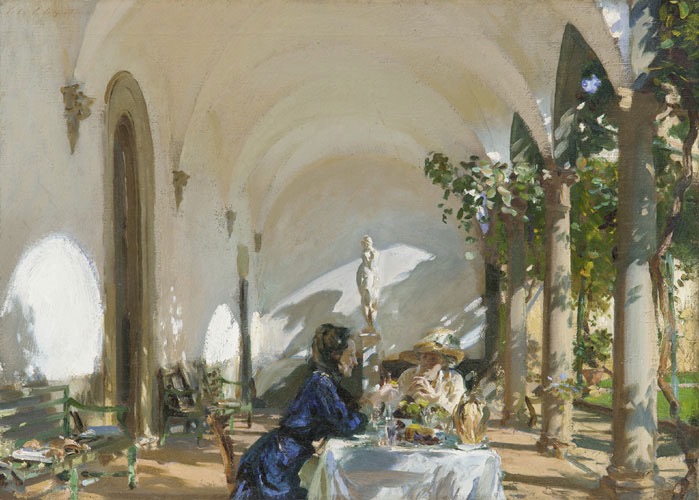
    Artwork: Breakfast In The Loggia, John Singer Sargent

    Leave a Reply

    💌hello@betweeneverywhereandnowhere.com

  • Yes, Zebras Don’t Get Ulcers

    Yes, Zebras Don’t Get Ulcers

    But Is Their Moonlight Ever Stolen?

    Recently, I have been reading Why Zebras Don’t Get Ulcers by Robert M. Sapolsky to better understand what stress actually is, what it does to our bodies, and whether it is possible to live with it without constantly crossing our biological limits.

    Sapolsky’s argument is simple: zebras do not get ulcers because they activate stress responses only when there is an immediate physical threat. A zebra runs from a lion, survives, and returns to grazing.

    Humans do not return in the same way. We keep the system running. We replay, anticipate, simulate. The body does not ask whether the threat is physically present. It responds anyway.

    That part made sense immediately.

    But I did not stay in abstraction for long, because something concrete was already there.

    I have a habit of moon bathing. In the evenings, when moonlight enters my room, I sit with it. It is not decoration for me. It is a way to reset, to remember where I am and who I am. Even when there is no direct moonlight in the room, I still go out and look at the sky. It is part of how I regulate myself.

    Then something changed.

    A new restaurant opened near my home, and a large LED advertising screen was installed outside. At night, instead of moonlight entering my room, bright artificial advertisements began cutting through the curtains—flashing images of fettuccine alfredo, constantly present. Out of the blue, I was no longer able to tell the difference between moonlight and artificial lights.

    My moonlight was stolen.

    Not metaphorically. Literally. Taken.

    It was not just light in the environment; it was the removal of something I actively use to reset and orient myself.

    And my reaction to it was immediate.

    This is where Sapolsky’s framework returns. Biologically, the system does not distinguish between types of stress in the way we like to believe. It responds with the same seriousness whether the trigger is immediate danger or sustained intrusion.

    But what usually follows is where things start to distort.

    The response turns inward: why am I reacting like this, I should ignore it, I should manage it better. Stress becomes not only the external situation, but also a judgment about the internal reaction.

    And that is where I stopped following that logic.

    Because the issue is not only my response. The issue is also the conditions producing it.

    There is a constant assumption that stress should be managed internally, as if the internal system exists in isolation. Regulate yourself. Stay grounded. Reduce sensitivity. Protect your peace.

    But that assumes the environment is neutral enough to be filtered out. It is not.

    Some environments enter the space that is meant for recovery. Some changes do not stay outside the system of experience; they interrupt it directly.

    This is where the zebra comparison starts to fail for me.

    Because I am not a zebra. I do not operate in cleanly bounded moments of threat and release. I am embedded in an environment that is continuously active.

    I am a member of Homo sapiens.

    And being a member of Homo sapiens means there is no clean separation between “me” and what surrounds me. The boundary is porous. Everything around me participates in shaping my state.

    One consequence of this is the tendency to turn every reaction into a personal problem. If something affects you, the assumption becomes that the issue is your regulation.

    But that is not always the first or most accurate conclusion.

    Sometimes something is actually taken. Sometimes something genuinely interrupts the way you live and reset yourself.

    And naming that matters.

    Not to exaggerate it, but to stop translating every reaction into self-blame.

    Not everything that produces stress is internal in origin.

    Sometimes the system is responding correctly to something that is genuinely intrusive.

    Sapolsky’s point still holds: the body responds as if it matters.

    But the question may not be how to stop that response.

    It may be why we insist on interpreting every response as a personal failure instead of sometimes recognizing the conditions that produced it.

    No one is trying to sell zebras fettuccine alfredo at midnight under artificial neon lights. And yet we keep building environments that behave as if no nervous system will ever have to rest.

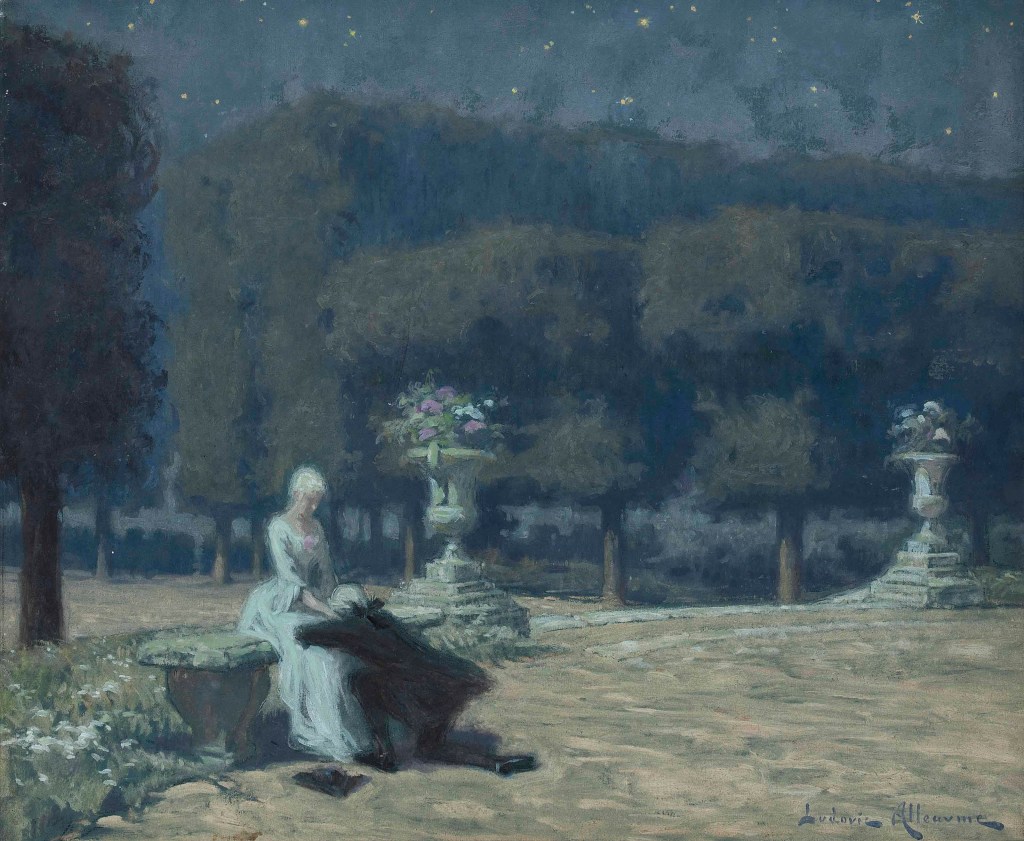
    Artwork: Paradis Nocturne, Ludovic Alleaume

    Leave a Reply

    💌hello@betweeneverywhereandnowhere.com

  • The Ordinary Roots of Arrogance

    The Ordinary Roots of Arrogance

    The quality of being unpleasantly proud.
    Behaving as if you are more important or knowledgeable than others.

    These are the usual connotations of the word arrogance.

    When looking at dictionary definitions, arrogance seems to emerge from a feeling of superiority. However, is that always the case?

    These kinds of terms are often associated with illusionary perceptions of the self. But what if the opposite is also true?

    Can a person carry a certain type of arrogance simply because they are too aware of themselves?

    Why is it rarely considered that self-awareness itself can become a legitimate reason for wrapping ourselves in the silk fabric of arrogance?

    Does it always have to be something negative? Does it always distance us from our surroundings in an illusionary way?

    I have always known that my way of thinking did not appeal to many people in many situations. Once, when I had the chance, I wanted to transfer my messy way of thinking onto a blank white paper and use all the non-traditional connections in my writing. The result? Of course I failed.

    At the time, one of my professors anonymously used my paper as an example of failure in class. Although I had literally failed, it did not feel destructive. Rather, I saw it as a chance to observe how my way of thinking was perceived within my own habitat.

    After that, I decided to keep the genuine side of my mental world to myself and started using my mind in saving mode, literally. I began analyzing the way that professor was thinking. It turned into a small experiment for me. I noted the words he used, his sentence structures, the way his mind connected subjects and pulled arguments from one point to another. I think one of the best parts of being a student is having enough time for these kinds of observations.

    Anyway, that day came and I had a second chance to write freely again. Was it really me writing those thoughts, or was I simply pretending? I still do not know.

    I filled that paper while imagining myself as if I were that professor. What would he write if this were his assignment?

    My second paper was declared the perfect assignment, by the way.

    You may ask, “We started with arrogance and somehow arrived at an ordinary memory that anyone could experience.” But I think the real question is this: where is the border between being arrogant and carrying yourself with a certain degree of arrogance?

    For me, it was realizing to what extent I was being accepted, and to what extent I could bend myself if I truly wanted to fit in. It was also realizing how ordinary I actually was.

    At some point, I also realized that what I truly thought, or who I genuinely was, was rarely important to most environments in the first place. People usually accepted the version of you that functioned well enough within the structure around them.

    After noticing this, I think I started leaving only a measured amount of ordinariness behind me wherever I went. Just enough to fit naturally into the atmosphere, but never enough to feel entirely dissolved inside it.

    Knowing my own limits and ordinariness strangely brought me a sense of arrogance throughout the years. It created a subtle separation between me and others. Because I was fully aware of myself, with both my strengths and weaknesses, I knew I could tame myself accordingly if necessary.

    That self-control, and perhaps self-manipulation towards the outer world, became the main fabric of my arrogance.

    Everyone else was ordinary too. The only difference was that many people were not fully aware of it yet.

    Sometimes the feeling of superiority can come from being absolutely grounded.

    Sometimes I ask myself: could arrogance also be a way of coping with having a painfully solid place in this world? Being ordinary in the most ordinary way can also hurt. Then you start thinking: “I achieved, I endured, I learned, and I still remained within this ordinariness.”

    That is usually the moment when a subtle arrogance taps you lightly on the back, wraps itself around you, and quietly becomes your shadow.

    Maybe arrogance is not always born from illusion.

    Sometimes it grows quietly from knowing exactly where you stand.

    Who knows.

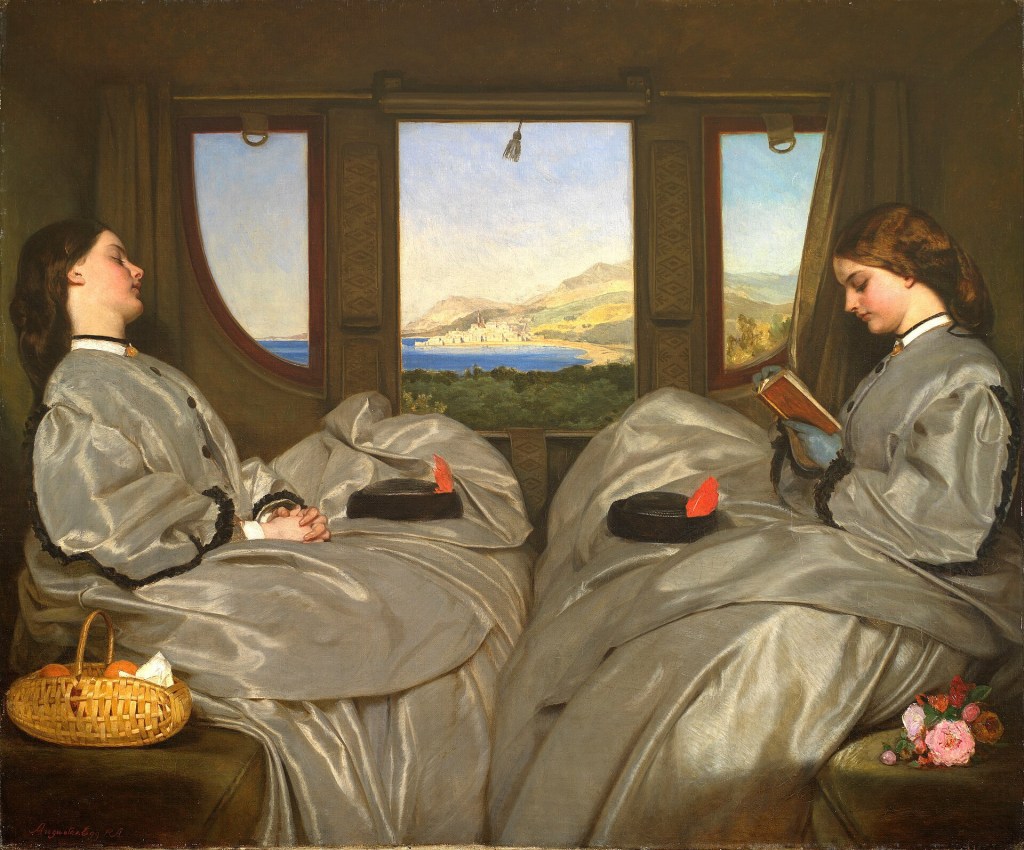
    Artwork: The Travelling Companions, Augustus Leopold Egg

    Leave a Reply

    💌hello@betweeneverywhereandnowhere.com

  • I Lost My Father on a Beautiful Spring Day

    I Lost My Father on a Beautiful Spring Day

    Years ago, I read a sentence in The Museum of Innocence:

    It was the happiest moment of my life, though I didn’t know it.

    At the time, I thought it was simply romantic in the melancholic way novels often are. I never imagined that one day I might understand it through my own life.

    My way into existentialism was through trying to understand death itself. Since childhood, I often wondered what life meant, what people meant to one another, and how anyone could survive the loss of someone they deeply loved.

    For years, one of my greatest fears was that I would one day have to adapt to life without someone I could not imagine losing.

    Over time, my understanding of death changed. I realized that many things die before people do. Habits die. Identities die. Relationships die. A version of yourself can disappear while the body remains. Even hope can gradually die.

    But somewhere inside me, I knew none of these would compare to the death of someone I loved.

    So, I lived with that private fear for years, trying to place it somewhere in my brain, somewhere in my heart.

    It was one of those beautiful spring days.

    I had never liked spring the way others did. It always carried a quiet nostalgia for me, a sadness I could never explain. Looking back now, I sometimes wonder whether it was only association or whether some parts of us sense grief before we truly encounter it.

    That day, everything was perfect. Almost flawless.

    In the morning, I received a letter of acceptance from a country I had long wanted to know more deeply. I remember feeling bright from the inside out. Everything felt possible. I felt myself shining with happiness.

    Then, in the middle of that brightness, the phone rang.

    I rushed to the airport and flew home. Somewhere in the blur of movement, disbelief, and noise, I heard the sentence:

    Sorry for your loss.

    I immediately thought:

    This has happened to me too.

    Not sorrow at first. Just emptiness. A strange hollow space where feeling should have been. I searched inside myself for something more dramatic, something more recognizable, but grief did not arrive in the form I expected, and nothing in my life seemed to be replaceable with this reality. 

    It came as absence. My biggest fear arrived as absence.

    That was when I understood what death truly means.

    It is not death itself that devastates us. It is the ultimate absence of someone who once shaped the atmosphere of your life.

    My father was not just my father. He was the starring actor of my memories, of my childhood, of many parts of my personality I had mistaken for being entirely my own.

    While getting ready for the funeral, I looked at myself in the mirror. Features I had criticized for years suddenly became precious to me because they were his. My face was no longer only mine. It was evidence.

    I had spent years fearing the death of one of my parents, and now I was living inside the very thing I feared.

    Yet real grief has no interest in your theories. It is bitter, physical, slow. It humbles every abstract thought.

    Shortly before my father died, I had been reading Marcus Aurelius. At the time, I believed he was right. Life should not be taken too seriously. Legacy was overrated. There was no need to burden oneself with thoughts of future generations.

    But grief has a way of exposing the beliefs we only hold in comfort.

    It may sound odd, but I stood at my father’s burial and thought the opposite.

    I realized that I did not want to disappear from this world.

    I wanted to contribute something. To leave something. To exist beyond the limits of a body. Whether through children, through work, through words—I did not know.

    Sometimes I wonder whether this blog itself is part of that desire: a refusal to vanish silently.

    My father did not vanish.

    He remains in the people who loved him, in the habits he formed in us, in our gestures, in our instincts, in our memories. He remains in my face. He remains even here, in these sentences, where someone who never knew him now knows that he existed.

    But everything truly begins after that period, when you are finally left on your own.

    As a teenager, I had a rule for myself: if I felt something too deeply, whether joy or pain, I would give it five days. I would sit with it until I became desensitized, then make decisions rationally. It was my private method of self-control.

    My father’s death taught me that some things do not obey systems.

    Some pain cannot be optimized. Some losses cannot be reasoned into neat conclusions. Some experiences need to be digested.

    I had to change my route, and I realized adulthood had begun at this very moment.

    What struck me most after losing my father was not only sadness, but the feeling that I had lost my sparkle.

    I had always been someone who could make meaning out of anything. Disappointment could become growth. Difficulty could become material. Whenever life gave me something inconvenient, my instinct was always:

    What can I do with this? What is my role in it? How can I cultivate myself through it?

    Then, for a while, I did not want to make meaning of anything.

    That frightened me more than grief itself.

    But grief changes shape.

    Later, I began to understand that my father’s absence was only biological. Presence can survive form. I found him in small things: a gentle breeze, a butterfly passing too close, the reflection in my coffee, a sudden scent in nature, a dream vivid enough to quiet the morning, my stance in certain situations.

    I thought I had lost my spark.

    Perhaps I had only shed the one I carried as a teenage girl.

    What came after was the slow work of building a different kind of light.

    Grief is not a wound that simply heals and disappears. It is more like losing a landscape you once navigated by instinct. The world remains, but your orientation changes.

    It does not truly pass.

    It is not something to be cured, nor should it be.

    You change. And then, you decide in which direction to continue.

    Sometimes you are guided only by what is missing inside you.

    It is not pain.

    It is ache.

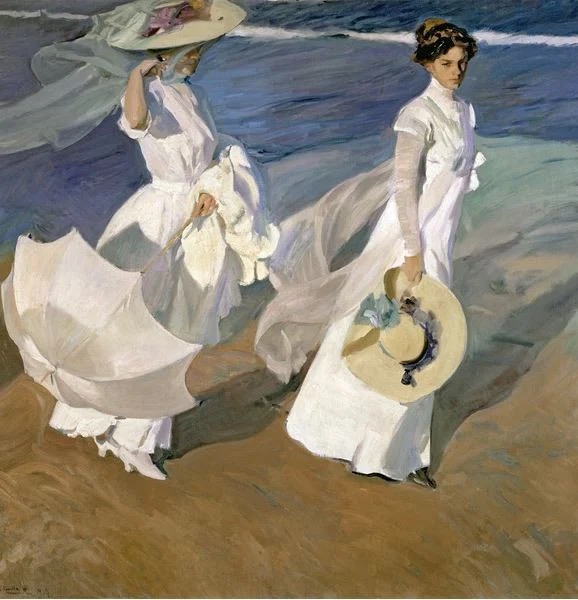
    Artwork: Strolling along the Seashore, Joaquín Sorolla y Bastida

    Leave a Reply

    💌hello@betweeneverywhereandnowhere.com

  • Am I Destined to Be a Crisovore?

    Am I Destined to Be a Crisovore?

    Or Just Learning How to Rest on Grass That Still Itches

    Sometimes the dynamics of life arrive not as a path, but as a series of collisions. Something breaks, shifts, disappears, or turns against the shape of who you thought you were. And because survival rarely waits for readiness, you learn quickly how to turn damage into utility.

    We are told to make lemonade out of lemons that life gives us. But some lemons are too bitter, too sharp, too misplaced to belong anywhere. So, you learn something subtler than optimism: if sweetness is impossible, extract zest. If healing is delayed, produce function. If nothing fits, make use of what wounds you.

    At first, this feels like resilience. Later, it becomes identity.

    Over time, crisis stops being an interruption and becomes a habitat. You no longer respond to intensity; you metabolize it. You become fluent in urgency, efficient in uncertainty, strangely calm in disorder. There is no official term for this transformation, so I made one: crisovore.

    A crisovore is someone who has learned to feed on crisis.

    Not because they enjoy suffering, but because disruption became the environment in which their strengths were formed. Some people grow in gardens. Others learn in storms.

    I had to scratch myself out of crisis at almost every stage of my life. I lost my father and learned that the worst fear can, in fact, become reality—and life continues anyway. I was betrayed by people I trusted and discovered that disappointment can clarify character faster than affection ever does. When I entered professional life, a pandemic began. And in a strange paradox, that global rupture created opportunities for growth within my field.

    Whether internal or external, personal or collective, crisis seemed to arrive with consistency. Enough times, and you begin to wonder: am I finding crisis, or has crisis found me? Do I endure it because I can, or have I simply built myself around expecting it?

    We often celebrate what hardship teaches us. Discipline. Perspective. Endurance. Adaptation. And those lessons are real. But there is a quieter consequence people rarely discuss: what happens when crisis becomes familiar enough to feel necessary?

    Because familiarity has its own gravity.

    Intensity begins to resemble meaning. Urgency feels like direction. Constant problem-solving mimics purpose. You wake up alert, needed, mobilized. Every day asks something of you, and in answering it, you feel alive.

    Then one day, life softens.

    Nothing is collapsing. No emergency needs containing. No immediate threat is sharpening your attention. The phone is quiet. The room is still. And instead of relief, you feel unease.

    Calm, for the unpracticed, can feel unnatural.

    Peace does not always arrive as comfort. Sometimes it arrives as emptiness. Sometimes it feels like a waiting room before the next disaster. Sometimes it is mistaken for stagnation simply because it lacks adrenaline.

    What does one do when life finally feels safe, but something inside does not trust safety? How do you distinguish between what is healthy and what is merely less stimulating? What happens when you feel tempted to recreate chaos, not because you want pain, but because pain is recognizable and calm is not?

    Living through crisis can resemble addiction—not in spectacle, but in rhythm. Like caffeine, it sharpens perception and lends momentum. It gives structure to the day. Its absence can feel less like peace and more like withdrawal: a low ache, a restlessness without object, a sense that something important has gone missing.

    Not the crisis itself, but the intensity.

    We speak often about rebuilding after hardship. We speak less about remaining present when nothing is broken. Yet perhaps this is the more difficult task.

    Crisis demands reaction. Calm demands tolerance.

    Crisis tells you what to do next. Calm asks whether you know who you are without instructions.

    Crisis can make you feel chosen, central, necessary. Calm asks whether existence needs drama to feel valid.

    So perhaps the real question is not whether we can survive crisis. Many of us already know that we can.

    The real question is whether we can live without organizing our inner world around it. Whether intensity can become an experience rather than a dependency. Whether peace can be learned with the same seriousness with which survival once was.

    Maybe there is no final balance, no permanent arrival. Maybe life is only this ongoing negotiation between two selves: the one trained by disruption, and the one still learning how to stay when nothing is on fire.

    Perhaps growth, for some of us, is not learning to survive the lava, but learning to rest on the grass. And who ever said the grass would not trigger an allergy of its own?

    Artwork: Carola i soffan, Gustaf Cederström

    Leave a Reply

    💌hello@betweeneverywhereandnowhere.com

  • I Keep Changing — Again and Again

    I Keep Changing — Again and Again

    It is often said that change is the only constant in life. But that sentence has never felt entirely comforting to me. Because the real question is not whether change is constant, but how one is expected to live inside that constancy.

    We are born into patterns. We are raised within structures that gradually become indistinguishable from who we are. Familiar streets, routines, faces, even the predictability of daily life begin to feel like extensions of identity rather than external conditions. I used to rely heavily on that sense of stability. It felt like a roof — not just protective but defining. Stability was control, and control became my identity. So, I assumed that being constant meant being intact.

    That assumption began to fracture when I was fifteen, after moving to another city because of my parent’s profession. Nothing dramatic happened in the way change is usually narrated, yet everything shifted. What I had known as “normal” disappeared almost entirely, and I was left in a space where adaptation was no longer optional. It had to be learned, almost physically — like a muscle that had never been used before.

    But what is change, really? Is it simply going with the flow? Or is it a subtle form of self-manipulation, a quiet adjustment made just to survive? Is it adaptation, or survival instinct? Or does it begin to feel like alienation — a gradual distance from earlier versions of the self? Or is it something more spatial: a wall between what came before and what comes after, with a door left open for whatever is still forming?

    I remember speaking to my childhood friends during that period. Nothing in our conversation had explicitly changed, yet something had already shifted beyond repair. They were still speaking to a version of me that no longer fully existed, while I was already somewhere else. That realization left me with a question I could not settle: if I am already different, then which version of me is the “real” one — if any of them are?

    Accepting this has never been simple. Sometimes change feels less like growth and more like a quiet disloyalty to earlier versions of myself. It raises an uncomfortable uncertainty: am I evolving, or am I fragmenting into disconnected states that only appear continuous from the outside?

    At times, I ground this uncertainty in something simpler. I am a living organism, shaped by conditions and response. Not everything needs to be elevated into meaning. Some things simply happen because they must. In that sense, change might also be understood as a form of digestion — what I experience is not simply lived through but processed internally. And what remains becomes what is called transformation.

    Still, I needed a way to observe these shifts rather than only experience them. That is when I turned to journaling. Not as a structured practice, but as a way of capturing fragments of myself in different states. I began documenting thoughts, reactions, habits — even added details that seemed to define who I was at a given time. Over time, those pages became a kind of archive. Not of a single self, but of multiple versions that do not always align.

    Looking back at them, I can trace change not only in circumstances, but in perception. Things that once felt overwhelming now appear distant, almost minimal. Yet at the time, they shaped entire emotional realities. There is something unsettling in that realization — how absolute something can feel in the moment, and how temporary it becomes later.

    Sometimes reading those entries feels like encountering someone else. I recognize the words, but not always the person behind them. And that distance adds another layer to this experience: the self is not as continuous as it appears.

    Perhaps the real difficulty is not change itself, but the expectation of continuity. We tend to assume that identity should remain coherent across time. Yet what I observe is less coherence and more accumulation — overlapping states that do not fully resolve into one another.

    I think there is a certain courage required to face all of these versions without forcing them into a single narrative: who we were, who we are, who we are becoming, and the versions we no longer fully recognize. The answers may not lie in one of them, but in the gaps between them — in what shifts, what disappears, and what quietly persists.

    In that sense, change is not something to be resolved. It is something to be positioned within.

    Change is indeed the only constant in life.
    And I am still learning how to exist inside that constancy.

    Artwork: The Titan’s Goblet, Thomas Cole

    Leave a Reply

    💌hello@betweeneverywhereandnowhere.com