Tag: personal essay

  • The Unbearable Lightness of Uncertainty

    The Unbearable Lightness of Uncertainty

    What would it be like to enter this world with your life already drawn for you, inch by inch?

    Some people seem to be born into a story that has already been written. Long before they can choose anything for themselves, their place in the world is almost outlined for them: what they will become, what they will inherit, what they will be expected to achieve. Perhaps they are handed influence, privilege, or power, but perhaps the greatest privilege of all is the certainty of knowing that they are meant to become something.

    And then there are those who arrive without such a map.

    Have you ever heard of the journey of caretta carettas, or loggerhead sea turtles?

    After an incubation period of approximately sixty days, hatchlings break through their shells using a temporary egg-tooth. There is no one waiting to guide them, no path laid out for them to follow. They emerge by relying on their sensory cues, making their way out of the nest and eventually towards the open ocean, completely on their own.

    Even the timing of their emergence is shaped by uncertainty. During the day, the heat of the sand can act as a thermal inhibitor, keeping them beneath the surface. As the sand cools at night, the change in temperature signals that it is safer to emerge. They do not know what awaits them beyond the nest. They simply respond to what they can sense.

    And perhaps this is where uncertainty begins to look a little different.

    It is easy to think of uncertainty as the absence of something: the absence of a plan, a guarantee, a destination. But what if it is also the space in which we learn to navigate? What if not knowing exactly who we are going to become is not a weakness, but one of the things that keeps possibility alive?

    A caretta caretta does not emerge from the sand knowing what kind of life it will have. It has no promise of safety, no certainty of survival, no one telling it where it belongs. It has, for a moment, little more than its body, its senses, and the sand beneath it.

    And somehow, that is enough to begin.

    I see uncertainty as a form of freedom, honestly. And I only came to see it this way relatively recently.

    I have always been an ambitious person, but my ambition was mostly directed towards academic and educational pursuits. I was raised by overly affectionate parents, under a very peaceful roof, with plenty of everything I could have wanted. And yet there was one thing I always felt I could not get enough of from my parents: an answer to the question, What could I become?

    Whenever I brought up this question, the answer I received was always the same: You can be anything and everything you want, and we will support you.

    When I was younger, this lack of direction drove me crazy. I wanted to be navigated towards something. I wanted a field, a destination, a sign telling me where I belonged. In my mind, I was living in a story in which I was lacking a sense of belonging. I was all alone. I was one of those caretta carettas.

    Now, as a young adult, I am more than grateful for the uncertainty my parents gave me.

    Thanks to this uncertainty, my dreams are still vivid and fluid. I can still be anything and everything, or nothing.

    I realized that this kind of uncertainty serves as fuel: a reason to remain willing to exist, to explore, to change direction, to become someone I have not yet imagined.

    This uncertainty opened up a lifelong journey in which I carry the sweet possibility of wearing any hat—or perhaps never finding a hat that fits me at all. Anything possible or everything impossible. This is not even the issue.

    Sometimes I feel like I am inside an arthouse film whose ending has deliberately been left open.

    And perhaps uncertainty is what makes me wonder: Is that film an absolute expression of me, or am I simply part of a story that was never meant to be carefully plotted? According to whom am I the director? According to whom am I a side character? According to whom am I the starring actress?

    In the hands of uncertainty, I can create a thousand questions and give a thousand different answers. Maybe all of them are correct. Maybe all of them are wrong.

    Maybe that is precisely the point.

    Uncertainty does not simply take certainty away from us. Paradoxically, it makes us more aware of the certainties we already carry.

    For a caretta caretta, there is the shell, its sensory cues, its instinct to move towards the sea. For us, perhaps, there is something less tangible but no less real: our essence, our stance, our will.

    When there is no map, we begin to notice what we already have.

    I see the uncertainties we wish to be certainties as our little fairies, constantly nudging us to find our own path.

    Maybe this is what uncertainty ultimately gives us. Not the certainty of knowing where we are going, but the certainty of knowing that we can navigate. Not a promise of who we will become, but the freedom to discover it. 

    To stop fighting the windmills. To have no idea who you are going to be, while slowly realizing that you already carry everything you need to begin. 

    This is the unbearable lightness of uncertainty.
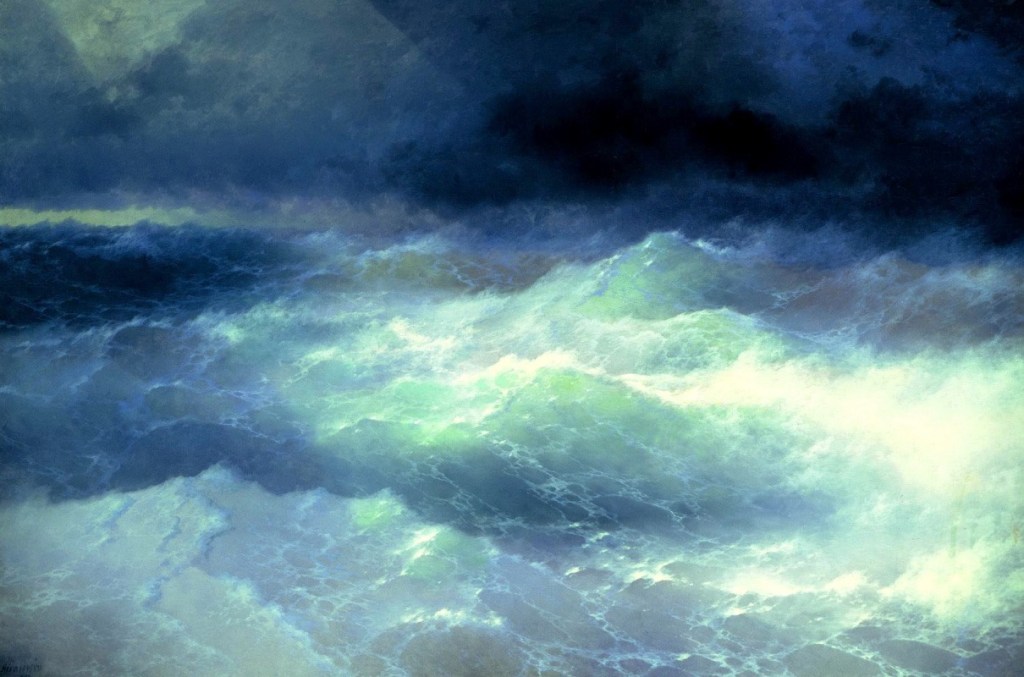
    Artworks: 1Among the Waves, Ivan Konstantinovich Aivazovsky
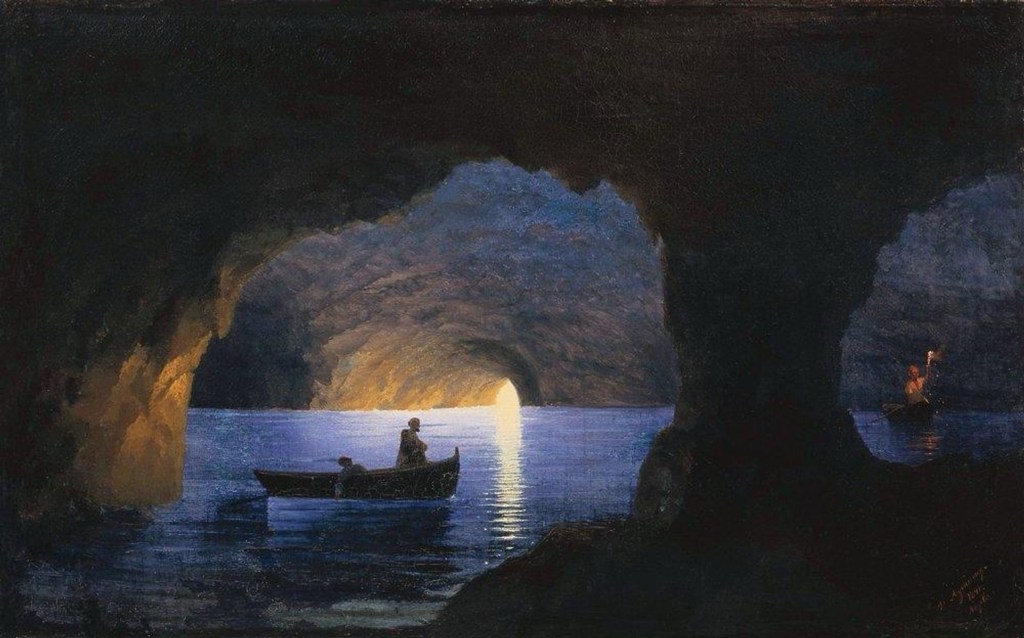
    2Azure Grotto. Naples, Ivan Konstantinovich Aivazovsky
    Leave a comment

  • What I Read, What I Become

    What I Read, What I Become

    How do you choose a book? How do you see it?

    Or perhaps a better question is this: what makes something worthy of becoming a book in the first place? Is it the story, the ideas, the language, or simply the possibility that someone else’s mind might resonate with ours?

    I have come to believe that the books we choose reveal where we stand at a particular stage of our lives.

    Most of the time, I gravitate towards books that challenge me—books that introduce unfamiliar ways of thinking and quietly stretch the limits of my understanding. Yet there are periods when I feel isolated, when I crave belonging more than intellectual stimulation. During those times, I find myself reaching for books that everyone else seems to be reading. Not because they are necessarily better, but because reading them allows me to participate in a shared conversation. Even a brief conversation in front of a bookshelf can satisfy that deeply human desire to belong, if only for a little while, to the same imagined world.

    Which brings me to another question.

    How should one read a book?

    I have taken courses on reading and literary analysis. I have written academic papers and learned countless methods for approaching a text. They all have their value. However, perhaps I had become a little spoiled by knowing those rules that I eventually felt the need to place them quietly in the background. I wanted to discover my own way of reading rather than constantly measuring myself against established criteria.

    During the years when I was choosing my university major, several people encouraged me to study literature instead of translation studies. I always found myself resisting that advice. It was never because I lacked respect for literature—quite the opposite. I was simply more fascinated by the destination than by the journey. I was interested in the work that finally emerged rather than in every step that had led the writer there.

    What fascinated me was never how a book came into existence, but what happened after it reached the reader. Because from that moment on, the journey no longer belonged solely to the writer. It belonged to me.

    Reading became a way of observing not only the book, but also myself. The books I returned to, the ideas I resisted, the characters I admired or quietly disagreed with—all of them became subtle ways of understanding who I was becoming. Books have always felt like some of the safest companions in that process.

    This approach may be wrong. It may be right. Or it may even be disrespectful.

    Or it may even be exactly what many writers secretly hope for.

    I have never read a book primarily to study its author. I read it for the universe it opens before me and for the candle it manages to light somewhere in my mind. Only after wandering through that universe that I begin to wonder about the person who created it—not the other way around. I have always enjoyed the ultimate stance of “art for people’s sake”.

    Reading, for me, has never been passive. Every book eventually becomes a conversation.

    Sometimes I imagine a different setting that feels more convincing to me. Sometimes I reshape the characters’ appearances according to my own imagination. If a detail is essential to the story, I do not erase it; I simply let my imagination bend around it until it finds room for both the author’s intention and my own.

    Is that a betrayal of the book? Or is that precisely what literature is meant to awaken?

    When we stand before a bookshelf, what are we really choosing?

    Another culture or the comfort of our own?

    A challenge to our assumptions or the reassurance of familiar expectations?

    Do we read to learn, to escape, to belong, to witness another life, or simply to rest inside a quieter universe for a while?

    Do we choose books in their original language because we want to hear the author’s own voice? Or do we look first at the translator or the publishing house because we trust the way they carry one world into another?

    Most of us probably never stop to ask ourselves these questions. Our choices often feel instinctive. Yet perhaps those instincts are far from random.

    Perhaps what happens in our minds when we reach for a book reveals more about us than we realize.

    Like a detective studying scattered clues, what if we examined our reading habits with the same curiosity? Could our reading habits become a mirror?

    Reading has never felt like a manual to me. It has always felt like an expedition. And I have come to believe that, on this journey, the only reliable guide is the reader themselves.

    You may lose yourself between the lines. You may feel distant from an idea. You may not understand every word. You may read with your imagination more than with your eyes. You may become frustrated, delighted, or find yourself unable to decide what to think at all.

    None of these are signs that you are reading incorrectly.

    They are signs that, somewhere along the way, the book has begun to touch something uniquely yours.

    Perhaps that is what “how to read a book” has always meant to me.

    Not finding the most efficient method. Not reading according to academic expectations.

    Not proving how intellectually capable we are. But discovering what kind of reader we naturally become.

    The way we read is rarely accidental. It reflects not only who we are, but sometimes who we long to become. The worlds we repeatedly return to may be the ones we quietly seek in our own lives. The stories that comfort us may reveal the shelter we need. Even the books we cannot bring ourselves to finish may tell us something about ourselves. Sometimes, a book simply becomes a temporary refuge in a universe we may never inhabit beyond the page.

    The books that stay with us are rarely the ones we have read “correctly.” They are the ones that reveal something about ourselves—what captures our attention, what unsettles us, what sparks our imagination, and what quietly lights another candle in our minds.

    Knowing how you read a book, in the end, is another way of knowing who you are—or perhaps who you are becoming.

    Because reading has never been merely about understanding books.

    It is about slowly, quietly, and honestly learning to understand ourselves through them.

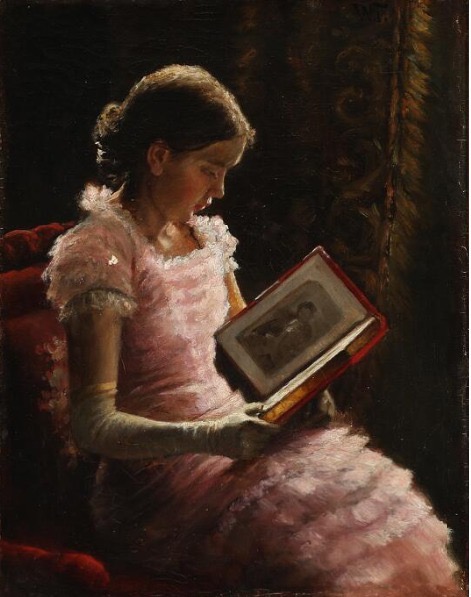
    Artwork: A Girl in a Pink Dress Reading, Wenzel Tornøe

    Leave a comment

  • Yes, Zebras Don’t Get Ulcers

    Yes, Zebras Don’t Get Ulcers

    But Is Their Moonlight Ever Stolen?

    Recently, I have been reading Why Zebras Don’t Get Ulcers by Robert M. Sapolsky to better understand what stress actually is, what it does to our bodies, and whether it is possible to live with it without constantly crossing our biological limits.

    Sapolsky’s argument is simple: zebras do not get ulcers because they activate stress responses only when there is an immediate physical threat. A zebra runs from a lion, survives, and returns to grazing.

    Humans do not return in the same way. We keep the system running. We replay, anticipate, simulate. The body does not ask whether the threat is physically present. It responds anyway.

    That part made sense immediately.

    But I did not stay in abstraction for long, because something concrete was already there.

    I have a habit of moon bathing. In the evenings, when moonlight enters my room, I sit with it. It is not decoration for me. It is a way to reset, to remember where I am and who I am. Even when there is no direct moonlight in the room, I still go out and look at the sky. It is part of how I regulate myself.

    Then something changed.

    A new restaurant opened near my home, and a large LED advertising screen was installed outside. At night, instead of moonlight entering my room, bright artificial advertisements began cutting through the curtains—flashing images of fettuccine alfredo, constantly present. Out of the blue, I was no longer able to tell the difference between moonlight and artificial lights.

    My moonlight was stolen.

    Not metaphorically. Literally. Taken.

    It was not just light in the environment; it was the removal of something I actively use to reset and orient myself.

    And my reaction to it was immediate.

    This is where Sapolsky’s framework returns. Biologically, the system does not distinguish between types of stress in the way we like to believe. It responds with the same seriousness whether the trigger is immediate danger or sustained intrusion.

    But what usually follows is where things start to distort.

    The response turns inward: why am I reacting like this, I should ignore it, I should manage it better. Stress becomes not only the external situation, but also a judgment about the internal reaction.

    And that is where I stopped following that logic.

    Because the issue is not only my response. The issue is also the conditions producing it.

    There is a constant assumption that stress should be managed internally, as if the internal system exists in isolation. Regulate yourself. Stay grounded. Reduce sensitivity. Protect your peace.

    But that assumes the environment is neutral enough to be filtered out. It is not.

    Some environments enter the space that is meant for recovery. Some changes do not stay outside the system of experience; they interrupt it directly.

    This is where the zebra comparison starts to fail for me.

    Because I am not a zebra. I do not operate in cleanly bounded moments of threat and release. I am embedded in an environment that is continuously active.

    I am a member of Homo sapiens.

    And being a member of Homo sapiens means there is no clean separation between “me” and what surrounds me. The boundary is porous. Everything around me participates in shaping my state.

    One consequence of this is the tendency to turn every reaction into a personal problem. If something affects you, the assumption becomes that the issue is your regulation.

    But that is not always the first or most accurate conclusion.

    Sometimes something is actually taken. Sometimes something genuinely interrupts the way you live and reset yourself.

    And naming that matters.

    Not to exaggerate it, but to stop translating every reaction into self-blame.

    Not everything that produces stress is internal in origin.

    Sometimes the system is responding correctly to something that is genuinely intrusive.

    Sapolsky’s point still holds: the body responds as if it matters.

    But the question may not be how to stop that response.

    It may be why we insist on interpreting every response as a personal failure instead of sometimes recognizing the conditions that produced it.

    No one is trying to sell zebras fettuccine alfredo at midnight under artificial neon lights. And yet we keep building environments that behave as if no nervous system will ever have to rest.

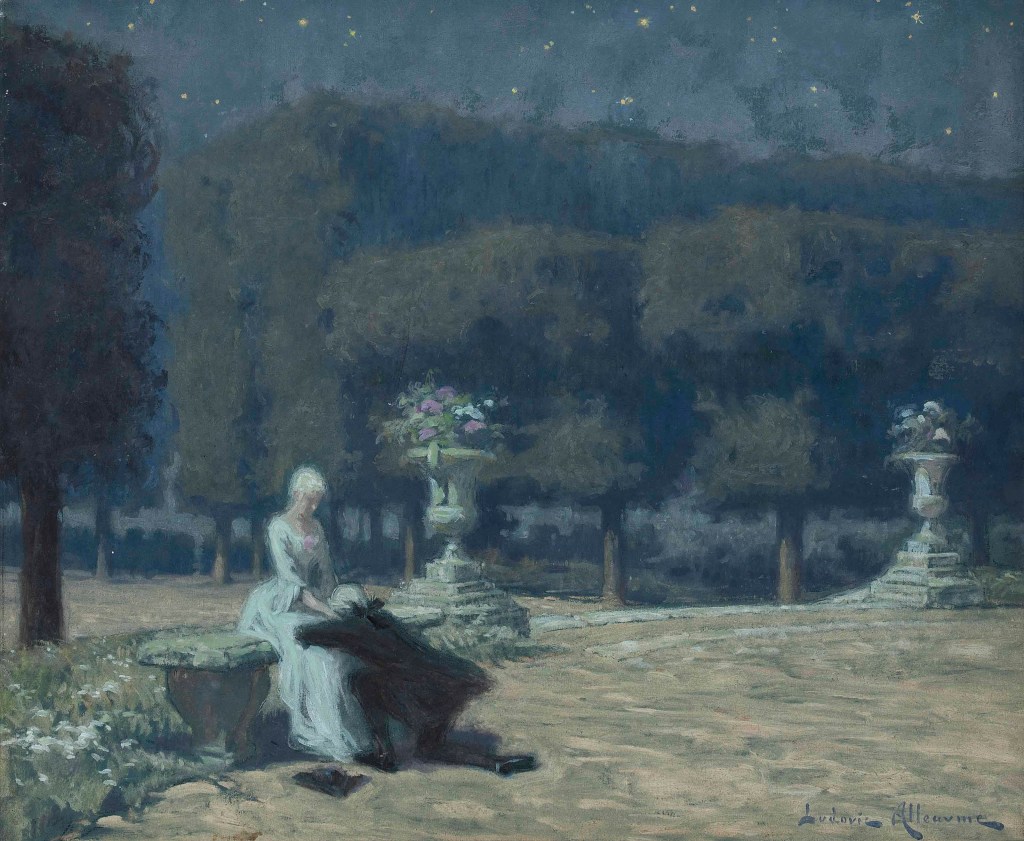
    Artwork: Paradis Nocturne, Ludovic Alleaume

    Leave a comment