Between Everywhere and Nowhere

  • Artificial Intelligence Is Not to Blame for Your Stupidity

    Artificial Intelligence Is Not to Blame for Your Stupidity

    Lately, I’ve been surrounded by studies, tweets, and heated conversations all warning the same thing: artificial intelligence is making us dumber, lazier, and creatively numb. Some even argue that it will slowly replace our ability to think for ourselves.

    Ironically, I was the only person in my circle still living with pens and notebooks—no AI planning apps, no AI writing tools, not even AI search. As a translator, I thought that made me somewhat cool. But instead of being praised for my independence, I was criticized for being outdated, slow to adapt, even resistant to change. Classic human hypocrisy.

    Curious to test this for myself, I started using ChatGPT non-stop for a few months, in every possible area of my daily life. From writing emails to planning meals, from brainstorming ideas to drafting work notes—even for terminology discussions in translation assignments.

    What I discovered is simple: AI doesn’t make you stupid. You become mentally passive only if you hand over your thinking to a ready-made mechanism because it feels easier, not because it is inevitable.

    Fed by human data, AI does its best to navigate you, meet your demands, and address you in different voices. But here’s the key question: how much trust do you place in your own voice, your research skills, and your expertise? During this trial, ChatGPT couldn’t change my voice or override what I wanted to say—simply because I didn’t let it.

    The Real Risk

    As human beings, we dramatize new technologies far too much. Instead of sinking into the warm arms of laziness, we should use technology the way it was intended: as a support, not a substitute.

    Workloads are heavy, deadlines are unrealistic, and underpayment is exhausting. Sometimes, we don’t even have the energy left to think. Depending on AI may seem like salvation in those moments. But this dependency is dangerous, as recent research warns. An arXiv preprint even explored how people develop intimate, emotional bonds with AI partners, blurring the lines between authentic human interaction and machine-mediated connection.

    Balance Is Key

    That’s why I believe everything beyond reference is poison. Keep things in balance. Don’t lose your own voice or your mental battery. Don’t forget the joy of researching and creating.

    While it’s impossible to isolate ourselves completely from new technologies, we can choose how much we let them shape us. AI was created by humans—by us, fragile beings in flesh prisons. It is still just a tool, idle until you ask it to produce.

    Don’t let anything, or anyone, pull you away from your humanness or make your abilities seem less worthy. And don’t let opportunists persuade you that it’s normal to be replaceable. 

    Just let technology be your servant, not the other way around.

    💌hello@betweeneverywhereandnowhere.com
    Leave a comment

    💌hello@betweeneverywhereandnowhere.com

  • When Tuvan Words Felt Familiar: A Cultural Reflection

    When Tuvan Words Felt Familiar: A Cultural Reflection

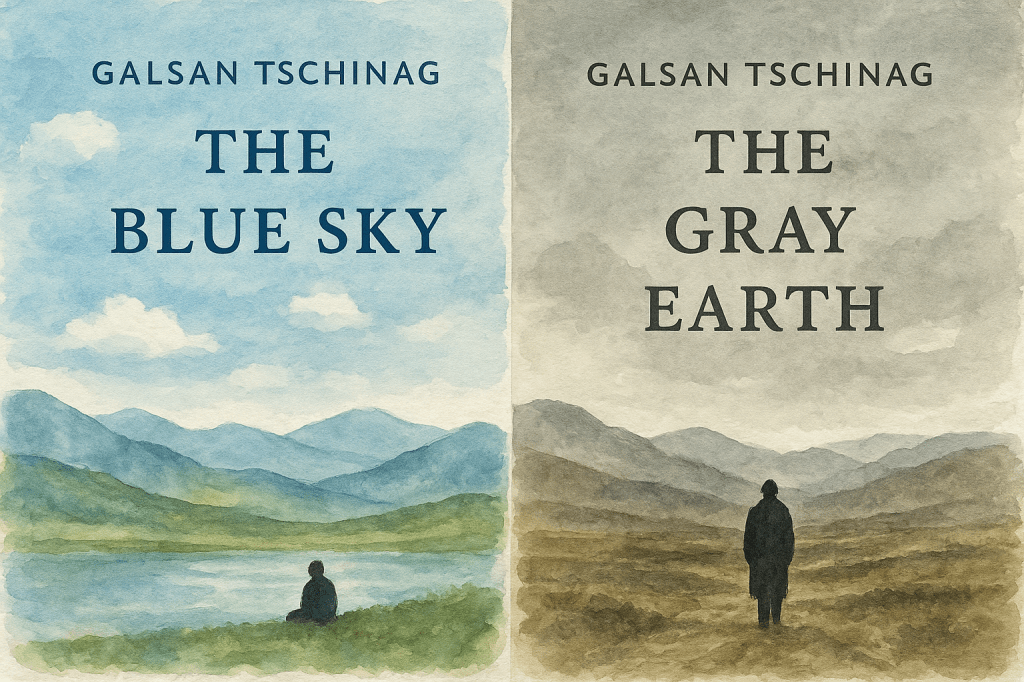
    I recently discovered Galsan Tschinag through two parts of his The Blue Sky series — The Blue Sky and The Gray Earth. Tschinag is a Mongolian author with Tuvan roots who writes in a deeply autobiographical way about the nomadic life of the Tuvan people.

    I read the books in Turkish translation, and right at the beginning, a small note caught my eye:

    “The author chose to leave Tuvan–Mongolian words as they are. We respect this choice and keep them untouched.”

    That intrigued me. Would these words feel distant? Would they interrupt the flow?

    To my surprise, as an Anatolian Turk, they rarely felt foreign. Most of the time, I read fluently, almost seamlessly, as if those words had always been part of my own language.

    Some examples included:

    TuvanTurkishEnglish
    ArzılanAslanLion
    HölGölLake
    HarlıgKarlıSnowy
    SarıgSarıYellow
    BeğBeyLord / Chief

    A Note on the Tuvans and Their Language

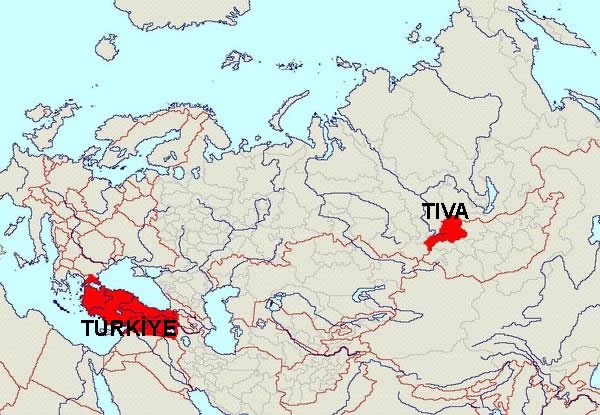
    The Tuvans are a Turkic-speaking people living mainly in the Tuva Republic in southern Siberia, Russia. Their language, Tuvan, belongs to the Turkic language family and shares historical roots with Turkish. Around 300,000 people speak Tuvan today.

    Historically, the Tuvans and Turks share common ancestry from Central Asia. Over centuries, migrations, nomadic movements, and intermixing with neighboring peoples shaped the cultures and languages of both groups.

    Knowing this makes the familiarity of certain words in Tschinag’s books even more fascinating, as echoes of a distant but connected linguistic and cultural heritage emerge across centuries and geography.

    Cultural Echoes Across Lands

    What struck me even more were the subtle cultural echoes. In one passage, the Tuvans deal with bad dreams in a unique way: instead of telling anyone, they dig a small hole in the ground and spit three times into it.

    In my own culture, we do something strikingly similar — when you wake from a bad dream, you turn to your left side and spit three times to ward it off without telling anyone.

    Two traditions, worlds apart, yet connected by the same instinctive gesture.

    Language as the Vessel of Identity

    That experience reminded me of something powerful: language is the true vessel of cultural memory. You can mix with other peoples, migrate to new lands, or adopt different faiths — but your language holds the essence of who you are.

    It carries the echoes of your ancestors: their struggles, joys, survival, and traditions. Here I was — a 28-year-old Anatolian Turk — suddenly understanding, mostly, the Tuvan words of a writer born in 1944 in Mongolia. Across geography, decades, and lives, there was a quiet recognition.No matter what the world tells you, identity lives in language. It is the thread that ties you to those who came before, and the voice you pass on to those who come after.

    Reflections on My Own Roots

    We, Anatolian Turks, are a people whose identity has been constantly shaped and reshaped: through our nomadic past, settled lives, and encounters with countless other communities.

    Reading Tschinag made me reflect on these layers — on how language, ritual, and memory carry the essence of who we are, often transcending borders and time.

    Although the ties between the Tuvans and Turks are historically known, what felt extraordinary to me was the immediacy of the recognition. Despite centuries of distance — geographic, cultural, and historical — I found myself transported into that world within the pages of a book. The traditions and words did not feel foreign; they resonated.

    It reminded me that no matter how far we move, how much we mix with others, or how much time passes, language remains our essence and our ancestor. It is the quiet force that brings us back to our identity — a bridge across time, distance, and generations, connecting us to who we are and who we might become.

    Carry the dignity and elegance of your identity by honoring your language, using it in the most poised and graceful way.

    💌hello@betweeneverywhereandnowhere.com

    Leave a comment

    💌hello@betweeneverywhereandnowhere.com

  • Welcome Autumn 🍂

    Welcome Autumn 🍂

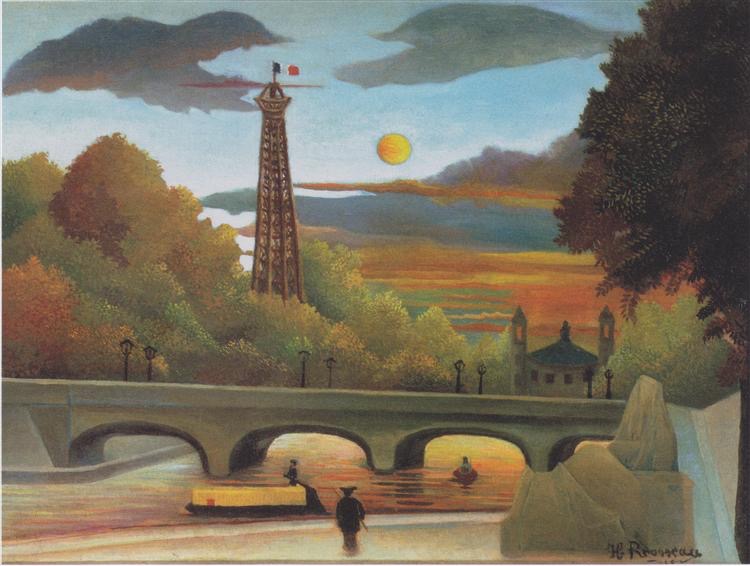
    The Seine and the Eiffel Tower in the Sunset by Henri Rousseau

    I started this blog in summer with the idea of “new season, new blog.” Now, I leave one full season behind and welcome another one here. I feel so grateful.

    Winds are getting breezier with each passing day. Water makes its presence more noticeable. In the fruit and vegetable aisles, colors have started to change. At coffee shops, I hear people saying more often: “We’re not really in the mood for something cold anymore.” And yes—a jacket over a striped blouse finally feels like a good idea.

    We left behind a long and—at least for me—very impactful summer. Every season has its own personality, yet everyone has a favorite. For me, it’s the early days of autumn and the last week of December. You can feel the transition: from hot to cool, from dry to wet, from vivid to brownish shades, from fruity to cinnamon notes in the air. 🧥☕️🌂🎐

    It’s incredible how quickly we adapt, even though only 24 hours separate the last day of August from the first day of September.

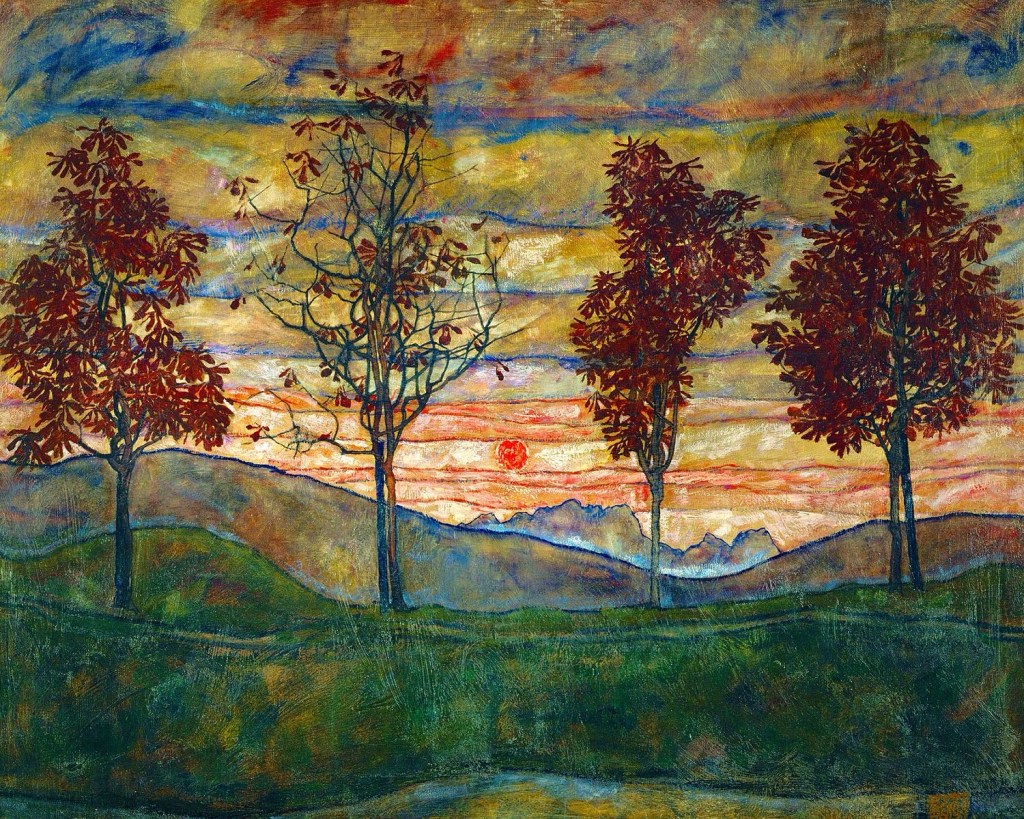
    Four Trees by Egon Schiele

    This summer was extremely hot, so now we know how precious it is to feel a little cold again. We had spring to prepare for summer, we had summer to prepare for what’s next. And now, we embrace autumn to get ready for—and enjoy—the winter.

    I love this harmony: trees shedding their leaves, pavements turning darker after gentle rains, the aroma of hot coffee, picking my favorite socks to add comfort to my home, and of course, waiting for the many ways pumpkin will appear on the table.

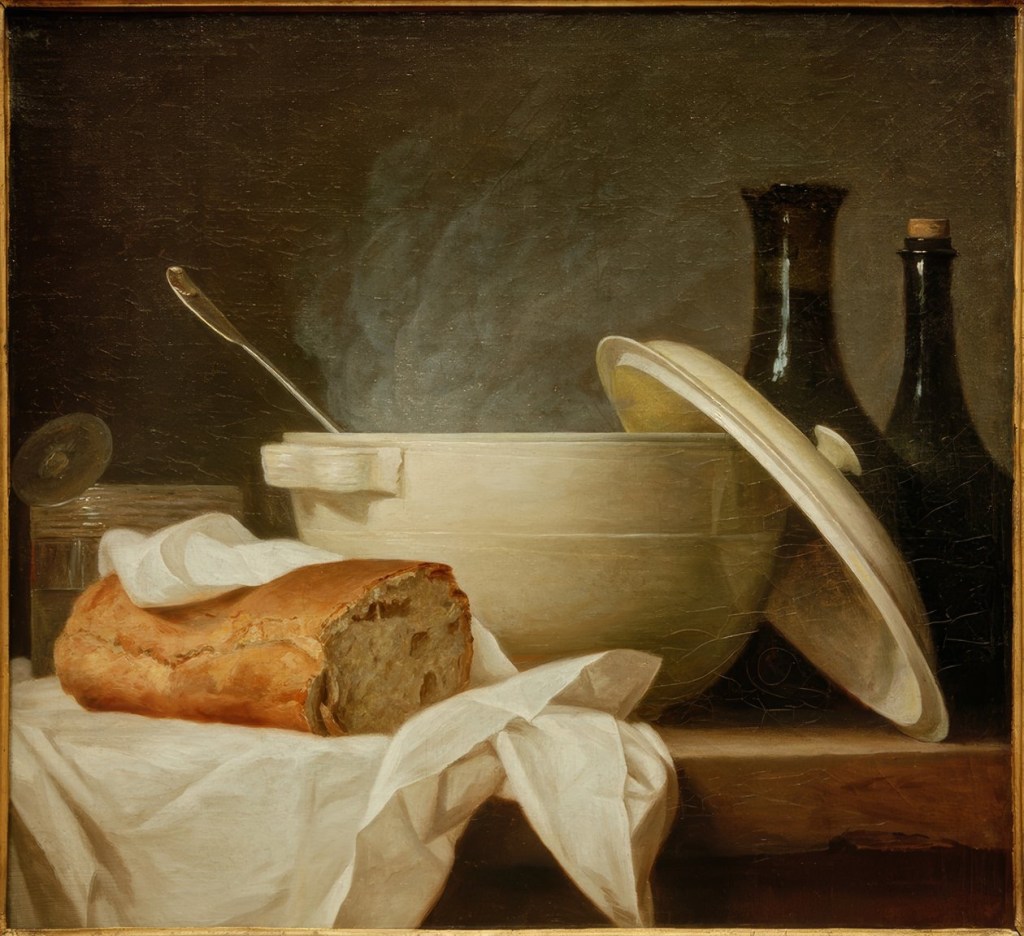
    White Soup Bowl by Anne Coster Vallayer

    I am deeply thankful: thankful for witnessing another transition in nature, thankful for the goosebumps a breeze leaves on my skin, thankful for teary eyes caused by strong winds, thankful for damp hair from a soft rain.

    Grateful for everything that makes me feel alive, human, and reminds me that I am also a biodegradable part of this whole ceremony.

    And while I embrace this poetic rhythm of nature, I also enjoy the simple, practical ways the seasons linger in our daily life.

    A side note: even though we leave summer behind, summer will live on in our fridges and jars. So, in a way, summer never truly ends. 🪷

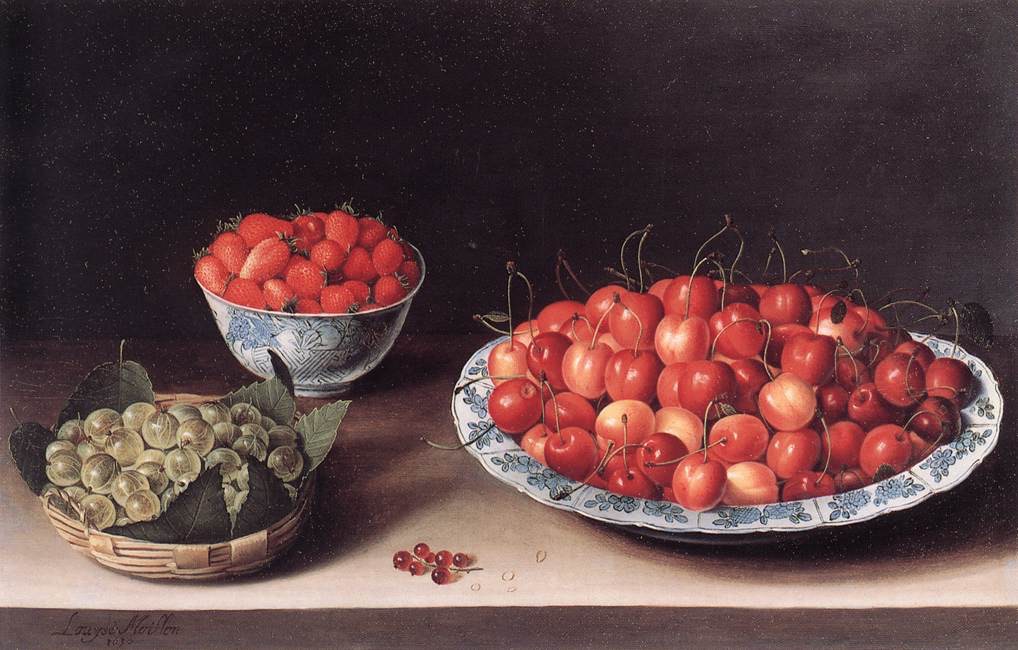
    Still Life with Cherries, Strawberries, and Gooseberries by Louise Moillon

    If you ever read this—how was your summer? How are the first weeks of autumn treating you? Share your favorite autumn ritual with me, I’d love to hear it!

    💌hello@betweeneverywhereandnowhere.com

    Leave a comment

    💌hello@betweeneverywhereandnowhere.com
  • What Do You Think of Etiquette?

    What Do You Think of Etiquette?

    Le Déjeuner des canotiers by Pierre-Auguste Renoir

    The term etiquette has been gaining popularity these days, especially on social media. But what do we actually know—or understand—about it?

    According to the Cambridge Dictionary, etiquette is “the set of rules or customs that control accepted behaviour in particular social groups or social situations.”

    We may not always notice it, yet we are all born into a world of etiquette. Do this, don’t do that, not here, only this way…These silent rules vary widely, but they help us navigate the necessities of society.

    Personally, I like to describe etiquette as “fancy boundaries that help us fit into the world required by the social contract.”

    At first, the very words rules or boundaries may trigger resistance. We tend to associate them with restriction. But in reality, these rules exist to make our lives easier—not harder.

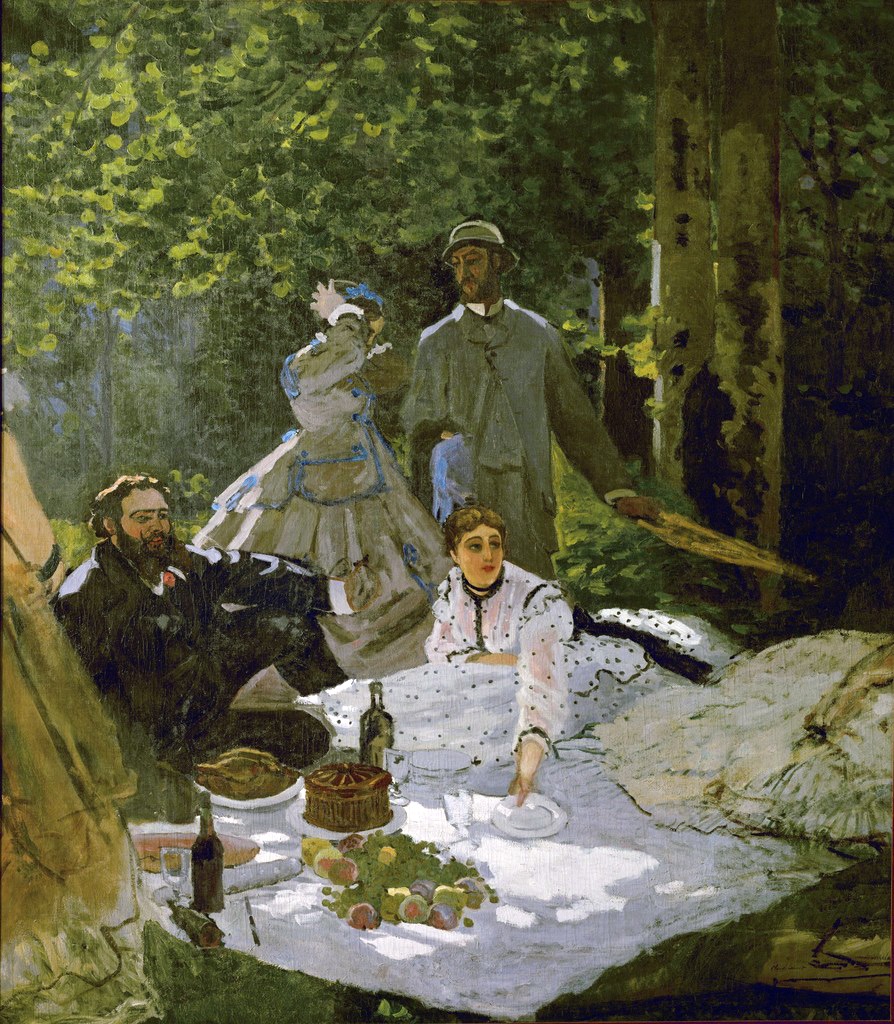
    Le Déjeuner sur l’herbe by  Claude Monet

    Every culture, every society, every city, every country has its own unique set of customs. In Japan, bowing is not just a greeting but a reflection of respect; in Türkiye, paying for a friend shows how deeply you embrace that friendship; in Denmark, following the rules and showing courtesy on bicycles reflects consideration for everyone on the street; while in France, table manners are a language of their own. We are expected not only to follow these customs, but also to respect and represent them. Etiquette is the perfect tool for this.

    Recently, I’ve been reading Crushing Etiquette by Miera Rao and Philip Sykes. What struck me most was the idea that etiquette isn’t just about what happens during an event—it starts the very moment we begin preparing, continues in how we engage, and even lingers in the way we leave. That sense of wholeness truly fascinated me.

    For me, etiquette is an investment in ourselves. But do we really think of it that way? Today, especially online, etiquette is often reduced to slogans like “dress like a lady,” “project silent wealth,” or “look like a true gentleman.” But it is so much more than styled hair or a neatly trimmed beard.

    It is about showing respect to a table by behaving as it requires. It is about easing the work of a host without making them uncomfortable. It is about smoothing daily life and supporting one another. Waiting patiently in line for the metro is etiquette—just as much as holding your wine glass by the stem, which keeps your wine at the right temperature.

    Of course, not every aspect of etiquette ages well. Some traditions may feel outdated, even irrelevant. But that is natural: etiquette is shaped by the needs of societies at particular moments. It evolves so that our lives become more ordinary, more compatible, and hopefully, more graceful. The important thing is not to hollow out its meaning, but to let it grow with us.

    Whether we are aware of it or not, we are all etiquette critics in our own way. In a business meeting, if we see someone with messy hair and creased clothes, what impression do we form? Or when someone stands too close in a queue, ignoring personal space—what does that say about them? Aren’t they acting against the etiquette we silently agree to uphold?

    Femme au jardin by Claude Monet

    Never underestimate the power of your daily habits. It is not just the business meeting, not just the holiday we enjoy, not just the coffee we drink, and not just the dinner that satisfies our hunger.

    I remember once attending an Independence Day concert organized by a foreign country in my own city. I hadn’t prepared properly and didn’t pay much attention beforehand, and as a result, I felt I was showing disrespect by not following the crowd’s cues. That moment reminded me that when everything is done with awareness and consideration, no negative feelings arise—etiquette simply allows life to flow more harmoniously.

    I also remember holding the door for a stranger, and their smile reminded me how small gestures can ripple through a day.

    As Oscar Wilde once said:
    “The man who can dominate a London dinner-table can dominate the world.”

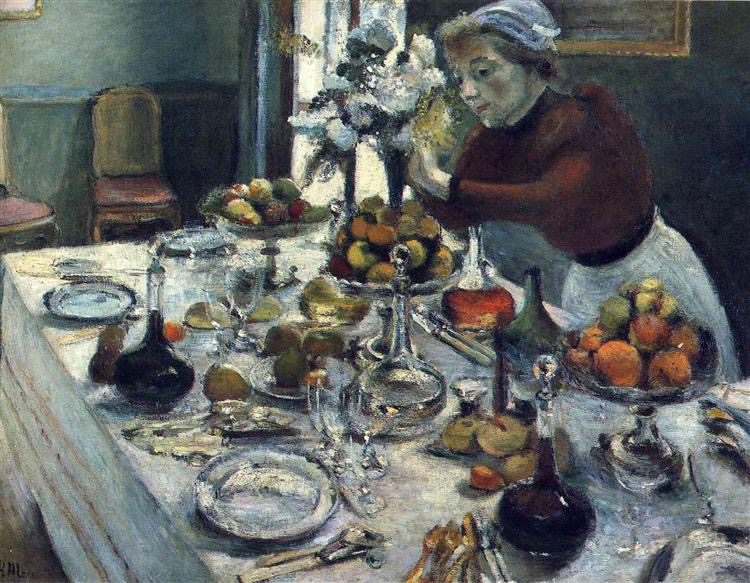
    The dinner table by Henri Matisse

    Nowadays, we should embrace everything that makes our lives easier and more harmonious—and I truly believe etiquette is one of them. No matter where we are or what we are doing, carrying ourselves with dignity is always worthwhile. Etiquette may seem small, even invisible at times, but it shapes the way we move through life—and the way life moves around us.

    So next time you pause in line, offer a smile, or hold your wine glass by the stem, remember: these little gestures matter. They are not just rules to follow—they are opportunities to live more gracefully.

    Which small gesture of etiquette will you practice today, and how will it change your interactions?

    💌hello@betweeneverywhereandnowhere.com

    You can follow me on:

    Leave a comment

    💌hello@betweeneverywhereandnowhere.com

  • How I Realized I Was a Workaholic

    How I Realized I Was a Workaholic

    Vilhelm Hammershøi, Les quatre pièces

    One delay. One pause. One cup of coffee. That’s how it began.

    I started actively working shortly after graduation. I loved being productive in my field, seeing the results, and earning money for what I truly enjoyed doing. When the Covid pandemic broke out, I somehow turned that crisis into an advantage, as I was working in the field of medicine and medical devices. Before long, I realized I was becoming “successful.” The more projects I submitted, the more “known” I became. Soon, job offers started arriving—project-based, part-time, everything.

    Gradually, I became a person whose brain couldn’t grasp the concept of “enough.” I just kept eating and eating, only my food was work. My schedule grew so tight that I was spending entire days without sleep just to keep up with deadlines. The projects were always delivered on time, but I was never sleeping on time. The world was in an economic crisis, yet I was earning well, especially compared to my peers. That was deeply satisfying. It felt as if I was taking my life under guarantee—or maybe it was just the routine taking control of me.

    Then one day, one of my projects was delayed. My teammate sent me an email: “The project was postponed this week. Next week we’ll discuss the details and the new project. Sincerely.” That project had been swallowing my entire afternoon and night. Suddenly, that time was mine. I didn’t have to rush. I didn’t feel the invisible pressure I had been carrying for so long.

    And then it happened: I realized I wanted coffee. I walked to the kitchen, started brewing, and froze. I couldn’t remember the last time I had made myself coffee without feeling stressed or trapped. That cup was a turning point, an illumination. I wasn’t going with the flow of work—I was drowning in a tsunami I had chosen. And it was not easy to admit to myself that I was ruining my young adulthood like this, especially after years of being applauded for all my professional efforts.

    I was becoming experience-rich and financially rich, but livelihood-poor and timely-poor. That evening, I looked at the sunset, and for the first time in a long while, I felt human. And it all began with just one project being postponed.

    When we talk about addiction, people usually think of drugs, alcohol, shopping, maybe hoarding. But anything taken beyond its natural limit is poison. For me, that poison was work. It was my addiction. After this realization, I decided I needed to turn back into a normal human being. I wasn’t saving the world—I was just ruining mine.

    So, in a “this is the first day of the rest of my life” kind of mood, I booked a trip along the coasts of my country. During that trip, I also started watching movies (I’d never had much of a movie culture, unfortunately). To my surprise, I realized I felt overly empathetic toward robotic, workaholic characters—and I always found excuses for their mechanical behavior.

    By constantly working and selling my labor, I was actually exploiting my humane side. I had turned myself into a machine: calculating, planning, organizing, submitting. At some point, I even noticed something more subtle: as a language worker, I was so consumed by my projects that I had become fluent only in professional terminology—yet I struggled to find words in daily conversations. Work hadn’t just claimed my time; it had started eroding my language.

    When I returned, I cut down my work schedule. I started working normal hours, like most people. And slowly, I began rediscovering what I truly loved doing. I even started building a reading habit again. But that wasn’t all. Now it was time for my body to react to what I had put it through for years.

    Since I wasn’t used to sleeping, my body struggled to adjust. Even months after switching to normal hours, I tossed and turned in bed for nights, unable to sleep more than a few hours. Still, I didn’t give up. I told myself: “I found a way to ruin it; now I’ll find a way to fix it.”

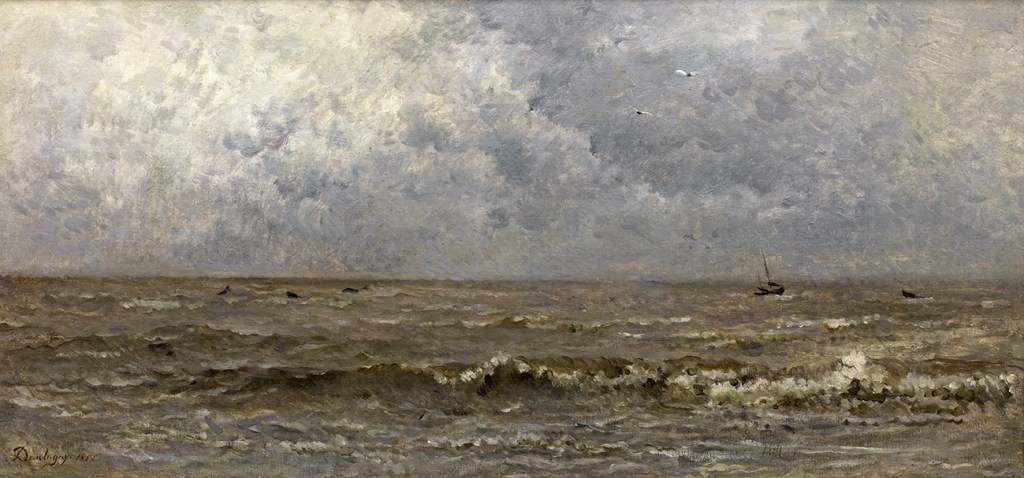
    Charles François Daubigny, La Mer, Temps Gris

    And you know what? I ended up spending almost half of the money I had earned—the money that had made me feel so “secure”—on healing from the damage of working too much. Whenever I put on my glasses, I’m reminded not just of my sight, but of what I let this addiction do to me.

    We are not just what we “provide” at work. We are also what we feel, what we love, and how we live. Sometimes, it’s worth pausing to ask ourselves: what are we doing, where are we going, and with whom are we spending our most valuable asset—time? Because going with the flow isn’t always safe. If we don’t stop to notice, that “flow” might carry us somewhere we never meant to be.

    💌hello@betweeneverywhereandnowhere.com
    Leave a comment

    💌hello@betweeneverywhereandnowhere.com
  • How to Be a Tourist in Your Own City

    How to Be a Tourist in Your Own City

    Les Grands Boulevards by Pierre-Auguste Renoir

    Can’t take time off? Exams, work, health, or budget holding you back? Or maybe you simply don’t feel like leaving the city. That’s okay. There’s always a way to reset your mind.

    What if you didn’t need to go far at all? Sometimes, all it takes is to shift your mindset—from a local to a curious tourist. And then? Just hit the road.

    As someone who grew up in a coastal Mediterranean city but is currently stuck in a continental climate because of a busy work schedule, I’ve learned a few tricks to keep my sanity intact when staying in one place feels a little too much.

    First- If you were a tourist, what would be your priority?

    Trick your brain and have some fun with your life. From this moment on, you are a tourist. Think like a first-time visitor—what would you look for? Where would you go first? What would surprise you? Which feeling would you like to get from your holiday?

    Promenade near Argenteuil by Claude Monet

    Leave your “local” identity at home and wear your shiny new “tourist” identity. You can make a list if you like planning routes, or you can hop on a random bus without checking its destination or simply start walking without a plan. This is your  tourist experience—do it your way.

    Second – Pace yourself—don’t consume everything at once.

    This part is important. How long would you like your “holiday” to last? Give your body and mind the space to feel excitement and joy.

    Summertime by Mary Cassatt

    I suggest planning different kinds of days—some for cultural activities, some for nature, and others for simply “living like a local.” Get into the true holiday mindset. Everything starts with perspective—never forget that.

    Third – Have some walks enjoying the roads, people around you.

    Boulevard Montmartre, morning by Camille Pissarro

    Take a walk, not just to move your feet but to see the roads and the people around you. Give yourself some time to slip into another personality and look at your environment as if you’ve just arrived. Notice the buildings. See what animals people choose to keep as pets. Observe their clothing — does it all blend into a certain harmony, or clash in unexpected ways? Do people rush? Do animals seem safe here? Do faces look happy? What feeling does this place give off? Even the shop windows tell a story: what do they choose to display? At some point, it may hit you — a small, quiet realization about the life you’re living here.

    P.S.: Walking isn’t just a physical act — it’s the art of noticing, of connecting the dots between where you are and what surrounds you. Even if you can’t physically walk, the act of ‘walking’ can mean navigating the world through observation, reflection, and awareness. You might see the cracks in the pavement, the forgotten bench, the neighbor’s plant that bloomed overnight. These small discoveries give you a sense of place — and of yourself within it.

    Fourth – Visit some museum, sightseeing places.

    Édouard Manet – View of the 1867 Exposition Universelle

    Even if you’ve been there before, go again—with different eyes. This time, read the plaques, observe the visitors, and let the stories sink in. One way or another, we all make a living in the place we currently inhabit. Visiting a museum is a way to honor the generations, civilizations, and heroes who made it possible for us to live here today. Strangely, many of us know more about faraway cultures and works of art than about our own heritage. Perhaps it’s because of the quiet comfort of thinking, “I have plenty of time to see it; I live here, after all.”

    Fifth – Blend in with other tourists.

    Rue de Paris, temps de pluie by Gustave Caillebotte

    Sometimes the best way to see your city with fresh eyes is to borrow the perspective of actual visitors. Get around other tourists—watch where they go, what they photograph, what excites them about your city. Why did they choose this place for their holiday? What stories do they tell when they send postcards or post online?

    You might be surprised to notice attractions you’ve long ignored or details you’ve taken for granted. Tourists often see magic where locals only see routine. By blending in—even just for an hour—you give yourself the chance to rediscover your city’s charm through their lens.

    Sixth – Slow down with a drink- coffee, beer, or whatever you love.

    At the Cafe by Édouard Manet

    Don’t rush. Don’t scroll. Just sip and observe. Notice the flavor, the atmosphere, the people around you. If you’re a coffee lover, pay attention to which beans, brewing styles, or even types of milk are popular in your city. If beer is your thing, see what local breweries or pubs offer. Treat it as part of your “tourist identity”—evaluating not just the drink but also the culture that comes with it. And of course, in most cases, “you have better at home.” That won’t be surprising at all. What matters is giving yourself permission to pause, to taste, and to notice.

    Seventh – Explore local bookstores and kiosks.

    Der Bücherwurm by Carl Spitzweg

    Step into a bookstore or a newspaper stand, not just to buy something but to observe. What are the bestsellers right now? Which genres take the front row, and which ones are pushed aside? Are there big discounts on certain categories? From which cultures or languages are books being translated into your own? These little details tell you what stories and voices are shaping your city at this very moment.


    And don’t skip the kiosks—look at the headlines. What are the “big” news items today? How are they framed and described in your local style and language? Do they match what you experience in daily life, or what you hear and read online? Sometimes, the differences can be as revealing as the similarities. Maybe you’ll realize there are narratives, concerns, or trends you hadn’t noticed before. It’s like holding up a mirror to your own culture. And reality.

    Eighth – Don’t forget to look at the sky.

    Starry Night Over the Rhone by Vincent Van Gogh

    It sounds simple, almost silly, but when was the last time you really paid attention to the sky above your city? The way the light falls, the way the clouds move, the colors at sunset—these are part of your place’s identity too.

    Our equatorial position matters: closer to the equator, the sky feels flatter, the sun rises and sets almost in a straight line. The further north you go, the sky curves more like a dome, stars and constellations moving in circular paths. It’s like the atmosphere itself is drawing a map of where you stand on Earth.


    So take a moment. Look up. Notice the patterns, the shades, the rhythm of the sky where you are. Sometimes that alone is enough to remind you: you are already traveling, just in your own coordinates.

    If it feels flat, I let myself flow with that flatness; if it feels round, I simply enjoy being held inside that vast dome. 🌬️

    Ninth – Get involved in the parts of your city for which you are truly “a tourist”.

    La Grenouillère by Pierre-Auguste Renoir

    Take this opportunity to explore areas or experiences that you wouldn’t usually explore. Which feels more unfamiliar or unexpected to you: attending a rock concert, an artsy workshop, or observing a religious ritual you don’t participate in? By stepping into these moments, you will encounter your own “inner tourist,” the part of you that sees your everyday surroundings with fresh, curious eyes.

    Tenth – Feel however you like, do not force yourself to be the “perfect tourist”.

    We’re all human, and we all need time off at some point—especially when everyone around us seems to be taking a break. Even if you feel like your mind doesn’t need it, trust me, your body probably does.

    Summer Night by Harald Oskar Sohlberg

    Everything I’ve shared in this post— “do this, look at that, go here, try that”—are just ideas, not obligations. Please don’t neglect yourself in the process of trying to do everything “right.” What matters is finding ways, big or small, to stay connected, calm, and present.

    If for you, a holiday simply means lying on your bed and staring at the ceiling, then that’s your absolute alternative holiday plan. If it means long walks, museum visits, or sipping a slow coffee, that’s your absolute alternative holiday plan too. What matters is that it feels right for you.

    There’s nothing wrong with wanting more—I do too. But learning to honor our limits is its own kind of strength. If you can’t go on holiday right now, don’t close the door on your spirit. Keep it open. Stay curious. Let yourself feel like a traveler, even if it’s just a few streets away from home.

    💌hello@betweeneverywhereandnowhere.com
    Leave a comment

    💌hello@betweeneverywhereandnowhere.com

  • You Won’t Live for a Thousand Years, So Why Carry the Anxiety of a Thousand?

    You Won’t Live for a Thousand Years, So Why Carry the Anxiety of a Thousand?

    Nighthawks by Edward Hopper (1942) 

    Anxiety. Overthinking. Worry. Depression. “Breaking the chain.”
    Words we hear more often than our own names these days.

    I see so many of us—me included—caught in the tangle of inner noise, pressure, and quiet despair.
    But you, modern human, do you really have the luxury of carrying all that emotional weight while you’re already haunted by the fear that time is slipping through your fingers?

    We are not sterile beings.
    We’ve been shaped by our surroundings, molded by expectations, and born into inherited concepts long before we had the chance to question them. Now, those concepts rule us silently- disguised as goals, values, and identities.

    But what makes us forget how temporary our existence truly is?
    Yes, our actions might outlive us—our creations, our words, our love.
    But if we can’t witness the ripple, does it really offer us peace in the present moment?

    Sometimes, I wonder whether a more Aurelian approach—stoic, detached, mindful—might actually serve us better.

    We lose sight of who we are under the pressure of modern ideals:
    Deadlines. Filtered perfection. Curated selves.
    We’re all trying to become the best version of ourselves. But let’s ask: best by whose definition?

    Are we building a self that’s truly ours—or merely mimicking a digital persona we believe society will applaud?

    Maybe we chase aesthetics, attend the “right” events, or even rebel in ways that still aim for uniqueness rather than authenticity. While I write this, I ask myself: Is it that deep?
    Maybe not.
    But this is how I think—messy, layered, searching.

    And no, this isn’t criticism for the sake of critique (though I admit, criticism is my hobby). It’s an attempt to understand my own urges too.

    So here’s the question I gently place on the table:
    How do we truly live a life we intend—not perform, not survive, but intend?

    And yes— “break the chain.”
    Another concept we all keep hearing.

    But before you try to shatter it, remember:

    You didn’t forge that chain.
    You are not defined by it.
    You are not all about that “chain.”

    Give yourself time.
    Maybe your awareness is the first step—and that’s enough for now.
    You don’t have to leap into liberation overnight.
    Maybe you can simply step away without smashing it to pieces.
    That chain is not your identity.
    You may choose to learn what you can, put it aside, and walk away.

    Or rather than seeing that chain as a burden, maybe you can turn it into an accessory that goes well with your outfit.
    The choice is yours.

    Let the anxiety simmer down.
    Let your logic—not a temporary need to be heroic—guide your next move.
    Perhaps you’ll never need to “break” anything.
    Perhaps liberation is simply knowing this chain isn’t yours to carry.

    Each day, we perform a life: successful, productive, composed.
    But we rarely stop to ask:

    What do I truly need?
    Who am I beneath all this noise?

    Take your time.
    Breathe deeply.
    Be gentle with yourself.

    Sometimes, we just want to be understood. This need for resonance, this longing to feel less alone in our inner storms, can lead us into many different situations.

    Ironically, those who try to support us sometimes end up binding us tighter with their version of what’s right.
    They offer comfort, yes—but sometimes at the cost of our autonomy.
    They mean well, but they deepen the maze.

    Perhaps instead of asking “What do I want?” or “What do I need?”, we should turn to deeper questions like:

    “What might God mean by this riddle?”
    “What is the purpose of my existence?”

    So here is what I’ve come to believe among my messy thoughts and writing:

    Live your life at your own pace.
    Be a decent human.
    Stay gently honest with yourself.
    Don’t overlook your own necessities.

    And if you feel like you’ve messed things up—it’s okay. Really.
    Let go of blame—of others, the past, yourself.
    I know I’m neither the first nor the last person to say this, but:
    what’s done is done.

    What matters now is this:
    Cultivate your inner world.
    Live what’s left of this beautifully uncertain journey as your own.
    Not as a reaction.
    Not as a duty.
    But as a quiet reclaiming of your one wild and temporary life.

    Do not let uneasiness in your soul find a form as a pathological problem in your body or mind.

    As we navigate the tangled emotions and endless questions of our existence, it helps to remember the simple yet powerful passions that have guided some of the greatest minds before us. Bertrand Russell once wrote:

    “Three passions, simple but overwhelmingly strong, have governed my life:
    the longing for love,
    the search for knowledge,
    and unbearable pity for the suffering of mankind.
    These passions, like great winds, have blown me hither and thither,
    in a wayward course, over a great ocean of anguish, reaching to the very verge of despair.”

    Like Russell, we too are carried by deep, sometimes turbulent currents—passions that define us beyond our anxieties and fears. And yet, our time here is finite. We won’t live for a thousand years. So why carry the anxiety of a thousand?

    Perhaps liberation isn’t about breaking chains in a dramatic burst, but about gently choosing what burdens to hold and for how long. Carry only what is truly yours.

    Again, why carry the anxiety of a thousand?

    Impression, Sunrise (1872) by Claude Monet

    💌hello@betweeneverywhereandnowhere.com

    Leave a comment

    💌hello@betweeneverywhereandnowhere.com
  • My Motherhood Is Not for Sale

    My Motherhood Is Not for Sale

    Artwork: Mother and Child (A Goodnight Hug) by Mary Cassatt

    Why financial incentives aren’t enough for a generation with deeper concerns

    Lately, news headlines, political debates, and public reports seem obsessed with one topic: declining birth rates. Governments express concern that shrinking younger populations can no longer support aging pensioners. In response, they’ve begun offering solutions—most of them financial.

    Tax breaks. Cash handouts. Free childcare. Lifelong exemptions.
    The message is clear: “Have more babies, and we’ll make it worth your while.”

    I get it. Parenting is expensive. These offers might help some.
    But as a young adult woman, I can’t help but ask:
    Is that all it takes? Just money?
    Because for me, finances aren’t even my first concern.

    More Than an Economic Transaction

    Having a child is not a transaction—it’s a lifelong responsibility.
    And I believe that responsibility begins long before birth.
    It means being willing to prioritize someone else’s life over your own. It means raising a human with love, presence, patience, and values.

    I don’t want to be a parent who kicks their child out the moment they turn legal age. I don’t want to raise someone into a world where I can’t offer at least the basics of security, dignity, and belonging. I want to raise an individual with as few what-ifs as possible.

    And no tax cut can guarantee that.

    What Kind of World Are We Raising Children Into?

    These days, I worry about more than just baby formula and school fees.
    What if my child is harassed on the street, or silenced in a classroom?
    Will they have access to clean food?
    Will they be free to travel, to think, to become whoever they are meant to be?

    What good is financial support if the world they’re born into feels hostile, polluted, or unsafe?

    Also, Let’s Talk About Fairness

    By giving benefits only to women who choose motherhood, what message are we sending to those who deliberately choose a child-free life?

    Will this widen the gap between women in the workplace?
    Will employers exploit these policies, benefiting from tax loopholes while pressuring women on both ends? 

    And what about men? Women don’t conceive by simply germinating on their own. Ignoring a future father’s role and struggle is just another form of injustice, and it reinforces the stigma that raising children is solely a woman’s duty.

    It’s not that I’m against support. I’m against pretending that support should be conditional on reproduction.

    If There’s a Way to Break It, Then There’s a Way to Fix It

    If we’ve found ways to turn people into numbers, to measure women by wombs, and to frame parenting as a productivity issue, then surely, we can also find ways to restore balance.

    Give us safety.
    Give us access to health and education.
    Give us clean food, fair politics, and breathable skies.
    Let us build lives worth living—with or without children.

    And only then—only then—ask us about birth rates.

    Because some of us need more than money to bring a new life into this world.

    💌hello@betweeneverywhereandnowhere.com
    Leave a comment

    💌hello@betweeneverywhereandnowhere.com

  • Your Language Learning Journey is More than Memorizing

    Your Language Learning Journey is More than Memorizing

    Photo by Emily Levine on Unsplash

    When you first start learning a language, the easiest part often feels like memorizing vocabulary or grammar rules. Flashcards, drills, lists—it’s straightforward, even satisfying to tick off those boxes. But that’s only the beginning.

    The real challenge lies beyond memorization. It’s about willpower, patience, and the deliberate effort to make that language part of your daily life—your thoughts, your identity, your way of seeing the world.

    Whether you want to reach native-like proficiency or simply shed the feeling of being an outsider to that language, it doesn’t matter. Every learning process requires its own respect and patience.

    To truly succeed in a language, you need to go deeper than words. You must invite it in, let it reshape your mindset, and live with it—not just learn it. That process isn’t quick or easy, but it’s the only way to move from being an outsider to feeling at home in a new language.

    As a translator, I’ve learned that language becomes alive when it stops being just something you study and starts becoming something you live. In this post, I’ll share how I approach this ongoing journey of internalizing a language, and I hope it helps you find your own path, too.

    First things first: Your Mother Tongue is Your Reference — Don’t Be Afraid to Speak

    When learning a new language, many of us hesitate to speak because we fear making mistakes. But let me ask you — are you flawless even in your mother tongue? We all make errors and stumble over words in our native language; it’s part of being human. So, it’s completely normal to have imperfections when you’re learning a new language. What truly matters is your effort, respect for the language, and your intention to express yourself clearly and sincerely. Speaking—even imperfectly—is one of the best ways to grow.

    Second – Think of the Language Like a Puzzle

    Learning a language is a bit like solving a puzzle. Every language has its own grammar rules and sentence structures, and your job is to piece them together. Start by creating mental “frames” — for example, one for positive sentences, one for negatives, and one for questions. 

    An example of verb sentences in the present tense

    Once you have these basic frames in place, all that’s left is to fill in the right words in the right spots. It’s really as simple as that. With practice, building sentences in your target language will become more natural and intuitive. And don’t forget, like any puzzle, the more you engage with the pieces, the clearer the picture becomes.

    Third – Have a Magazine or Newspaper Handy at All Times

    Magazines and newspapers are some of your best allies in this journey. Learning a language is not just about words — it’s about understanding the way your target community thinks and communicates. Following current affairs, noticing the words they use to describe events, and observing how they pair stories with images will help you absorb not just the language but the culture behind it. It doesn’t matter if your source is printed or digital — today’s online versions are just as valuable, and the digital style itself is part of the culture you’re trying to embrace.

    Fourth – Balance Your Skills

    During this journey, the most important aspect is creating a balance among your proficiencies. You shouldn’t forget that along with reading, writing, speaking, and listening are your holy trinity too.

    As Arthur Schopenhauer in Essays and Aphorisms says:

    ‘… So, it comes about that if anyone spends almost the whole day in reading, and by way of relaxation devotes the intervals to some thoughtless pastime, he gradually loses the capacity for thinking; just as the man who always rides, at last forgets how to walk.’

    Do no let your brain get numb with only one outweighed skill. Don’t just become a reader of the language. Become a speaker, a listener, and a thinker in it too. You’ll love every step of this journey.

    Fifth – Catch Your Own Pace

    No, it is never too slow or too fast if it feels right for you. In this journey, the only valid reference is you.

    Some days, you may not feel like learning anything. And sometimes, missing a few days of practice can make you feel like giving up altogether. But don’t let that voice win. Even if you learn a word a day, form just one sentence, or listen to just one phrase a day, it will add up to 365 new words, sentences, and maybe ideas by the end of the day. 

    Small steps will take you there. Never underestimate the quiet power of consistency no matter big or little.

    Sixth – Experience Your Moment with the Language You Learn

    Whatever situation you are in, try to describe or talk about your moment with simple words and sentence structure you know. If the appropriate words do not come to your mind, try to explain that “word” with other simple words. The more you practice, the more complex phrases you will handle. There is no right or wrong in this. Just keep going. The fluency comes with trust in your own voice.

    Seventh – Listen to Radio

    Radios, especially via mobile applications, are best and easiest way to keep you up to date in your target culture. Here, you also have possibility to hear the voices of your target culture. Try to imagine yourself as a guest in one of the studios and answer some personal questions. It is so fun I promise!

    My current favorite is Sommarprat 2025 programme on Sveriges Radio!

    Eight – Consider Having a Diary

    If you think you aren’t proficient in writing, keep a diary. I even recommend going back after a while to revisit your earlier entries. You’ll be surprised at how far you’ve come, both personally and linguistically. 

    Ninth – Practice, Practice and More Practice

    If you need more practice in speaking, you may find language workshops at your level or simply make practice via some language applications like Busuu – not an ad, just a helpful tool I’ve used myself. Verbal practices are so important in terms of shedding out the language shyness. In addition to that, consider engaging with community-based platforms where you can write reviews, leave comments, or join discussions — like sports forums, skincare review apps, or interest-based websites. These spaces allow you to practice in context and interact with real people around real topics. That’s how language becomes more than a skill, it becomes part of your daily rhythm.

    Just some of my applications. There is no ending in learning.

    Tenth – Accept That This Will Take a While

    Like everything meaningful, language learning is a whole process. It is a lifelong skill and a rich process that goes far beyond memorizing some grammar rules or building up some vocabulary. It is not abnormal for you to take some time to be proficient in a language. Learning a language requires also being proficient in that culture and society too. In these times where human capabilities are deeply replaced by computers, it is a great act of staying faithful to your own mind.

    If you have come this far, wish you luck in your journey! If you have any suggestions or questions, please do not hesitate to share. 💜

    💌hello@betweeneverywhereandnowhere.com
    Leave a comment

    💌hello@betweeneverywhereandnowhere.com
  • IT IS A LOSS OF LIFE WHEN A TREE BURNS

    IT IS A LOSS OF LIFE WHEN A TREE BURNS

    Header via Pexel

    I come from one of the beautiful coastal cities along the Mediterranean. And I’ve always felt lucky for it. When I was a kid, my family taught me, almost religiously, to respect nature.

    “Don’t hurt the tree while climbing.”
    “Be gentle while picking the fruit.”
    “Don’t pluck flowers just because they look nice.”
    “Watch where you step. Don’t harm the ants.”
    “Never kill a bee.”

    These were the sentences I grew up hearing repeatedly, and they shaped the way I looked at the world around me.

    Lately, wildfires have become a terrifying reality across different parts of the world. And this time, they came closer to home. In Türkiye, over 600 wildfires were reported in a single city in just one week. Many are still not under control.

    These fires hurt more than landscapes. They erase memories, homes, livelihoods, even heritage. They ache somewhere deep in me.


    Because while authorities say, “Thankfully, there has been no loss of life,” I ask myself:
    What do we count as life?
    Isn’t a tree life? Isn’t a burning animal, a wounded bird that will no longer fly, a panicked fox running for shelter – life?

    When a tree burns, a life is lost.
    Nature is not something that exists solely to serve or entertain humans. It is not a background. It breathes. It shelters. It grieves.

    Sometimes, I think we’ve become too used to viewing nature through the lens of convenience. But damaging nature – whether intentionally or through ignorance – is not a small matter. In some places, war requires no bullets. Sometimes, it starts with fire and silence.

    Knowingly or not, those who destroy nature betray something much bigger than laws or borders. They betray life itself. They betray us all. Burning trees shouldn’t be dismissed as less tragic than human loss. Life takes many forms.

    Yes, sometimes things happen beyond our control. But that doesn’t mean we should stop watching, caring, or raising our voices.

    We must keep our eyes on nature. We must teach those around us, especially the little ones, to grow up with respect for the world they live in.

    As governments grow more indifferent each passing year, our personal vigilance becomes even more vital.

    In an age where machines are getting smarter and humans often seem to be forgetting their roots, our awareness matters more than ever.

    It’s not only about planting trees. It’s about planting values. We must be part of an education that goes beyond classrooms and textbooks.

    💌hello@betweeneverywhereandnowhere.com
    Leave a comment

    💌hello@betweeneverywhereandnowhere.com