Category: On Self

  • IT IS A LOSS OF LIFE WHEN A TREE BURNS

    IT IS A LOSS OF LIFE WHEN A TREE BURNS

    I come from one of the beautiful coastal cities along the Mediterranean. And I’ve always felt lucky for it. When I was a kid, my family taught me, almost religiously, to respect nature.

    “Don’t hurt the tree while climbing.”
    “Be gentle while picking the fruit.”
    “Don’t pluck flowers just because they look nice.”
    “Watch where you step. Don’t harm the ants.”
    “Never kill a bee.”

    These were the sentences I grew up hearing repeatedly, and they shaped the way I looked at the world around me.

    Lately, wildfires have become a terrifying reality across different parts of the world. And this time, they came closer to home. In Türkiye, over 600 wildfires were reported in a single city in just one week. Many are still not under control.

    These fires hurt more than landscapes. They erase memories, homes, livelihoods, even heritage. They ache somewhere deep in me.


    Because while authorities say, “Thankfully, there has been no loss of life,” I ask myself:
    What do we count as life?
    Isn’t a tree life? Isn’t a burning animal, a wounded bird that will no longer fly, a panicked fox running for shelter – life?

    When a tree burns, a life is lost.
    Nature is not something that exists solely to serve or entertain humans. It is not a background. It breathes. It shelters. It grieves.

    Sometimes, I think we’ve become too used to viewing nature through the lens of convenience. But damaging nature – whether intentionally or through ignorance – is not a small matter. In some places, war requires no bullets. Sometimes, it starts with fire and silence.

    Knowingly or not, those who destroy nature betray something much bigger than laws or borders. They betray life itself. They betray us all. Burning trees shouldn’t be dismissed as less tragic than human loss. Life takes many forms.

    Yes, sometimes things happen beyond our control. But that doesn’t mean we should stop watching, caring, or raising our voices.

    We must keep our eyes on nature. We must teach those around us, especially the little ones, to grow up with respect for the world they live in.

    As governments grow more indifferent each passing year, our personal vigilance becomes even more vital.

    In an age where machines are getting smarter and humans often seem to be forgetting their roots, our awareness matters more than ever.

    It’s not only about planting trees. It’s about planting values. We must be part of an education that goes beyond classrooms and textbooks.

    Header via Pexel

    💌hello@betweeneverywhereandnowhere.com
    Leave a comment

  • Staying Human In These Days

    Staying Human In These Days

    A lot has been happening in the world of politics these days. And it is always us – ordinary people, citizens, commoners, whatever name you give it – who end up carrying the burden of it all.

    Although the name of my blog is Between Everywhere and Nowhere, my country currently feels stuck in the Middle of a Politically Charged Everywhere. So, I didn’t want to scroll past current affairs this week.

    You’ve probably heard the saying: ‘Hard times create stronger people.

    I’d rather see this time as an opportunity for us to become truer humans. Not just stronger, not just survivors, but simply and fully human.

    But what is a human being, anyway? The Encyclopaedia Britannica defines us as ‘culture-bearing primates.’ I like that definition. I’d also add: a culture-bearing primate with free will.

    These days, we’re constantly bombarded with negativity. And no, I’m not saying it’s exaggerated. 

    Especially for us young adults, this ‘new world’ feels like a place where we work endlessly just to make it through another month. The future looks blurry. Sometimes, just having one meal a day feels like a blessing. And this harsh reality is what those in power expect us to normalize.

    Yet, through our virtual screens, we continue to witness each other’s lives, no matter where we’re from.

    One way or another, we’re all human, and we’re all in the same boat, even if the journey is different for each of us.

    But it’s easy to forget that. When you have no face, voice or name – when you’re just an anonymous user – it becomes easier for others to hate and judge you.

    Still, I don’t recommend hatred. It’s a very heavy, invasive feeling. It sits in your chest and grows like a weed. And it poisons the way we think. It disconnects us.

    These times offer us rare opportunities to prove our humanity, not through grand acts of philanthropy, but simply by staying close to our nature.

    This doesn’t mean acting on our instincts blindly. It means remembering that we’re primates with free will and that we can choose: not to join the noise, not to dehumanize others, and not to give up.

    While we shouldn’t forget our instincts – our need for safety, connection and survival – we must also not switch off the part that makes us truly human: the ability to pause, to reflect, and to act with intention.

    As Schopenhauer quotes from Voltaire in The Wisdom of Life

    ‘We have only two days to live; it is not worth our while to spend them in cringing to contemptible rascals.’

    They say hard times create strong people. I believe hard times also reveal real people, those who choose dignity over indifference.

    Pause before judging. Evaluate before embracing. Question before believing. Be determined not to become a prey to manipulative propaganda. Nurture logical tolerance and water the roots of your human side.

    We don’t need to save the world to stay human. But we can refuse to let it take our humanity away.

    And that, I truly believe, is what really matters.

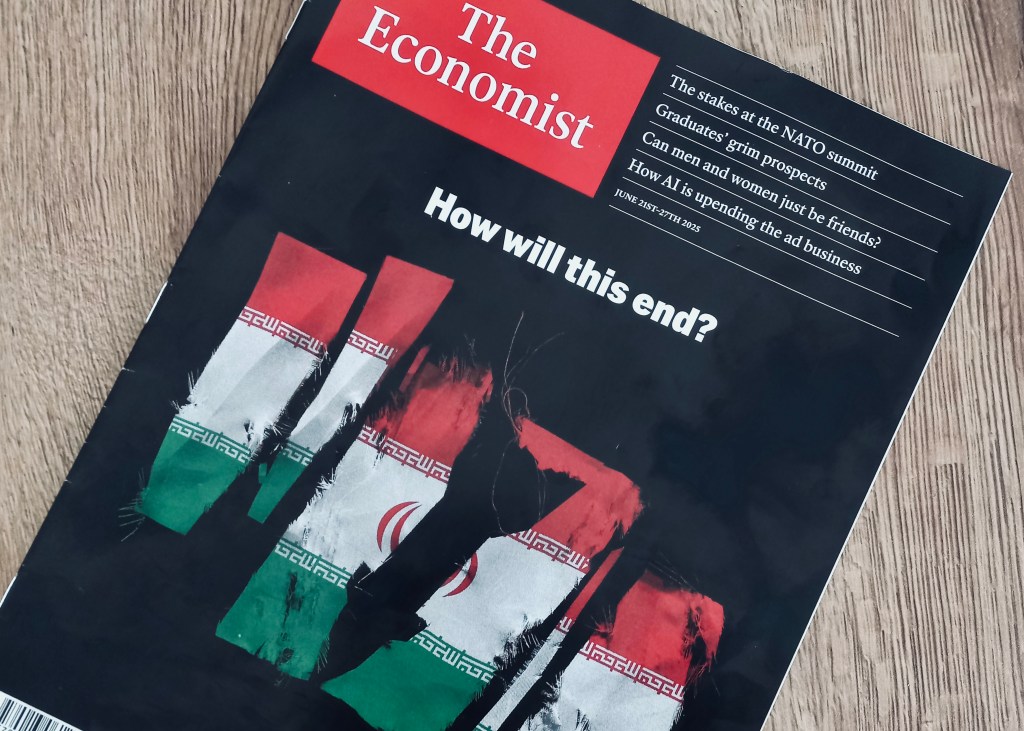
    Cover image © The Economist. Shared here under fair use, in the context of personal reflection.

    💌hello@betweeneverywhereandnowhere.com

    Leave a comment

  • What I Learned from                                          Margareta Magnusson’s Döstädning

    What I Learned from Margareta Magnusson’s Döstädning

    Warm

    When I first started reading this book, this was the first feeling that overwhelmed me. It was exactly one week after finishing writing my affordable allergy guide when I randomly bumped into this book at a bookstore. It was resting on the lowest shelf, quiet, humble… But somehow it blinked at me. As if it whispered: You might need me.

    Döstädning, literally Death Cleaning, or the gentle art of Swedish death cleaning

    You might say: Wait, this is about death, and you started your writing with warm!? 

    Ja, absolut. 

    We often associate death with someone we love, with flesh and bone. But death doesn’t only visit people, or animals. A habit can die. A routine can die. A mindset, a place, a phase can come to its end.  As the author says:

    This visual excerpt from Döstädning by Margareta Magnusson is used solely for personal reflection. The text content has been intentionally blurred. All rights reserved.

    That’s how I read this book. 

    Döstädning is the Swedish practice of cleaning, particularly when you feel your journey on this planet is approaching its expiration date.

    But it’s not dark. It’s filled with kindness. The whole idea is about not leaving a material burden to your loved ones, knowing your absence will already be heavy enough.

    As someone who knows it’s impossible to experience or know everything, I have always sought out people who could inspire me, give me more will to live or offer life advice, or simply chat about a new knitting trend, for example. This book by Margareta Magnusson has given me that energy. Reading this book was like receiving life advice from a wise person you have trusted for years while enjoying coffee together on a relaxed Sunday morning.

    It’s not loud or moralistic. It’s humble, like the shelf it came from.

    When My Body Screamed What My Soul Couldn’t Say

    As I mentioned before, I was recently diagnosed with an allergy. It may sound dramatic, or odd, but I always look for a meaning in the things that happen to me. In my case, nothing should happen in vain.

    If you resist transforming yourself after something significant happens, what would be the point of the suffering?

    So yes, while reading this book, I couldn’t stop thinking about my situation.

    And then I remembered something my high school philosophy teacher once said:

    ‘At first, our soul gets ill. It tries to find a way. If it can’t, it starts screaming through the body.

    I think this is exactly what happened to me. And this book gently held my hand during that realization.

    I was (maybe still am) a hardcore hoarder. I used to keep even the plastic packaging of a bookmark I bought during my trip to Norway. Why? Because I attached so many meanings to a tiny piece of plastic. But the truth is: it wasn’t about the packaging. It was about the version of me who bought that bookmark. I wasn’t keeping the object; I was freezing the moment.

    I hoarded and hoarded. Until my body finally gave me a pathological message: ‘You must stop, now.

    And I had to accept the challenge.

    What started as an obligation turned into a quiet awakening. I saw how easy it could be to let go, when necessary or when your soul is finally ready.

    When survival becomes your reason, your mind finds the way. It always does.

    More Than a Book Recommendation

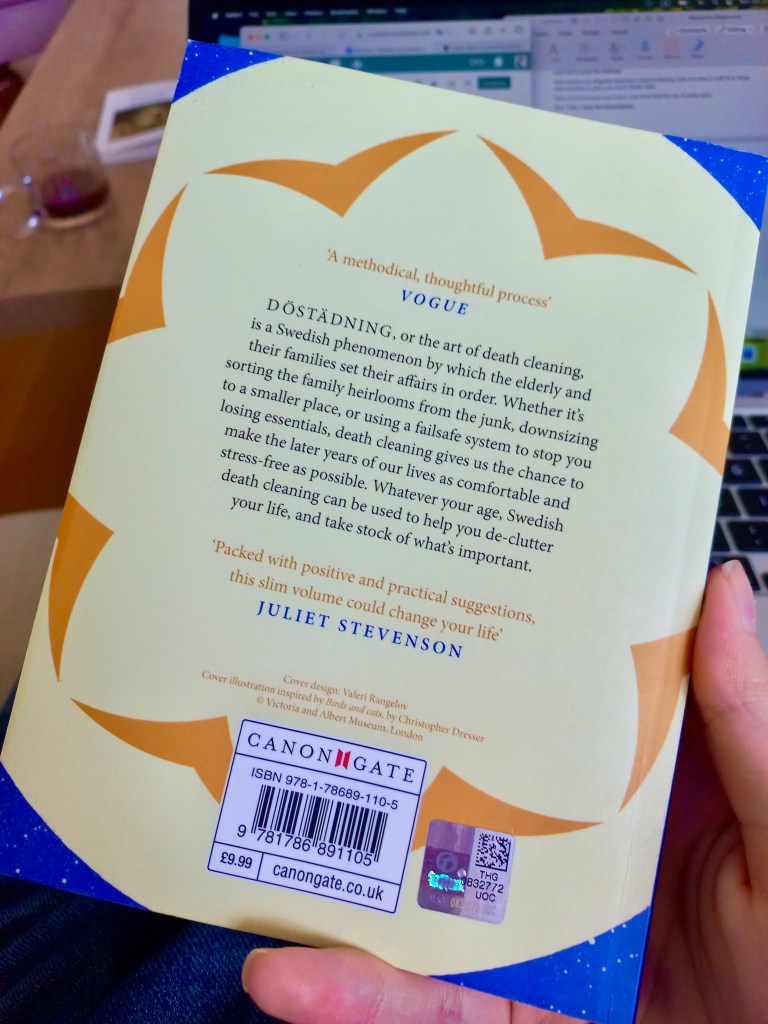
    All book cover photos were personally taken for non-commercial, review purposes. All rights belong to the publisher and author.

    If you’re looking for warm and honest advice about hoarding, material attachments, or even just feeling ‘off’ in your space, but don’t know where to start, I genuinely recommend this book. Not as a manual. As a conversation.

    Of course, maybe you’re content with your hoarding habits, or you have the philosophy of ‘après moi, le déluge.

    Totally fair.

    But even with that mindset, would you be open to a different way of seeing things?

    Would you let a serene, kind Swedish woman tell you about a few things over coffee? Then you may want to welcome this book into your home, until the time comes to part with it, of course. 📚

    💌hello@betweeneverywhereandnowhere.com
    Leave a comment