Between Everywhere and Nowhere

  • Yes, Zebras Don’t Get Ulcers

    Yes, Zebras Don’t Get Ulcers

    But Is Their Moonlight Ever Stolen?

    Recently, I have been reading Why Zebras Don’t Get Ulcers by Robert M. Sapolsky to better understand what stress actually is, what it does to our bodies, and whether it is possible to live with it without constantly crossing our biological limits.

    Sapolsky’s argument is simple: zebras do not get ulcers because they activate stress responses only when there is an immediate physical threat. A zebra runs from a lion, survives, and returns to grazing.

    Humans do not return in the same way. We keep the system running. We replay, anticipate, simulate. The body does not ask whether the threat is physically present. It responds anyway.

    That part made sense immediately.

    But I did not stay in abstraction for long, because something concrete was already there.

    I have a habit of moon bathing. In the evenings, when moonlight enters my room, I sit with it. It is not decoration for me. It is a way to reset, to remember where I am and who I am. Even when there is no direct moonlight in the room, I still go out and look at the sky. It is part of how I regulate myself.

    Then something changed.

    A new restaurant opened near my home, and a large LED advertising screen was installed outside. At night, instead of moonlight entering my room, bright artificial advertisements began cutting through the curtains—flashing images of fettuccine alfredo, constantly present. Out of the blue, I was no longer able to tell the difference between moonlight and artificial lights.

    My moonlight was stolen.

    Not metaphorically. Literally. Taken.

    It was not just light in the environment; it was the removal of something I actively use to reset and orient myself.

    And my reaction to it was immediate.

    This is where Sapolsky’s framework returns. Biologically, the system does not distinguish between types of stress in the way we like to believe. It responds with the same seriousness whether the trigger is immediate danger or sustained intrusion.

    But what usually follows is where things start to distort.

    The response turns inward: why am I reacting like this, I should ignore it, I should manage it better. Stress becomes not only the external situation, but also a judgment about the internal reaction.

    And that is where I stopped following that logic.

    Because the issue is not only my response. The issue is also the conditions producing it.

    There is a constant assumption that stress should be managed internally, as if the internal system exists in isolation. Regulate yourself. Stay grounded. Reduce sensitivity. Protect your peace.

    But that assumes the environment is neutral enough to be filtered out. It is not.

    Some environments enter the space that is meant for recovery. Some changes do not stay outside the system of experience; they interrupt it directly.

    This is where the zebra comparison starts to fail for me.

    Because I am not a zebra. I do not operate in cleanly bounded moments of threat and release. I am embedded in an environment that is continuously active.

    I am a member of Homo sapiens.

    And being a member of Homo sapiens means there is no clean separation between “me” and what surrounds me. The boundary is porous. Everything around me participates in shaping my state.

    One consequence of this is the tendency to turn every reaction into a personal problem. If something affects you, the assumption becomes that the issue is your regulation.

    But that is not always the first or most accurate conclusion.

    Sometimes something is actually taken. Sometimes something genuinely interrupts the way you live and reset yourself.

    And naming that matters.

    Not to exaggerate it, but to stop translating every reaction into self-blame.

    Not everything that produces stress is internal in origin.

    Sometimes the system is responding correctly to something that is genuinely intrusive.

    Sapolsky’s point still holds: the body responds as if it matters.

    But the question may not be how to stop that response.

    It may be why we insist on interpreting every response as a personal failure instead of sometimes recognizing the conditions that produced it.

    No one is trying to sell zebras fettuccine alfredo at midnight under artificial neon lights. And yet we keep building environments that behave as if no nervous system will ever have to rest.

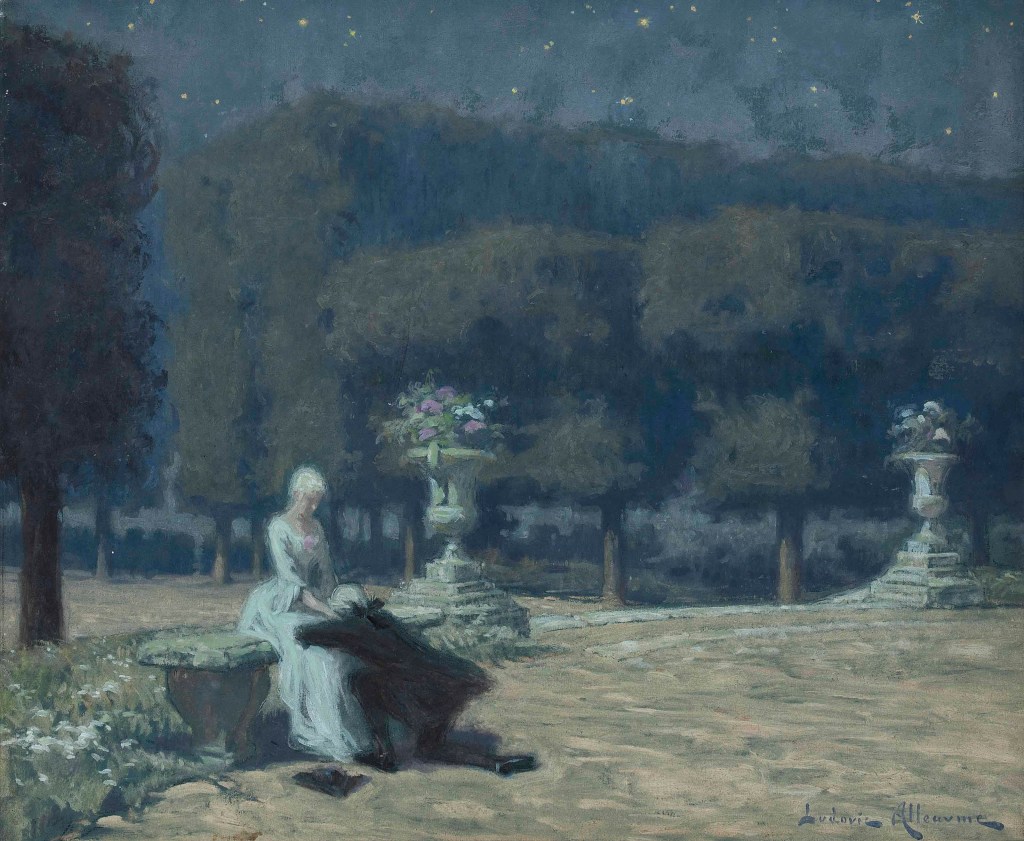
    Artwork: Paradis Nocturne, Ludovic Alleaume
    Leave a comment

    đź’Śhello@betweeneverywhereandnowhere.com

  • The Ordinary Roots of Arrogance

    The Ordinary Roots of Arrogance

    The quality of being unpleasantly proud.
    Behaving as if you are more important or knowledgeable than others.

    These are the usual connotations of the word arrogance.

    When looking at dictionary definitions, arrogance seems to emerge from a feeling of superiority. However, is that always the case?

    These kinds of terms are often associated with illusionary perceptions of the self. But what if the opposite is also true?

    Can a person carry a certain type of arrogance simply because they are too aware of themselves?

    Why is it rarely considered that self-awareness itself can become a legitimate reason for wrapping ourselves in the silk fabric of arrogance?

    Does it always have to be something negative? Does it always distance us from our surroundings in an illusionary way?

    I have always known that my way of thinking did not appeal to many people in many situations. Once, when I had the chance, I wanted to transfer my messy way of thinking onto a blank white paper and use all the non-traditional connections in my writing. The result? Of course I failed.

    At the time, one of my professors anonymously used my paper as an example of failure in class. Although I had literally failed, it did not feel destructive. Rather, I saw it as a chance to observe how my way of thinking was perceived within my own habitat.

    After that, I decided to keep the genuine side of my mental world to myself and started using my mind in saving mode, literally. I began analyzing the way that professor was thinking. It turned into a small experiment for me. I noted the words he used, his sentence structures, the way his mind connected subjects and pulled arguments from one point to another. I think one of the best parts of being a student is having enough time for these kinds of observations.

    Anyway, that day came and I had a second chance to write freely again. Was it really me writing those thoughts, or was I simply pretending? I still do not know.

    I filled that paper while imagining myself as if I were that professor. What would he write if this were his assignment?

    My second paper was declared the perfect assignment, by the way.

    You may ask, “We started with arrogance and somehow arrived at an ordinary memory that anyone could experience.” But I think the real question is this: where is the border between being arrogant and carrying yourself with a certain degree of arrogance?

    For me, it was realizing to what extent I was being accepted, and to what extent I could bend myself if I truly wanted to fit in. It was also realizing how ordinary I actually was.

    At some point, I also realized that what I truly thought, or who I genuinely was, was rarely important to most environments in the first place. People usually accepted the version of you that functioned well enough within the structure around them.

    After noticing this, I think I started leaving only a measured amount of ordinariness behind me wherever I went. Just enough to fit naturally into the atmosphere, but never enough to feel entirely dissolved inside it.

    Knowing my own limits and ordinariness strangely brought me a sense of arrogance throughout the years. It created a subtle separation between me and others. Because I was fully aware of myself, with both my strengths and weaknesses, I knew I could tame myself accordingly if necessary.

    That self-control, and perhaps self-manipulation towards the outer world, became the main fabric of my arrogance.

    Everyone else was ordinary too. The only difference was that many people were not fully aware of it yet.

    Sometimes the feeling of superiority can come from being absolutely grounded.

    Sometimes I ask myself: could arrogance also be a way of coping with having a painfully solid place in this world? Being ordinary in the most ordinary way can also hurt. Then you start thinking: “I achieved, I endured, I learned, and I still remained within this ordinariness.”

    That is usually the moment when a subtle arrogance taps you lightly on the back, wraps itself around you, and quietly becomes your shadow.

    Maybe arrogance is not always born from illusion.

    Sometimes it grows quietly from knowing exactly where you stand.

    Who knows.

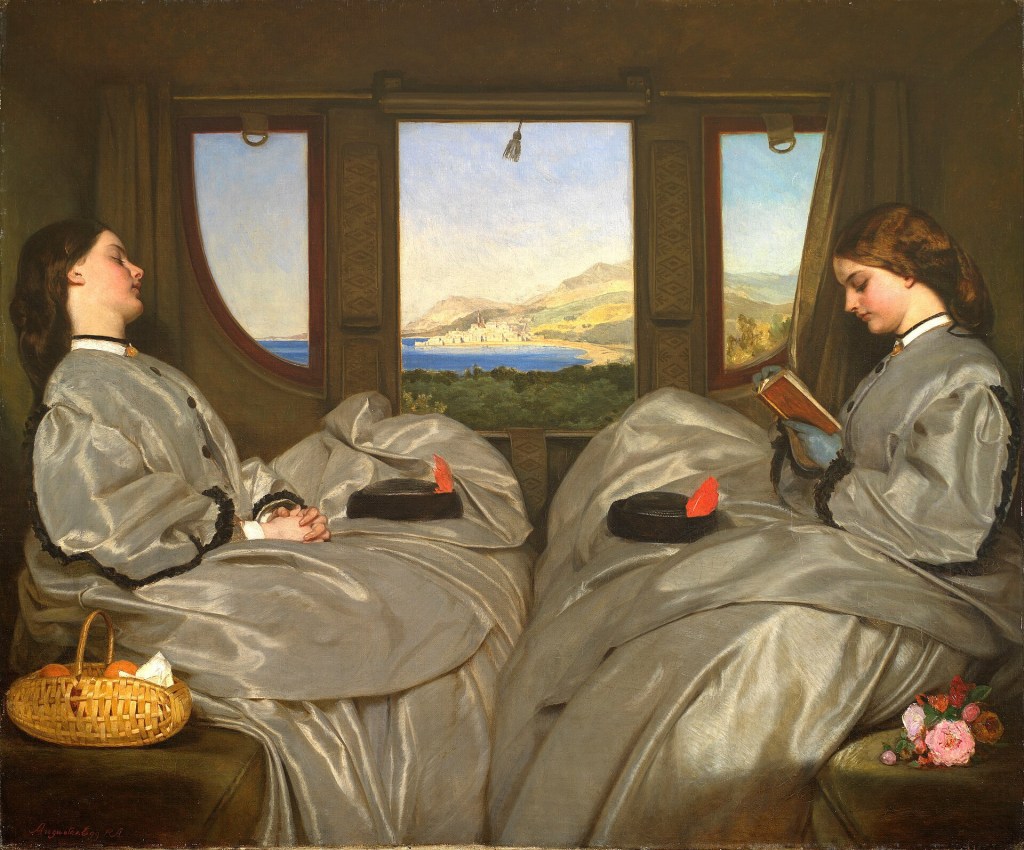
    Artwork: The Travelling Companions, Augustus Leopold Egg

    Leave a comment

    đź’Śhello@betweeneverywhereandnowhere.com

  • I Lost My Father on a Beautiful Spring Day

    I Lost My Father on a Beautiful Spring Day

    Years ago, I read a sentence in The Museum of Innocence:

    It was the happiest moment of my life, though I didn’t know it.

    At the time, I thought it was simply romantic in the melancholic way novels often are. I never imagined that one day I might understand it through my own life.

    My way into existentialism was through trying to understand death itself. Since childhood, I often wondered what life meant, what people meant to one another, and how anyone could survive the loss of someone they deeply loved.

    For years, one of my greatest fears was that I would one day have to adapt to life without someone I could not imagine losing.

    Over time, my understanding of death changed. I realized that many things die before people do. Habits die. Identities die. Relationships die. A version of yourself can disappear while the body remains. Even hope can gradually die.

    But somewhere inside me, I knew none of these would compare to the death of someone I loved.

    So, I lived with that private fear for years, trying to place it somewhere in my brain, somewhere in my heart.

    It was one of those beautiful spring days.

    I had never liked spring the way others did. It always carried a quiet nostalgia for me, a sadness I could never explain. Looking back now, I sometimes wonder whether it was only association or whether some parts of us sense grief before we truly encounter it.

    That day, everything was perfect. Almost flawless.

    In the morning, I received a letter of acceptance from a country I had long wanted to know more deeply. I remember feeling bright from the inside out. Everything felt possible. I felt myself shining with happiness.

    Then, in the middle of that brightness, the phone rang.

    I rushed to the airport and flew home. Somewhere in the blur of movement, disbelief, and noise, I heard the sentence:

    Sorry for your loss.

    I immediately thought:

    This has happened to me too.

    Not sorrow at first. Just emptiness. A strange hollow space where feeling should have been. I searched inside myself for something more dramatic, something more recognizable, but grief did not arrive in the form I expected, and nothing in my life seemed to be replaceable with this reality. 

    It came as absence. My biggest fear arrived as absence.

    That was when I understood what death truly means.

    It is not death itself that devastates us. It is the ultimate absence of someone who once shaped the atmosphere of your life.

    My father was not just my father. He was the starring actor of my memories, of my childhood, of many parts of my personality I had mistaken for being entirely my own.

    While getting ready for the funeral, I looked at myself in the mirror. Features I had criticized for years suddenly became precious to me because they were his. My face was no longer only mine. It was evidence.

    I had spent years fearing the death of one of my parents, and now I was living inside the very thing I feared.

    Yet real grief has no interest in your theories. It is bitter, physical, slow. It humbles every abstract thought.

    Shortly before my father died, I had been reading Marcus Aurelius. At the time, I believed he was right. Life should not be taken too seriously. Legacy was overrated. There was no need to burden oneself with thoughts of future generations.

    But grief has a way of exposing the beliefs we only hold in comfort.

    It may sound odd, but I stood at my father’s burial and thought the opposite.

    I realized that I did not want to disappear from this world.

    I wanted to contribute something. To leave something. To exist beyond the limits of a body. Whether through children, through work, through words—I did not know.

    Sometimes I wonder whether this blog itself is part of that desire: a refusal to vanish silently.

    My father did not vanish.

    He remains in the people who loved him, in the habits he formed in us, in our gestures, in our instincts, in our memories. He remains in my face. He remains even here, in these sentences, where someone who never knew him now knows that he existed.

    But everything truly begins after that period, when you are finally left on your own.

    As a teenager, I had a rule for myself: if I felt something too deeply, whether joy or pain, I would give it five days. I would sit with it until I became desensitized, then make decisions rationally. It was my private method of self-control.

    My father’s death taught me that some things do not obey systems.

    Some pain cannot be optimized. Some losses cannot be reasoned into neat conclusions. Some experiences need to be digested.

    I had to change my route, and I realized adulthood had begun at this very moment.

    What struck me most after losing my father was not only sadness, but the feeling that I had lost my sparkle.

    I had always been someone who could make meaning out of anything. Disappointment could become growth. Difficulty could become material. Whenever life gave me something inconvenient, my instinct was always:

    What can I do with this? What is my role in it? How can I cultivate myself through it?

    Then, for a while, I did not want to make meaning of anything.

    That frightened me more than grief itself.

    But grief changes shape.

    Later, I began to understand that my father’s absence was only biological. Presence can survive form. I found him in small things: a gentle breeze, a butterfly passing too close, the reflection in my coffee, a sudden scent in nature, a dream vivid enough to quiet the morning, my stance in certain situations.

    I thought I had lost my spark.

    Perhaps I had only shed the one I carried as a teenage girl.

    What came after was the slow work of building a different kind of light.

    Grief is not a wound that simply heals and disappears. It is more like losing a landscape you once navigated by instinct. The world remains, but your orientation changes.

    It does not truly pass.

    It is not something to be cured, nor should it be.

    You change. And then, you decide in which direction to continue.

    Sometimes you are guided only by what is missing inside you.

    It is not pain.

    It is ache.

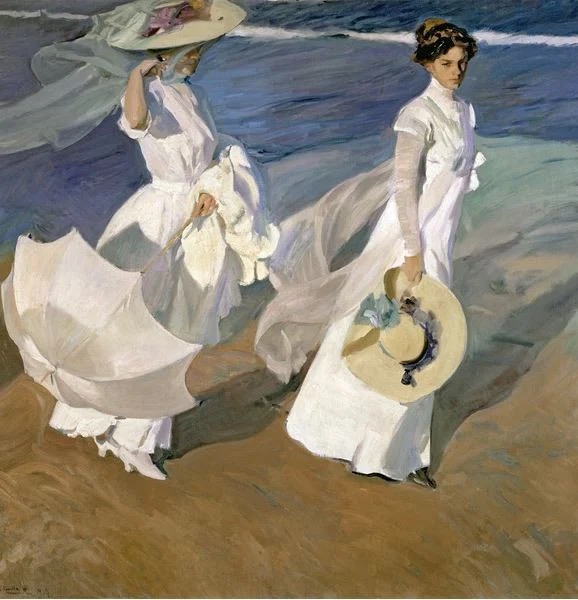
    Artwork: Strolling along the Seashore, JoaquĂ­n Sorolla y Bastida

    Leave a comment

    đź’Śhello@betweeneverywhereandnowhere.com

  • Am I Destined to Be a Crisovore?

    Am I Destined to Be a Crisovore?

    Or Just Learning How to Rest on Grass That Still Itches

    Sometimes the dynamics of life arrive not as a path, but as a series of collisions. Something breaks, shifts, disappears, or turns against the shape of who you thought you were. And because survival rarely waits for readiness, you learn quickly how to turn damage into utility.

    We are told to make lemonade out of lemons that life gives us. But some lemons are too bitter, too sharp, too misplaced to belong anywhere. So, you learn something subtler than optimism: if sweetness is impossible, extract zest. If healing is delayed, produce function. If nothing fits, make use of what wounds you.

    At first, this feels like resilience. Later, it becomes identity.

    Over time, crisis stops being an interruption and becomes a habitat. You no longer respond to intensity; you metabolize it. You become fluent in urgency, efficient in uncertainty, strangely calm in disorder. There is no official term for this transformation, so I made one: crisovore.

    A crisovore is someone who has learned to feed on crisis.

    Not because they enjoy suffering, but because disruption became the environment in which their strengths were formed. Some people grow in gardens. Others learn in storms.

    I had to scratch myself out of crisis at almost every stage of my life. I lost my father and learned that the worst fear can, in fact, become reality—and life continues anyway. I was betrayed by people I trusted and discovered that disappointment can clarify character faster than affection ever does. When I entered professional life, a pandemic began. And in a strange paradox, that global rupture created opportunities for growth within my field.

    Whether internal or external, personal or collective, crisis seemed to arrive with consistency. Enough times, and you begin to wonder: am I finding crisis, or has crisis found me? Do I endure it because I can, or have I simply built myself around expecting it?

    We often celebrate what hardship teaches us. Discipline. Perspective. Endurance. Adaptation. And those lessons are real. But there is a quieter consequence people rarely discuss: what happens when crisis becomes familiar enough to feel necessary?

    Because familiarity has its own gravity.

    Intensity begins to resemble meaning. Urgency feels like direction. Constant problem-solving mimics purpose. You wake up alert, needed, mobilized. Every day asks something of you, and in answering it, you feel alive.

    Then one day, life softens.

    Nothing is collapsing. No emergency needs containing. No immediate threat is sharpening your attention. The phone is quiet. The room is still. And instead of relief, you feel unease.

    Calm, for the unpracticed, can feel unnatural.

    Peace does not always arrive as comfort. Sometimes it arrives as emptiness. Sometimes it feels like a waiting room before the next disaster. Sometimes it is mistaken for stagnation simply because it lacks adrenaline.

    What does one do when life finally feels safe, but something inside does not trust safety? How do you distinguish between what is healthy and what is merely less stimulating? What happens when you feel tempted to recreate chaos, not because you want pain, but because pain is recognizable and calm is not?

    Living through crisis can resemble addiction—not in spectacle, but in rhythm. Like caffeine, it sharpens perception and lends momentum. It gives structure to the day. Its absence can feel less like peace and more like withdrawal: a low ache, a restlessness without object, a sense that something important has gone missing.

    Not the crisis itself, but the intensity.

    We speak often about rebuilding after hardship. We speak less about remaining present when nothing is broken. Yet perhaps this is the more difficult task.

    Crisis demands reaction. Calm demands tolerance.

    Crisis tells you what to do next. Calm asks whether you know who you are without instructions.

    Crisis can make you feel chosen, central, necessary. Calm asks whether existence needs drama to feel valid.

    So perhaps the real question is not whether we can survive crisis. Many of us already know that we can.

    The real question is whether we can live without organizing our inner world around it. Whether intensity can become an experience rather than a dependency. Whether peace can be learned with the same seriousness with which survival once was.

    Maybe there is no final balance, no permanent arrival. Maybe life is only this ongoing negotiation between two selves: the one trained by disruption, and the one still learning how to stay when nothing is on fire.

    Perhaps growth, for some of us, is not learning to survive the lava, but learning to rest on the grass. And who ever said the grass would not trigger an allergy of its own?

    Artwork: Carola i soffan, Gustaf Cederström

    Leave a comment

    đź’Śhello@betweeneverywhereandnowhere.com

  • I Keep Changing — Again and Again

    I Keep Changing — Again and Again

    It is often said that change is the only constant in life. But that sentence has never felt entirely comforting to me. Because the real question is not whether change is constant, but how one is expected to live inside that constancy.

    We are born into patterns. We are raised within structures that gradually become indistinguishable from who we are. Familiar streets, routines, faces, even the predictability of daily life begin to feel like extensions of identity rather than external conditions. I used to rely heavily on that sense of stability. It felt like a roof — not just protective but defining. Stability was control, and control became my identity. So, I assumed that being constant meant being intact.

    That assumption began to fracture when I was fifteen, after moving to another city because of my parent’s profession. Nothing dramatic happened in the way change is usually narrated, yet everything shifted. What I had known as “normal” disappeared almost entirely, and I was left in a space where adaptation was no longer optional. It had to be learned, almost physically — like a muscle that had never been used before.

    But what is change, really? Is it simply going with the flow? Or is it a subtle form of self-manipulation, a quiet adjustment made just to survive? Is it adaptation, or survival instinct? Or does it begin to feel like alienation — a gradual distance from earlier versions of the self? Or is it something more spatial: a wall between what came before and what comes after, with a door left open for whatever is still forming?

    I remember speaking to my childhood friends during that period. Nothing in our conversation had explicitly changed, yet something had already shifted beyond repair. They were still speaking to a version of me that no longer fully existed, while I was already somewhere else. That realization left me with a question I could not settle: if I am already different, then which version of me is the “real” one — if any of them are?

    Accepting this has never been simple. Sometimes change feels less like growth and more like a quiet disloyalty to earlier versions of myself. It raises an uncomfortable uncertainty: am I evolving, or am I fragmenting into disconnected states that only appear continuous from the outside?

    At times, I ground this uncertainty in something simpler. I am a living organism, shaped by conditions and response. Not everything needs to be elevated into meaning. Some things simply happen because they must. In that sense, change might also be understood as a form of digestion — what I experience is not simply lived through but processed internally. And what remains becomes what is called transformation.

    Still, I needed a way to observe these shifts rather than only experience them. That is when I turned to journaling. Not as a structured practice, but as a way of capturing fragments of myself in different states. I began documenting thoughts, reactions, habits — even added details that seemed to define who I was at a given time. Over time, those pages became a kind of archive. Not of a single self, but of multiple versions that do not always align.

    Looking back at them, I can trace change not only in circumstances, but in perception. Things that once felt overwhelming now appear distant, almost minimal. Yet at the time, they shaped entire emotional realities. There is something unsettling in that realization — how absolute something can feel in the moment, and how temporary it becomes later.

    Sometimes reading those entries feels like encountering someone else. I recognize the words, but not always the person behind them. And that distance adds another layer to this experience: the self is not as continuous as it appears.

    Perhaps the real difficulty is not change itself, but the expectation of continuity. We tend to assume that identity should remain coherent across time. Yet what I observe is less coherence and more accumulation — overlapping states that do not fully resolve into one another.

    I think there is a certain courage required to face all of these versions without forcing them into a single narrative: who we were, who we are, who we are becoming, and the versions we no longer fully recognize. The answers may not lie in one of them, but in the gaps between them — in what shifts, what disappears, and what quietly persists.

    In that sense, change is not something to be resolved. It is something to be positioned within.

    Change is indeed the only constant in life.
    And I am still learning how to exist inside that constancy.

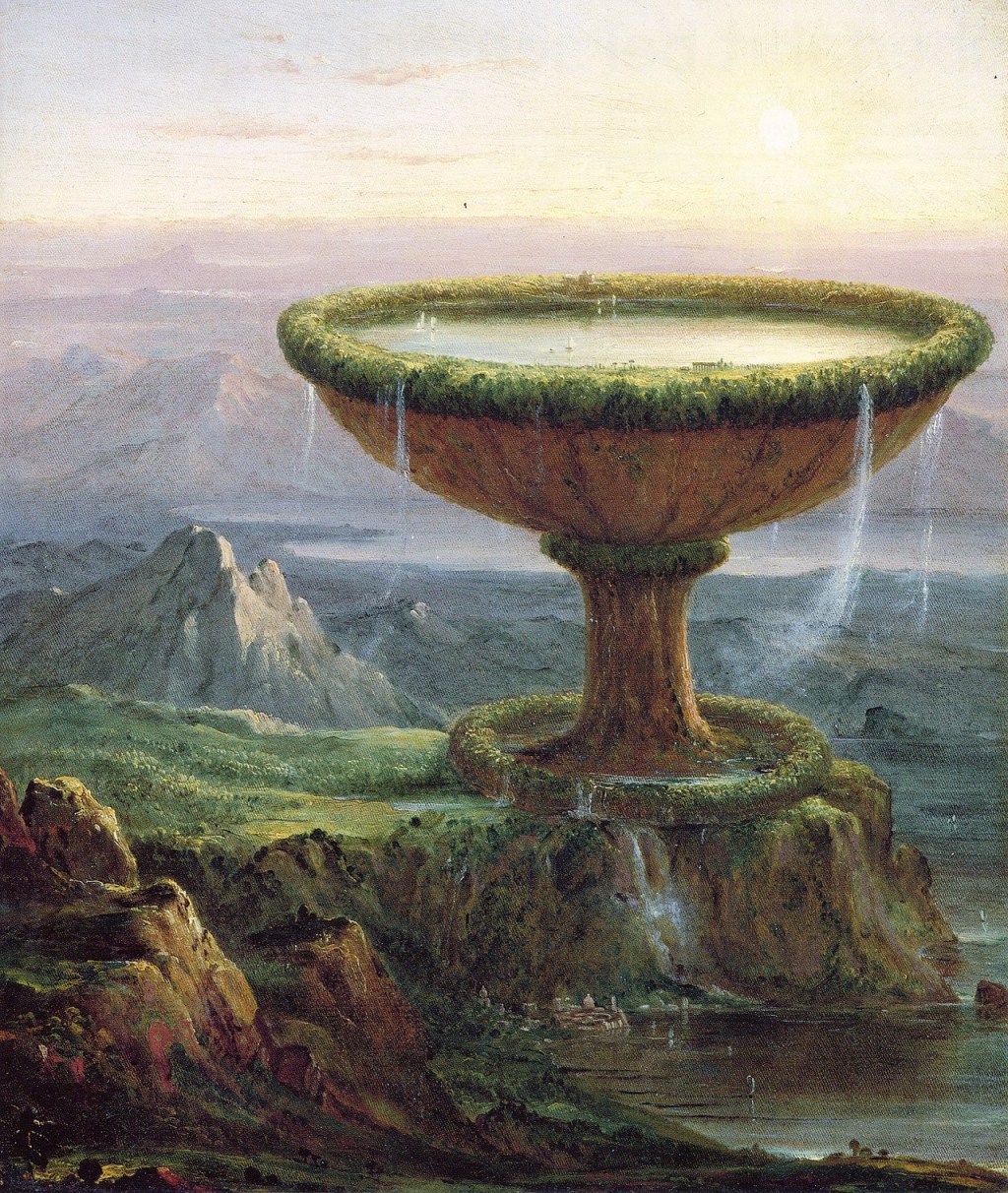
    Artwork: The Titan’s Goblet, Thomas Cole

    Leave a comment

    đź’Śhello@betweeneverywhereandnowhere.com

  • I Am in Love with Ravelverse

    I Am in Love with Ravelverse

    Have you ever listened to the French composer Maurice Ravel? Because this post is a pure, unapologetic appreciation of his art.

    I know there are hundreds of analyses, critiques, and historical readings of any work of art. But I always find myself stepping aside from all of that—away from the academy, away from “what it really means”—and instead focusing on what the piece does to me. What it awakens in my mind. What it places in front of my eyes. What it opens in my imagination.

    And for this reason, I love Ravel, and the universe he creates—what I call the Ravelverse.

    Take his most renowned work, La Valse, for example. It is often described as a “waltz on the edge of collapse,” a dance dissolving into chaos. But whenever I listen to it—or watch it performed live—the notes do something entirely different to me. They teleport me directly into Ravelverse.

    There, I am dressed in elegant clothes, standing in a place so calm it almost feels unreal. A calm so perfect that I cannot fully comprehend it. Everything is suspended in a soft, almost weightless illusion of beauty. And just when I start surrendering to that peace, to that constructed serenity, the percussion arrives.

    It doesn’t enter gently. It grabs me by the neck and throws me back into something like reality—raw, sudden, almost painfully tangible. Something soft yet disturbing at the same time. And I love that instability.

    Because in that universe, there is nothing you can hold onto. The notes, the harmony, the percussion, the contrabass—they all continuously pull you in and out of reality, illusion, and whatever lies in between. You are never allowed to stay in one place for too long.

    On the other hand, Daphnis et ChloĂ© carries the same vibration of Ravelverse, but it moves differently.

    Again, you are teleported into a dreamlike space, dressed in your most elegant, unreal version of yourself. But this time, nothing breaks the illusion. Nothing throws you out of it.

    It stays intact.

    And something begins to chase you.

    Not violently. Not suddenly. But persistently.

    You are running, escaping, moving through landscapes that feel too beautiful to be stable. And yet that thing—whatever we choose to call it—keeps coming closer. Not loud enough to be named, not clear enough to be understood. But always there. Always approaching.

    In La Valse, the illusion collapses and forces you out of itself.
    In Daphnis et ChloĂ©, the illusion holds and you are the one trying to escape.

    Then suddenly, you wake up.

    At least you think you do.

    Because you realize it was only a dream. But it is not over—because you have woken up inside another layer of it. This is the kind of illusion that does not end when the music stops. It leaves something behind. A weight that stays with you for hours, as if part of it refuses to let go.

    And all his works… I still cannot believe what I hear is also what I see so vividly in front of me. How sound becomes a space. How it takes me away from reality and then suddenly drops me back into the chair I am sitting on, as if nothing happened.

    I love watching how the orchestra reflects a kind of quiet dominance when they perform Ravel—an elegant control, as if they are not just playing the instruments but negotiating with them. I love the intensity Ravelverse brings to everyone and everything it touches. I love the way it feels both familiar and completely strange at the same time.

    And I don’t think there will ever be a time in the near future when I will get enough of it.

    Some places you visit once and leave behind.

    Ravelverse is definitely not one of them.

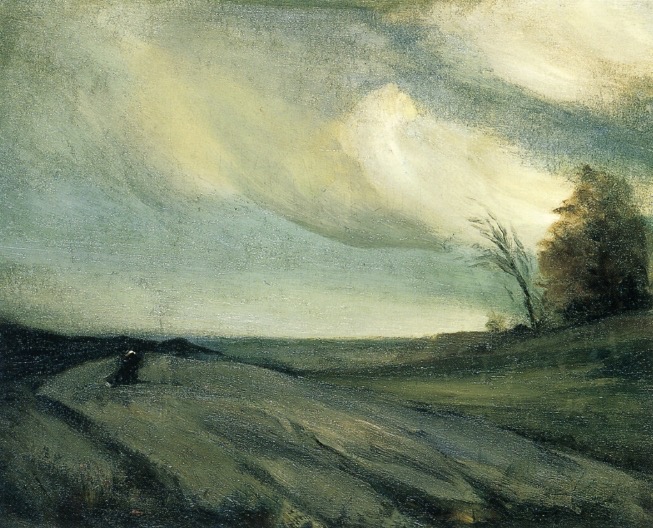
    Artwork: The March Wind, Robert Henri

    Leave a comment

    đź’Śhello@betweeneverywhereandnowhere.com

  • The Sensory Evidence of “We Were Here”

    The Sensory Evidence of “We Were Here”

    There are many ways a person can reflect the tangible version of their true essence, and just as many ways to conceal it.

    Perfume sits somewhere in between.

    It is one of the most subtle yet striking expressions of the self — visible and invisible, present yet intangible.

    Perfume is often defined as a mixture of fragrant essential oils or aroma compounds, historically used for masking odors, healing, rituals, or even status signaling.

    Today, it feels more like an accessory. Sometimes a refined field of interest, sometimes simply an identity in the form of a spray. But it is never only about notes and compositions.

    We carry two kinds of scent.
    One that we construct — something we choose, apply, and project.
    And another that exists without our intervention — something biological, innate, entirely our own.

    I won’t go into the anthropological or biological depth of it. But it does raise a quieter question: How true do we remain to our raw existence through what we choose to smell like?

    Modern life already distances us from that rawness. Artificial food, synthetic fabrics, constant stress — all of it interferes with something that was once more instinctive, more unfiltered.

    Of course, hygiene is essential. That is not the question here.
    The question is something else.

    Isn’t perfume almost too personal?

    It begins with something natural — herbs, spices, flowers — reduced, distilled, transformed. And then it becomes something we carry on our skin, in our hair, on our coat.

    One spray.
    Tiny particles enter the air, reach the senses, and settle somewhere between memory and instinct. They can revive something, signal something, suggest where you belong or simply where you are going.

    That is a lot for something so unseen.

    I tend to see anything personal — anything that reflects my own taste — as something almost intimate. Even when it is something as simple as a scent.

    If I am drawn to something, I don’t arrive there casually. I try, I eliminate, I return.
    And when I finally find something that feels right, it feels earned.

    Lately, I’ve found myself observing people in perfume sections — the way they test, compare, return to the same strip again. There is a certain kind of attention there, almost like tasting wine or olive oil. A quiet expertise, or maybe just a refined curiosity.

    And I find myself wondering — should something experienced with that much sensitivity really belong to everyone’s perception equally?

    Because when that scent finally settles on me, it feels contained — almost like it belongs within a boundary I cannot quite define. And yet, with a single movement, it dissolves into the air, becoming something anyone can perceive.

    Sometimes that feels like a quiet injustice to the process itself. And I ask myself — does this make me selfish?

    Or am I simply assigning too much meaning to something that was never meant to be this private?

    We engage so many of our senses, consciously or not, to arrive at what we like.
    Maybe we use scent just to reset ourselves, to strengthen our very presence in a certain place, or to maintain a certain emotional state.

    But then another question follows:
    How much of something that can shape my emotional state should belong only to me, and how much of it should spill into the world?

    Scent carries a certain kind of power. And even the same scent settles differently on every person. Quiet, but persistent.

    So, what do we actually mean when we wear a perfume?

    Is it an open declaration of who we are, or a controlled version of it?
    Something we leave behind freely, letting it linger in every space we pass through?

    Or something more contained — something that requires proximity, even permission?

    Should what we choose to smell like remain everywhere we briefly exist, in every person we unknowingly pass?

    Or is it enough, simply, to have a sensory existence at all?

    Maybe it is not even that deep anymore.
    Maybe it is just a habit — a gesture, a routine, a background presence, like music in a film.

    Or maybe it is simply our way of saying we were here — in the language of scented particles, or more precisely in a language no one sees, but somehow remembers.

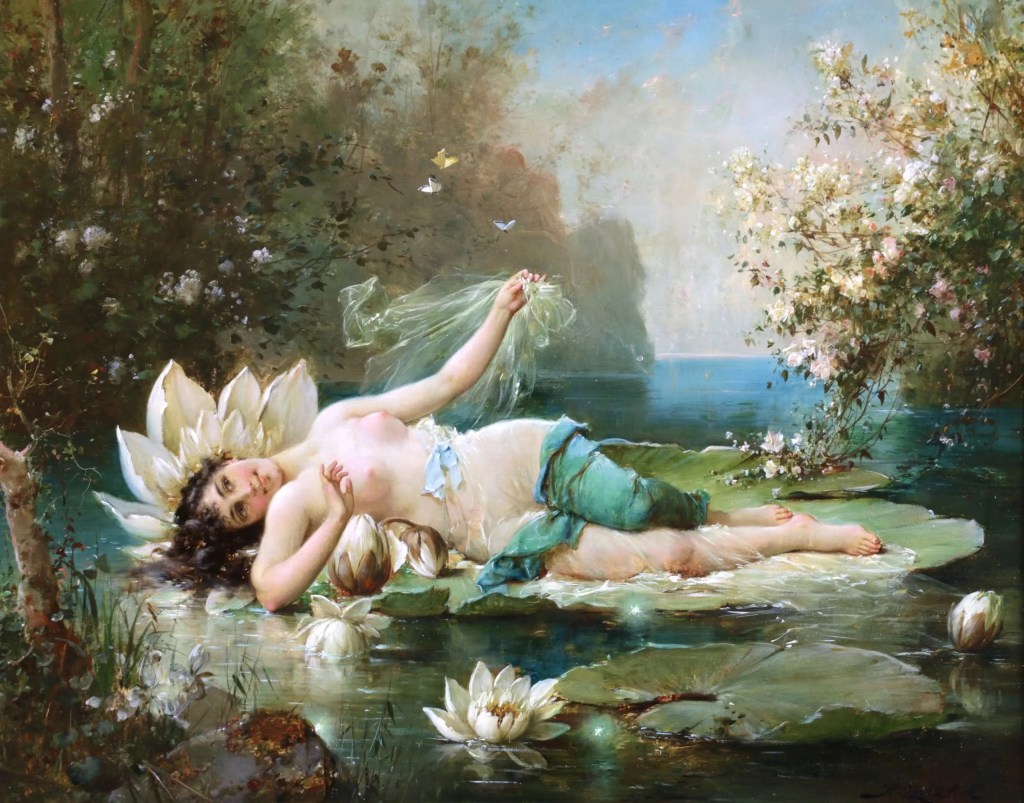
    Artwork: Water Nymph, Hans Zatzka

    Leave a comment

    đź’Śhello@betweeneverywhereandnowhere.com

  • Am I Really Your Sunshine?

    Am I Really Your Sunshine?

    You are my sunshine,
    My only sunshine…

    Such gentle, romantic words from such a gentle song.
    Soft enough to feel safe, simple enough to believe without questioning.

    But when someone says, “you are my sunshine,” I find myself asking:
    What does it really mean?

    The Sun is everything we associate with warmth and life.
    It nourishes. It grows. It makes existence possible. 
    And yet, that same Sun burns.
    It dries. It exhausts.

    Not out of intention, not out of emotion, but simply because this is what it is.

    Everything revolves around it — not because it is loved, but because it cannot be escaped.

    And maybe that is the part we don’t really think about.

    That the same source that feeds us is also, slowly and inevitably, consuming us.

    The Sun is not doing us a favor. It is not choosing to give, and it is not choosing to take.
    It simply exists in its own nature, and everything else learns how to live with it — or doesn’t.

    And I think that is why the word “sunshine” has never felt entirely soft to me.

    Because some people are like that.

    Not necessarily cruel.
    Not necessarily kind either.

    Just… intense in a way that changes things.

    They don’t enter your life with a clear intention to transform you.
    But their presence alone makes that transformation almost unavoidable.

    If not you, then someone else.
    If not now, then eventually.

    And sometimes, without even realizing it, the ones who need change the most
    are the ones who move closest to that kind of light.

    But maybe the real question was never about transformation.

    Because it will happen anyway. It always does.

    The real question is what kind of change you are standing close to.

    Will it warm you enough to grow, to become something fuller, more alive?

    Or will it take everything you have built and slowly burn it down, piece by piece?

    I might be your sunshine.

    But light is never just light.

    Will I warm you, help you grow into something fuller, more alive — or will I draw a circle of fire around you and keep you there until there is nothing left but something dry enough to burn?

    Is there even a middle ground, or is that just something we tell ourselves to stay a little longer?

    Please don’t take my sunshine away…

    What happens after you find your sun?

    Do you stay close out of warmth or out of fear of losing it?

    Do you begin to orbit, slowly forgetting your own direction?

    Everyone needs transformation at some point.
    The Sun is transformative by its very existence.

    But again — it is not the Sun.

    It is you.

    Is it up to you what to do with this force placed into your life?

    Will your snow withstand the light, or disappear beneath it?

    So, what will you do?

    Will you use the brightness to clear your vision, or let it blind you?

    Will you keep moving closer, mistaking the brightness for safety?

    Or will you recognize the heat for what it is and trace back the quiet marks
    it has already left on you?

    Again, the light was never the question.

    It was always you.

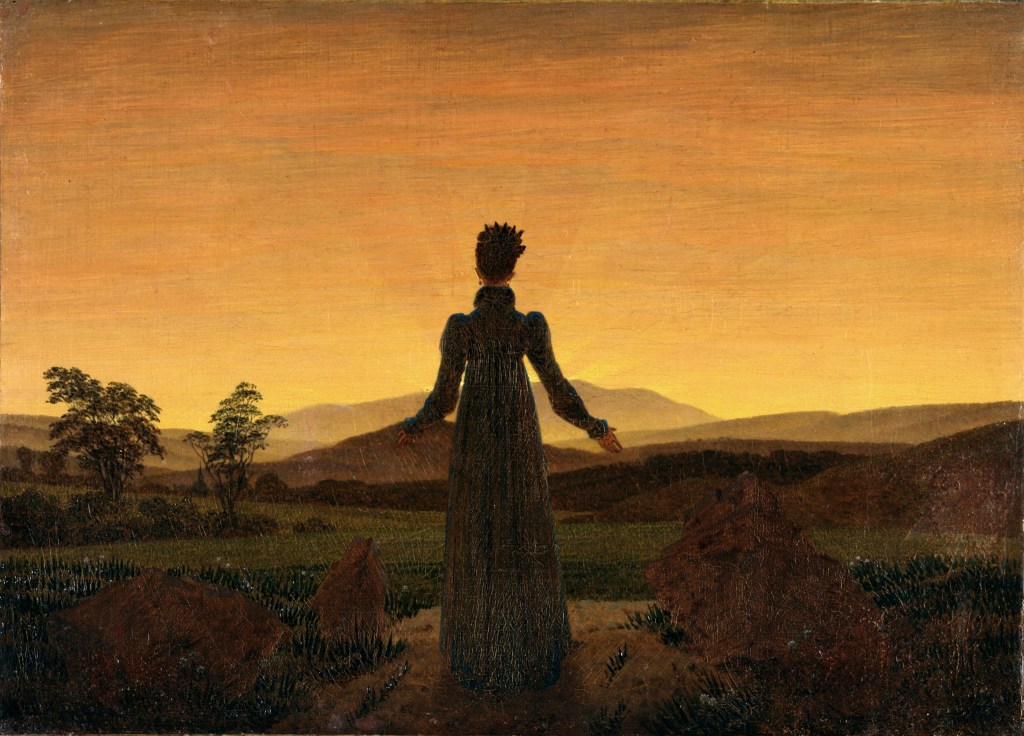
    Woman Before the Rising Sun, Caspar David Friedrich

    Leave a comment

    đź’Śhello@betweeneverywhereandnowhere.com

  • What Do You Feel?

    What Do You Feel?

    You woke up and started the day.

    What do you truly feel?

    Busy schedules, traffic jams, overpriced tags on the shelves…
    Life moves fast, almost mechanically.

    But somewhere in between all this — what is it that you actually feel?

    Have you ever paused, even for a minute, to notice what is passing through your mind, your heart, your body?
    Not only to explain or justify it, but simply to notice it.

    What is “to feel” anyway?
    Dictionaries define it simply as experiencing something physical or emotional. A simple definition for something that rarely feels simple.

    We know many names for what we feel: happy, sad, overwhelmed, devastated, embarrassed, angry.

    But there are moments when none of these quite fit — moments when language feels insufficient, and we find ourselves explaining a single feeling with entire paragraphs.

    Maybe the problem is not that we don’t feel enough.
    Maybe we just don’t always have the words.

    And when we don’t have the words, we sometimes begin to treat the feeling itself as if it doesn’t quite belong — as if it is too vague, too much, or simply unnecessary.

    But perhaps it is not the feeling that is unfamiliar, only the language surrounding it.

    I have never been someone who is consumed by emotions, nor someone who ignores them.

    I tend to sit with them, to make sense of them — sometimes at length.

    I could write pages about a single feeling.

    And yet, sometimes, what I look for is just one word.
    One term that reminds me I am not the only one who has felt this.

    This is where languages quietly step in.

    What has always fascinated me about them is this:
    Some seem to have paused longer on certain emotions — long enough to give them a name.

    There are moments when time suddenly feels limited — when you start measuring your life against invisible deadlines, and a quiet anxiety settles in.
    Not loud, not dramatic, but persistent.
    In German, there is a word for this: Torschlusspanik.

    Or those rare moments when you are completely immersed in the present — when nothing else seems to exist beyond what you are living right now.
    A kind of joy that is calm rather than loud.
    In Welsh, they call this Hwyl.

    Or the restless anticipation of waiting for someone — checking the door, looking outside, feeling time stretch in an almost physical way.
    In Inuit, this becomes Iktsuarpok.

    And then there is that quiet, almost bittersweet awareness that something is beautiful precisely because it will pass.
    Not despite its impermanence, but because of it.
    The Japanese have a word for this: Mono no aware.

    Even the darker corners of being human have found their place in language.

    That subtle, uncomfortable moment when someone else’s misfortune brings a sense of satisfaction you didn’t ask for.
    In German: Schadenfreude.

    If you notice closely, these words do more than describe emotions.
    They carry their weight, their rhythm, their texture.
    Some feel light, others heavy. Some linger longer than others.

    And perhaps this is where something deeper reveals itself:

    Being human may be a shared condition, but the way we are allowed to experience it is not always the same.

    Some cultures make space for certain emotions, while others leave them unnamed — and therefore, often unnoticed.

    And when a feeling has no name in the language we live in,
    it becomes easier to overlook it.
    Not because it is insignificant, but because it has nowhere to stay.

    Yet these experiences are not foreign to us.

    Perhaps learning new words for emotions is not just about language.
    Perhaps it is a way of recognizing parts of ourselves we couldn’t quite name before — not because they were absent, but because they were never fully acknowledged.

    Because to feel is not always loud.
    It is not only a racing heartbeat or a visible reaction.
    Sometimes it sits quietly — in your chest, in your stomach, behind your eyes — waiting to be noticed.

    And when a feeling feels too complex, too layered to be named,
    it might help to remember this:

    Somewhere else, in another language, shaped by another way of seeing the world, someone has already felt it deeply enough to name it.

    You are not alone in your feelings — even when your own language does not seem to have a place for them.

    And maybe learning these words is not only about understanding others, but about finally making space for ourselves.

    If you are curious to explore more of these emotions and the words that hold them, you might enjoy The Book of Human Emotions by Tiffany Watt Smith.

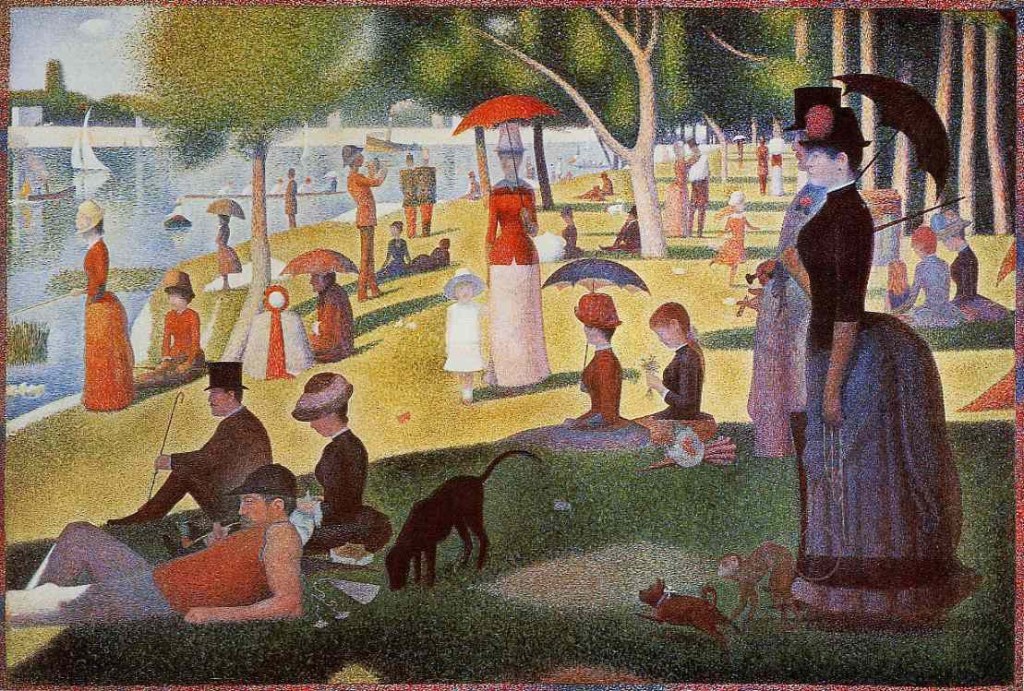
    Artwork: A Sunday Afternoon on the Island of La Grande Jatte, Georges Seurat

    2 responses to “What Do You Feel?”

    1. The Luttie Board Avatar

      I like how incredible you are in the way you blend emotion, culture, and language together.

      Liked by 1 person

      1. betweeneverywhereandnowhere Avatar

        Thank you! I’m really glad you felt that!

        Like

    Leave a comment

    đź’Śhello@betweeneverywhereandnowhere.com

  • Saturn’s Return or Being Welcomed to True Adulthood

    Saturn’s Return or Being Welcomed to True Adulthood

    I am currently somewhere between 29 and 30 years old — somewhere between what I used to call “not yet” and what others confidently name “adulthood.” For the first time, I understand why this age is considered a threshold.

    From a psychological point of view, these years feel like the first real moment when our biological existence begins to support the idea of being an adult. 

    From an astrological perspective, it is often described as a time of harvesting — reaping what has been sown so far. Retrospectively, I realize I started this blog right at the beginning of that phase. This space became one of Saturn’s quiet gifts; a way to keep track of who I am becoming, and who I have the potential to become.

    Up until last year, I was crying, thinking I had failed to build the adulthood I imagined. I felt crushed under the weight of not being able to manage my own ordinariness. 

    But this year, something shifted. Not dramatically, not all at once — but enough for me to start taking pride in what I could build out of the rubble left in my hands.

    When I look back, I see a pattern — as if the universe tested me theme by theme, until it made me free of almost every fear.

    I grew up in a deeply loving family, and my biggest anxiety was always the idea of losing one of my parents. I thought about it so often that at some point it almost felt like I was rehearsing it. And then — it happened.

    It was like the universe said to me: “Don’t waste your energy in vain. Here you go — your self-fulfilling prophecy!”

    I was faced with one of my greatest fears — with pain, with emptiness. But also, unexpectedly, with a strange sense of clarity and a new kind of freedom. Life did not end. I did not collapse in the way I had imagined.

    I continued. One strength added.

    I have always been someone who values depth over quantity, someone who lets only a few people inside her walls. And still, those few managed to betray me.

    And yet — life went on.

    I used to believe in control. In plans, in cause and effect, in carefully constructed paths. I was certain that if I did not pursue an academic career, my life would fall apart. 

    I built a castle out of my ambitions â€”me and my illusory arrogance, hand-in-hand— within the walls I had built around myself. Then, one by one, those plans failed. 

    Again, I found myself facing the ruins. Not gently, but clearly enough. The universe reminded me that my plans are small in such a vast system. And what remained was not ruin, but space.

    My tests have always been a little harsh and intense. Otherwise, a stubborn, know-it-all spaghetti would probably never have understood how things actually work. 

    It took me 29 years to realize that my “now” is simultaneously my past, my present, and my future. 

    I used to say, almost like a philosopher, that life does not owe us anything.

    It took me 29 years to realize that I do not owe the world a perfectly constructed version of myself either.

    My mind has never been linear. Thoughts scatter — one somewhere in the distance, another right in front of me, another just out of reach. For years, I tried to collect them, organize them, and convert them into some meaningful strings. This was my way to refine my place in this world. 

    Now, I am learning something else: not everything needs to be perfectly articulated to be real. There is a certain relief in allowing things to remain a little unfinished, a little unclear.

    I have always believed that I could handle everything. This year, I admitted something different: just because I can, does not mean I should. Or want to.

    I am learning not to go with the flow, perhaps, but at least no longer to resist it.

    There was a time when I believed that if I had not achieved everything by the age of 25, life would somehow be over.
    Last year, I felt crushed by my perception of reality. This year, I see things differently. Not as success or failure — but as endurance.

    I feel like it is time to shine, but not with something fragile.
    Not like a butterfly emerging from a cocoon, but something else entirely.
    Something formed under pressure, layer by layer. Something like granitic gneiss. Shaped, compressed, transformed — and still here.

    I feel, for the first time, the quiet strength of building an identity.

    A lot has changed, and it will keep changing. But something has settled. The more I try to understand why I exist, the more that question expands into a void I cannot fully grasp. And maybe that is not a problem to solve anymore.

    Sometimes my mind feels scattered, almost absurd — like those self-help books placed next to tomato paste on supermarket shelves. And somehow, that feels accurate.

    I try to embrace it all, and none of it, with the awareness that we are all just a reflected digestion of our experiences.

    Good or bad, right or wrong, successful or not — this is a life.

    And it is mine.

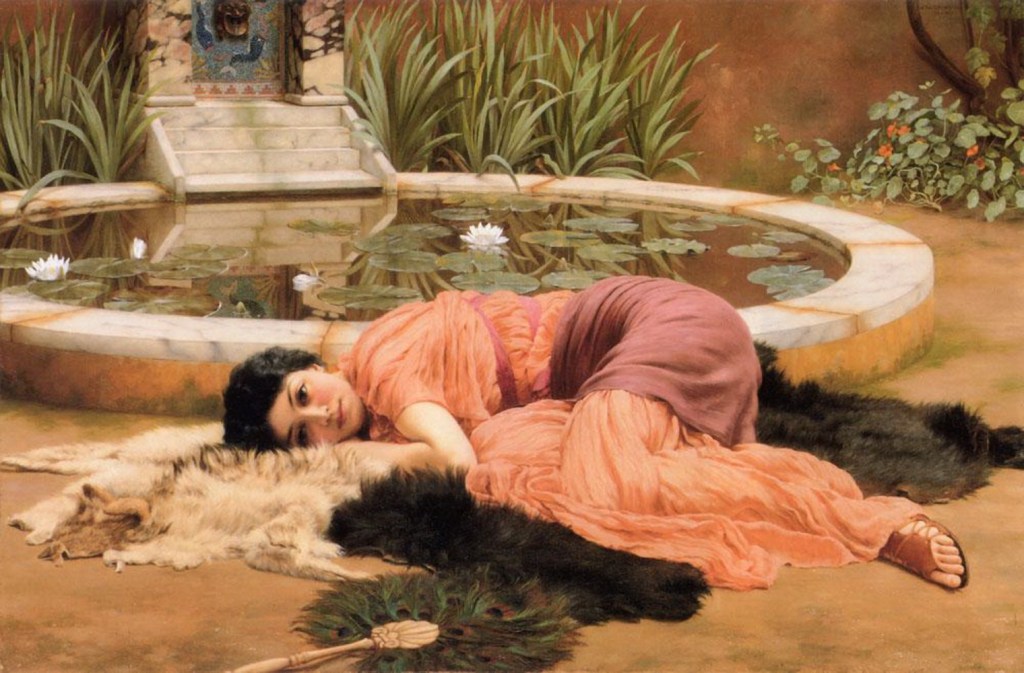
    Artwork: Dolce Far Niente, 1904, John William Godward

    If you happen to stumble across this corner and experience similar things, or if you have adulting tips for me, I am one comment or e-mail (hello@betweeneverywhereandnowhere.com) away.

    Leave a comment

    đź’Śhello@betweeneverywhereandnowhere.com