Tag: life

  • Sparvens visa

    Sparvens visa

    Hör du sparven lilla, far du inte illa,
    när som vintern är så sträng och kall.

    Utan mycken möda, lär du dig att föda,
    som är nästan minst av fåglar all.

    Listen, little sparrow, do you not suffer
    when winter is so harsh and cold?

    Yet with little effort, you learn to feed yourself,
    though you are among the smallest of all birds.

    This is how the Swedish folk song begins.

    Most of the time, when we read literature, we try to understand all kinds of ideas. We turn the pages of numerous books, sit and think about answers, or try to find a meaning. Sometimes we are not even aware that we are searching for one, or that we are in need of one. But suddenly, a song catches your ear. Its melody gently invites your mind, and its lyrics take your hand into their unique universe.

    Sometimes it is as simple as that.

    Kan du fågel lätta, mig helt kort berätta,
    från det allra första, minsta med det största.

    Säg om dig behagar, om din levnads dagar,
    ifrån början till din levnads slut.

    Little bird, can you tell me briefly
    of all things, from the smallest to the greatest?

    Tell me, if you will, about your life,
    of all your days, from its very beginning to its end.

    Sometimes I wish I had a magic lamp or a magic sphere that could tell me what I need right now, why I want a certain thing, and why I have what I have. Then I realize that we already have something like that in our lives. The only difference is that it does not always come in the shape of a sphere or in the form of a lamp.

    Sometimes it is a folk song.

    Although I try to understand this “flow” and accompany it, I cannot help asking: Could this have beenthat instead? Could I have had this rather thanthat? Whythis? Why not that?

    Stinn uti min kräva, hämtad utav näva,
    klara vattendroppar utan silver koppar.

    My belly is full, filled with clear drops of water,
    offered by hand, without a silver cup.

    I found one of the most persuasive truths in the lyrics of a Swedish folk song.

    It was this, not that, because this was what I needed to have, what I needed to experience, what I needed to leave behind. Although this sounds like a cliché, it is not as easy to digest and accept as it may sound.

    The sparrow found water. It had what it needed, without needing a silver cup. It needed water, and somehow, it found the water it needed.

    Perhaps this is where I started thinking about how we live.

    Schopenhauer famously described life as swinging like a pendulum between pain and boredom – the pain of unfulfilled desire and the boredom that follows when our desires are satisfied.

    Sometimes I think that nowadays, instead of our lives simply swinging like a pendulum, we have become pendulums ourselves. But between what are we – pendulums – oscillating exactly?

    Oscillating between possibilities and realities. Between what we hoped for and what we found. 

    Between what we wanted and what we got. Between what could have been and what actually happened.

    We start with “what I want” and end with “what I could not get”.

    Somewhere between these two ends, however, there is a life being lived.

    And I sometimes think that this is the part we forget.

    We become so occupied with the distance between what we hoped for and what we found that we stop seeing everything that happens in between. We look at one end and then the other, comparing, measuring, imagining alternatives. We wonder whether we should have had this instead of that, whether we should have been somewhere else, whether another possibility would have suited us better.

    And while we are doing this, life is happening in the middle.

    Are our lives, or our existence, really all about our desires and our failures? Why do we reduce everything to such simple terms when doing so does not even serve us? Why do we reduce ourselves to pendulums?

    Why do we keep asking what we could have had while forgetting to notice what has already found its way to us?

    Anything and everything may go right or wrong. You may have this and not have that now. It may be your failure or your success.

    But perhaps there is something else happening too.

    The sparrow needed water. It found water.

    And perhaps we, too, keep meeting what we need in forms we would never have thought to ask for. Not because everything necessarily happens for a reason, and not because every experience is secretly designed for us, but because life is not made up only of what we hoped to find.

    It is also made up of what we encounter along the way – what sustains us, what changes us, what teaches us, what we leave behind, and what allows us to continue.

    Sometimes I wonder whether this is why certain things arrive in our lives exactly when they do.

    We may never know.

    Maybe you are served your coffee in a cartoon cup rather than a ceramic one because, at that moment, you were simply meant to have some coffee. Maybe the ceramic cup would have made no difference at all. Maybe you were protected from a possibility you could not see. Or maybe you are supposed to invent something out of the burning sensation in your hand.

    Or maybe it was simply a cartoon cup.

    Who knows?

    We have our desires and our achievements. Where are they now?

    What kind of feelings do your achievements awaken in you? And what about your desires?

    I decided that I do not want to be a pendulum, missing my life while oscillating between “what could have been” and “what could be”.

    I want to notice what happens in between.

    This may also be a starting point. I will definitely continue wanting, wondering, imagining different possibilities, and maybe bargaining with the universe, but I decided to stop living in the void of the distance between what I hoped for and what I found. I do not want this spectrum to be the whole measure of my life.

    I have come to see the simple yet warm sentence of Elizabeth von Arnim a little differently:

    How grateful I felt to the kindly Fate that has brought me here and given me a heart to understand my own blessedness.

    It may not be about believing that everything happened exactly as it was supposed to happen.

    It may be about realizing that, somehow, we are here.

    And that somewhere between what we hoped for and what we found, there was a life that brought us here.

    The sparrow did not need a silver cup.

    It needed water. And it found it.
    Then it flew and landed in her garden.

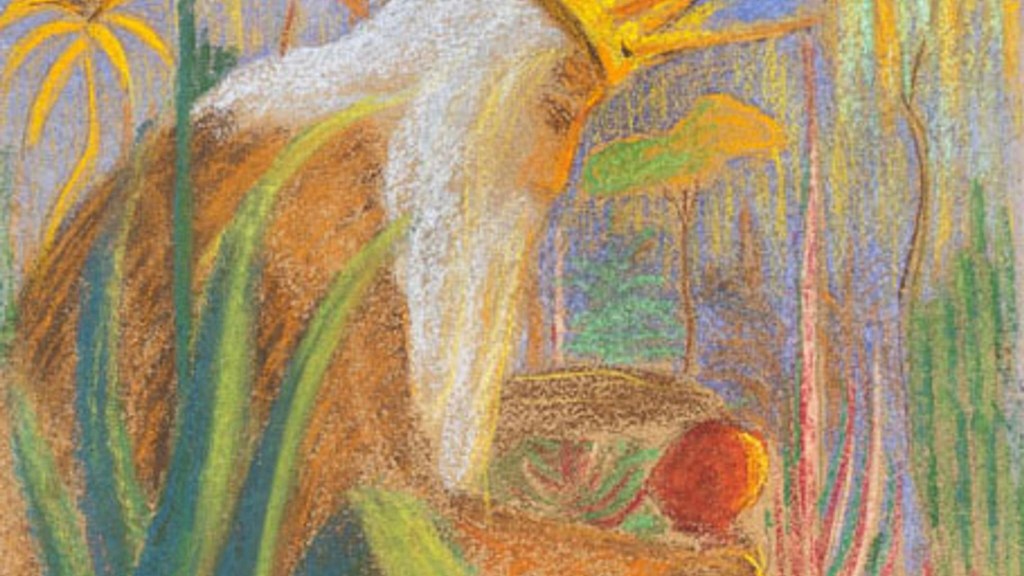
    Artwork: Rex. I eskizas iš vitražų diptiko, Mikalojus Konstantinas Čiurlionis
    Leave a Reply

  • My Life Had Stood a Loaded Gun

    My Life Had Stood a Loaded Gun

    There are certain sentences that feel less like literature and more like recognition. You do not simply read them; you recognize something that has been quietly living within you all along.

    This is how I feel whenever I truly pause at Emily Dickinson’s My Life Had Stood a Loaded Gun. Words written by a stranger, perhaps centuries ago, can suddenly become mirrors for thoughts I had never managed to articulate myself.

    My Life Had Stood – a Loaded Gun –.

    The metaphor has stayed with me ever since.

    What if my life has stood like a loaded gun, and every experience I have lived has become another bullet?

    But then another question followed.

    What are these bullets really made of?

    Could words themselves become my bullets in this lifetime?

    Who decides where they are aimed?

    Am I truly capable of deciding what this gun will yield, or am I merely the one carrying it?

    For a long time now, I have been trying not to resist what people often call the flow. Yet before surrendering to an idea, I cannot help questioning it.

    Can we truly persuade ourselves that such a thing exists?

    We speak of flow as though it were self-evident. We encourage one another to trust it, surrender to it, and stop resisting it. Yet if there truly is a flow, why am I being carried into this one and not another? Could its mystery lie in never knowing its direction, its contents, or the story into which it has already placed us?

    Despite these questions, I still believe in free will. I believe in planning, determination, responsibility, and conscious decisions. Yet I cannot ignore that life continually confronts us with boundaries we never chose ourselves: the things that happen, the things that never happen, the opportunities that quietly appear, the ones that disappear despite every effort, and the unexpected situations into which we somehow find ourselves being pulled.

    If there truly is a flow, perhaps we do not simply believe in it—we eventually recognize it through the shape our lives take.

    For as long as I can remember, I have believed that nothing happens in vain.

    And for me, it has never been Why me?

    It has always been Why this?

    Life simply keeps happening to everyone.

    Beautiful things. Painful things.

    Ordinary things. Life-changing things.

    None of them belong exclusively to us.

    What fascinates me is not that these things happen.

    It is how differently they continue to exist after they have happened.

    The very same event may quietly dissolve into one person’s memory while becoming another person’s identity.

    A conversation, a rejection, a delayed train, a city, a diagnosis, a book, a success, or even a stranger encountered only for a brief moment may continue living within someone for years—not because the event itself was extraordinary, but because of the meaning gradually woven around it.

    Perhaps this is also why I have never felt comfortable with how easily we reduce life’s turning points to heartbreak.

    Is that really the case?

    Perhaps we call it heartbreak because every outcome eventually finds its way into the heart. Every ending, every disappointment, every unanswered question seems to leave something behind there.

    But does everyone truly carry life in the heart?

    Or do some carry it somewhere else? Or nowhere at all?

    Perhaps that is another question altogether.

    There are heartbreaks, certainly.

    But along with heartbreaks, there are also mind-breaks.

    Dream-breaks. Ideal-breaks. Identity-breaks.

    And countless quieter fractures that rarely have a name.

    Sometimes what changes us is not the loss of a person, but the loss of an idea. A certainty. A future we had already begun living inside our minds. A version of ourselves that never came into existence.

    Perhaps these are the bullets.

    Not the events themselves, but the meanings we slowly forge from them.

    The bullet is not the rejection, the city, the illness, the book, the success, or the heartbreak. Those belong to life.

    The bullet is what remains after they pass through us—the meaning that quietly settles within us, gradually shaping how we understand ourselves and, eventually, how we move through the world.

    Maybe that is why nothing happens in vain.

    Not because every event carries an objective purpose waiting to be discovered, but because meaning is never entirely contained within the event itself. It comes into existence in the encounter between life and the person living it.

    Perhaps this is also why I have never been interested only in asking what happened.

    I find myself asking a different question nowadays.

    Who did it happen to?

    Because perhaps that is where meaning truly begins.

    The event may be ordinary. The person who carries it never is.

    That ordinary event may eventually become a painting, a piece of writing, a photograph, a melody, a conversation remembered years later, or even a small pin attached to someone’s bag.

    The event belongs to life.

    The meaning gradually becomes part of the person.

    So why am I here, thinking these thoughts and sharing them?

    And why are you here, reading and witnessing my possible bullets?

    Out of all the places in this virtual universe and out of all the words ever written, why would our paths happen to cross here, in this particular moment?

    Maybe there is no answer.

    Or perhaps there never needed to be one.

    Perhaps what we spend a lifetime carrying is not the weight of our experiences, but the meanings we create from them.

    And perhaps what this loaded gun ultimately yields has never depended solely on what happened to us, but on who we became while carrying every bullet.

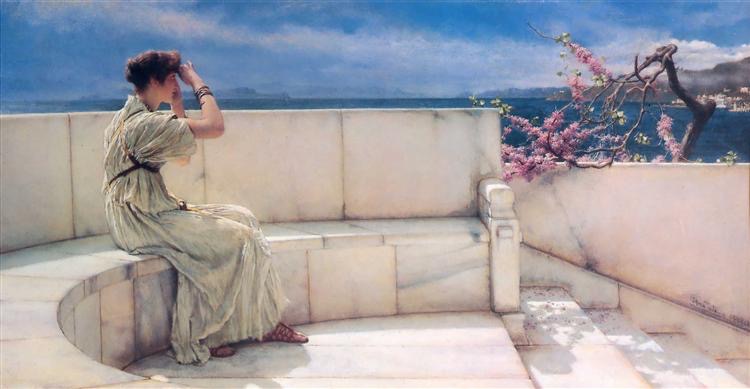
    Artwork: Expectations, Sir Lawrence Alma-Tadema

    Leave a Reply

  • My Motherhood Is Not for Sale

    My Motherhood Is Not for Sale

    Why financial incentives aren’t enough for a generation with deeper concerns

    Lately, news headlines, political debates, and public reports seem obsessed with one topic: declining birth rates. Governments express concern that shrinking younger populations can no longer support aging pensioners. In response, they’ve begun offering solutions—most of them financial.

    Tax breaks. Cash handouts. Free childcare. Lifelong exemptions.
    The message is clear: “Have more babies, and we’ll make it worth your while.”

    I get it. Parenting is expensive. These offers might help some.
    But as a young adult woman, I can’t help but ask:
    Is that all it takes? Just money?
    Because for me, finances aren’t even my first concern.

    More Than an Economic Transaction

    Having a child is not a transaction—it’s a lifelong responsibility.
    And I believe that responsibility begins long before birth.
    It means being willing to prioritize someone else’s life over your own. It means raising a human with love, presence, patience, and values.

    I don’t want to be a parent who kicks their child out the moment they turn legal age. I don’t want to raise someone into a world where I can’t offer at least the basics of security, dignity, and belonging. I want to raise an individual with as few what-ifs as possible.

    And no tax cut can guarantee that.

    What Kind of World Are We Raising Children Into?

    These days, I worry about more than just baby formula and school fees.
    What if my child is harassed on the street, or silenced in a classroom?
    Will they have access to clean food?
    Will they be free to travel, to think, to become whoever they are meant to be?

    What good is financial support if the world they’re born into feels hostile, polluted, or unsafe?

    Also, Let’s Talk About Fairness

    By giving benefits only to women who choose motherhood, what message are we sending to those who deliberately choose a child-free life?

    Will this widen the gap between women in the workplace?
    Will employers exploit these policies, benefiting from tax loopholes while pressuring women on both ends? 

    And what about men? Women don’t conceive by simply germinating on their own. Ignoring a future father’s role and struggle is just another form of injustice, and it reinforces the stigma that raising children is solely a woman’s duty.

    It’s not that I’m against support. I’m against pretending that support should be conditional on reproduction.

    If There’s a Way to Break It, Then There’s a Way to Fix It

    If we’ve found ways to turn people into numbers, to measure women by wombs, and to frame parenting as a productivity issue, then surely, we can also find ways to restore balance.

    Give us safety.
    Give us access to health and education.
    Give us clean food, fair politics, and breathable skies.
    Let us build lives worth living—with or without children.

    And only then—only then—ask us about birth rates.

    Because some of us need more than money to bring a new life into this world.

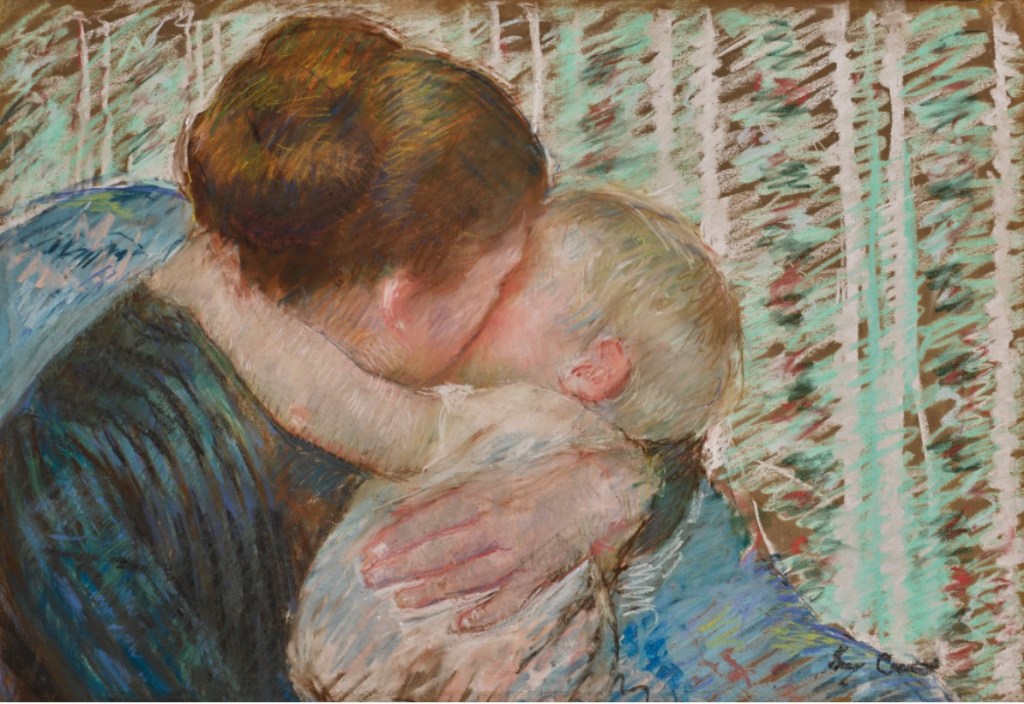
    Artwork: Mother and Child (A Goodnight Hug), Mary Cassatt

    💌hello@betweeneverywhereandnowhere.com

    Leave a Reply