Tag: languages

  • What Do You Feel?

    What Do You Feel?

    A Sunday Afternoon on the Island of La Grande Jatte, Georges Seurat

    You woke up and started the day.

    What do you truly feel?

    Busy schedules, traffic jams, overpriced tags on the shelves…
    Life moves fast, almost mechanically.

    But somewhere in between all this — what is it that you actually feel?

    Have you ever paused, even for a minute, to notice what is passing through your mind, your heart, your body?
    Not only to explain or justify it, but simply to notice it.

    What is “to feel” anyway?
    Dictionaries define it simply as experiencing something physical or emotional. A simple definition for something that rarely feels simple.

    We know many names for what we feel: happy, sad, overwhelmed, devastated, embarrassed, angry.

    But there are moments when none of these quite fit — moments when language feels insufficient, and we find ourselves explaining a single feeling with entire paragraphs.

    Maybe the problem is not that we don’t feel enough.
    Maybe we just don’t always have the words.

    And when we don’t have the words, we sometimes begin to treat the feeling itself as if it doesn’t quite belong — as if it is too vague, too much, or simply unnecessary.

    But perhaps it is not the feeling that is unfamiliar, only the language surrounding it.

    I have never been someone who is consumed by emotions, nor someone who ignores them.

    I tend to sit with them, to make sense of them — sometimes at length.

    I could write pages about a single feeling.

    And yet, sometimes, what I look for is just one word.
    One term that reminds me I am not the only one who has felt this.

    This is where languages quietly step in.

    What has always fascinated me about them is this:
    Some seem to have paused longer on certain emotions — long enough to give them a name.

    There are moments when time suddenly feels limited — when you start measuring your life against invisible deadlines, and a quiet anxiety settles in.
    Not loud, not dramatic, but persistent.
    In German, there is a word for this: Torschlusspanik.

    Or those rare moments when you are completely immersed in the present — when nothing else seems to exist beyond what you are living right now.
    A kind of joy that is calm rather than loud.
    In Welsh, they call this Hwyl.

    Or the restless anticipation of waiting for someone — checking the door, looking outside, feeling time stretch in an almost physical way.
    In Inuit, this becomes Iktsuarpok.

    And then there is that quiet, almost bittersweet awareness that something is beautiful precisely because it will pass.
    Not despite its impermanence, but because of it.
    The Japanese have a word for this: Mono no aware.

    Even the darker corners of being human have found their place in language.

    That subtle, uncomfortable moment when someone else’s misfortune brings a sense of satisfaction you didn’t ask for.
    In German: Schadenfreude.

    If you notice closely, these words do more than describe emotions.
    They carry their weight, their rhythm, their texture.
    Some feel light, others heavy. Some linger longer than others.

    And perhaps this is where something deeper reveals itself:

    Being human may be a shared condition, but the way we are allowed to experience it is not always the same.

    Some cultures make space for certain emotions, while others leave them unnamed — and therefore, often unnoticed.

    And when a feeling has no name in the language we live in,
    it becomes easier to overlook it.
    Not because it is insignificant, but because it has nowhere to stay.

    Yet these experiences are not foreign to us.

    Perhaps learning new words for emotions is not just about language.
    Perhaps it is a way of recognizing parts of ourselves we couldn’t quite name before — not because they were absent, but because they were never fully acknowledged.

    Because to feel is not always loud.
    It is not only a racing heartbeat or a visible reaction.
    Sometimes it sits quietly — in your chest, in your stomach, behind your eyes — waiting to be noticed.

    And when a feeling feels too complex, too layered to be named,
    it might help to remember this:

    Somewhere else, in another language, shaped by another way of seeing the world, someone has already felt it deeply enough to name it.

    You are not alone in your feelings — even when your own language does not seem to have a place for them.

    And maybe learning these words is not only about understanding others, but about finally making space for ourselves.

    If you are curious to explore more of these emotions and the words that hold them, you might enjoy The Book of Human Emotions by Tiffany Watt Smith.

    2 responses to “What Do You Feel?”

    1. The Luttie Board Avatar

      I like how incredible you are in the way you blend emotion, culture, and language together.

      Liked by 1 person

      1. betweeneverywhereandnowhere Avatar

        Thank you! I’m really glad you felt that!

        Like

    Leave a comment

  • Your Language Learning Journey is More than Memorizing

    Your Language Learning Journey is More than Memorizing

    Photo by Emily Levine on Unsplash

    When you first start learning a language, the easiest part often feels like memorizing vocabulary or grammar rules. Flashcards, drills, lists—it’s straightforward, even satisfying to tick off those boxes. But that’s only the beginning.

    The real challenge lies beyond memorization. It’s about willpower, patience, and the deliberate effort to make that language part of your daily life—your thoughts, your identity, your way of seeing the world.

    Whether you want to reach native-like proficiency or simply shed the feeling of being an outsider to that language, it doesn’t matter. Every learning process requires its own respect and patience.

    To truly succeed in a language, you need to go deeper than words. You must invite it in, let it reshape your mindset, and live with it—not just learn it. That process isn’t quick or easy, but it’s the only way to move from being an outsider to feeling at home in a new language.

    As a translator, I’ve learned that language becomes alive when it stops being just something you study and starts becoming something you live. In this post, I’ll share how I approach this ongoing journey of internalizing a language, and I hope it helps you find your own path, too.

    First things first: Your Mother Tongue is Your Reference — Don’t Be Afraid to Speak

    When learning a new language, many of us hesitate to speak because we fear making mistakes. But let me ask you — are you flawless even in your mother tongue? We all make errors and stumble over words in our native language; it’s part of being human. So, it’s completely normal to have imperfections when you’re learning a new language. What truly matters is your effort, respect for the language, and your intention to express yourself clearly and sincerely. Speaking—even imperfectly—is one of the best ways to grow.

    Second – Think of the Language Like a Puzzle

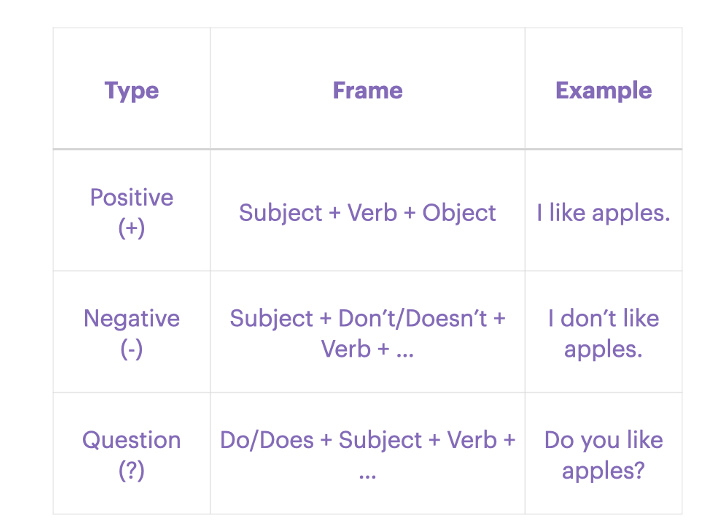
    Learning a language is a bit like solving a puzzle. Every language has its own grammar rules and sentence structures, and your job is to piece them together. Start by creating mental “frames” — for example, one for positive sentences, one for negatives, and one for questions. 

    An example of verb sentences in the present tense

    Once you have these basic frames in place, all that’s left is to fill in the right words in the right spots. It’s really as simple as that. With practice, building sentences in your target language will become more natural and intuitive. And don’t forget, like any puzzle, the more you engage with the pieces, the clearer the picture becomes.

    Third – Have a Magazine or Newspaper Handy at All Times

    Magazines and newspapers are some of your best allies in this journey. Learning a language is not just about words — it’s about understanding the way your target community thinks and communicates. Following current affairs, noticing the words they use to describe events, and observing how they pair stories with images will help you absorb not just the language but the culture behind it. It doesn’t matter if your source is printed or digital — today’s online versions are just as valuable, and the digital style itself is part of the culture you’re trying to embrace.

    Fourth – Balance Your Skills

    During this journey, the most important aspect is creating a balance among your proficiencies. You shouldn’t forget that along with reading, writing, speaking, and listening are your holy trinity too.

    As Arthur Schopenhauer in Essays and Aphorisms says:

    ‘… So, it comes about that if anyone spends almost the whole day in reading, and by way of relaxation devotes the intervals to some thoughtless pastime, he gradually loses the capacity for thinking; just as the man who always rides, at last forgets how to walk.’

    Do no let your brain get numb with only one outweighed skill. Don’t just become a reader of the language. Become a speaker, a listener, and a thinker in it too. You’ll love every step of this journey.

    Fifth – Catch Your Own Pace

    No, it is never too slow or too fast if it feels right for you. In this journey, the only valid reference is you.

    Some days, you may not feel like learning anything. And sometimes, missing a few days of practice can make you feel like giving up altogether. But don’t let that voice win. Even if you learn a word a day, form just one sentence, or listen to just one phrase a day, it will add up to 365 new words, sentences, and maybe ideas by the end of the day. 

    Small steps will take you there. Never underestimate the quiet power of consistency no matter big or little.

    Sixth – Experience Your Moment with the Language You Learn

    Whatever situation you are in, try to describe or talk about your moment with simple words and sentence structure you know. If the appropriate words do not come to your mind, try to explain that “word” with other simple words. The more you practice, the more complex phrases you will handle. There is no right or wrong in this. Just keep going. The fluency comes with trust in your own voice.

    Seventh – Listen to Radio

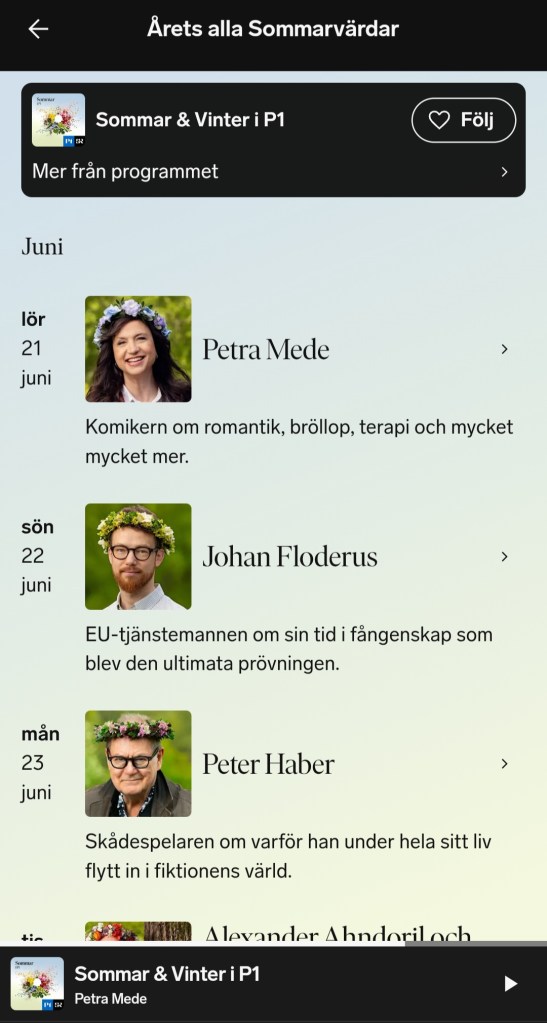
    Radios, especially via mobile applications, are best and easiest way to keep you up to date in your target culture. Here, you also have possibility to hear the voices of your target culture. Try to imagine yourself as a guest in one of the studios and answer some personal questions. It is so fun I promise!

    My current favorite is Sommarprat 2025 programme on Sveriges Radio!

    Eight – Consider Having a Diary

    If you think you aren’t proficient in writing, keep a diary. I even recommend going back after a while to revisit your earlier entries. You’ll be surprised at how far you’ve come, both personally and linguistically. 

    Ninth – Practice, Practice and More Practice

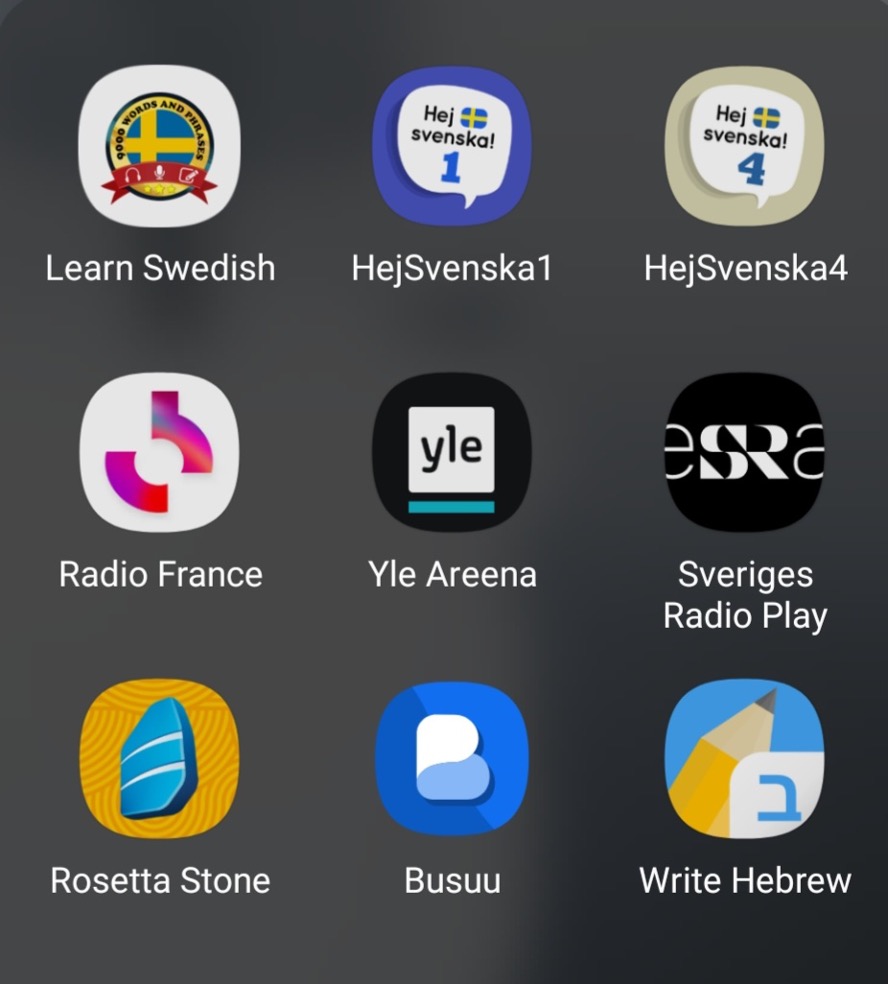
    If you need more practice in speaking, you may find language workshops at your level or simply make practice via some language applications like Busuu – not an ad, just a helpful tool I’ve used myself. Verbal practices are so important in terms of shedding out the language shyness. In addition to that, consider engaging with community-based platforms where you can write reviews, leave comments, or join discussions — like sports forums, skincare review apps, or interest-based websites. These spaces allow you to practice in context and interact with real people around real topics. That’s how language becomes more than a skill, it becomes part of your daily rhythm.

    Just some of my applications. There is no ending in learning.

    Tenth – Accept That This Will Take a While

    Like everything meaningful, language learning is a whole process. It is a lifelong skill and a rich process that goes far beyond memorizing some grammar rules or building up some vocabulary. It is not abnormal for you to take some time to be proficient in a language. Learning a language requires also being proficient in that culture and society too. In these times where human capabilities are deeply replaced by computers, it is a great act of staying faithful to your own mind.

    If you have come this far, wish you luck in your journey! If you have any suggestions or questions, please do not hesitate to share. 💜

    💌hello@betweeneverywhereandnowhere.com

    Leave a comment