Tag: identity

  • I Keep Changing — Again and Again

    I Keep Changing — Again and Again

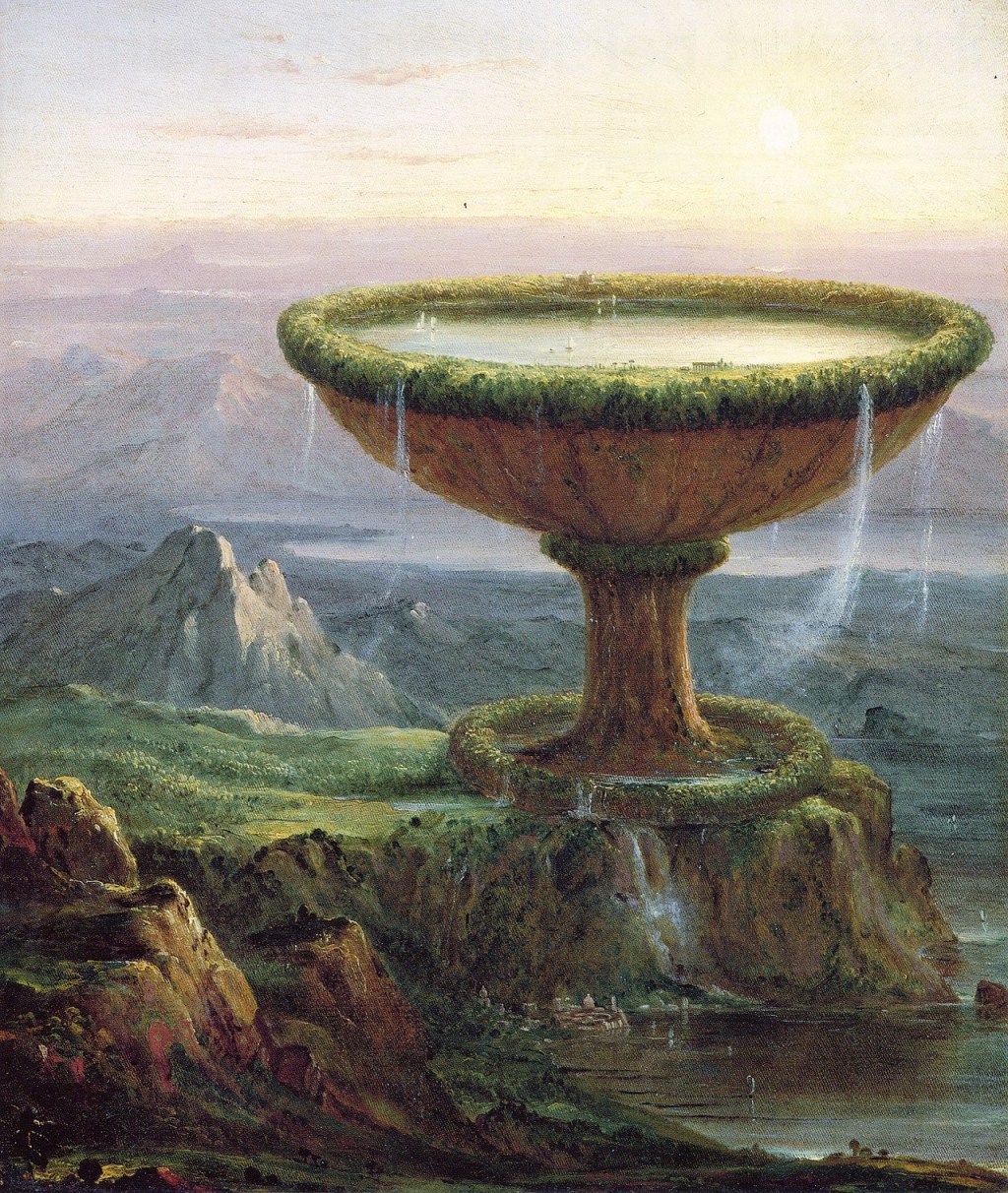
    The Titan’s Goblet, Thomas Cole

    It is often said that change is the only constant in life. But that sentence has never felt entirely comforting to me. Because the real question is not whether change is constant, but how one is expected to live inside that constancy.

    We are born into patterns. We are raised within structures that gradually become indistinguishable from who we are. Familiar streets, routines, faces, even the predictability of daily life begin to feel like extensions of identity rather than external conditions. I used to rely heavily on that sense of stability. It felt like a roof — not just protective but defining. Stability was control, and control became my identity. So, I assumed that being constant meant being intact.

    That assumption began to fracture when I was fifteen, after moving to another city because of my parent’s profession. Nothing dramatic happened in the way change is usually narrated, yet everything shifted. What I had known as “normal” disappeared almost entirely, and I was left in a space where adaptation was no longer optional. It had to be learned, almost physically — like a muscle that had never been used before.

    But what is change, really? Is it simply going with the flow? Or is it a subtle form of self-manipulation, a quiet adjustment made just to survive? Is it adaptation, or survival instinct? Or does it begin to feel like alienation — a gradual distance from earlier versions of the self? Or is it something more spatial: a wall between what came before and what comes after, with a door left open for whatever is still forming?

    I remember speaking to my childhood friends during that period. Nothing in our conversation had explicitly changed, yet something had already shifted beyond repair. They were still speaking to a version of me that no longer fully existed, while I was already somewhere else. That realization left me with a question I could not settle: if I am already different, then which version of me is the “real” one — if any of them are?

    Accepting this has never been simple. Sometimes change feels less like growth and more like a quiet disloyalty to earlier versions of myself. It raises an uncomfortable uncertainty: am I evolving, or am I fragmenting into disconnected states that only appear continuous from the outside?

    At times, I ground this uncertainty in something simpler. I am a living organism, shaped by conditions and response. Not everything needs to be elevated into meaning. Some things simply happen because they must. In that sense, change might also be understood as a form of digestion — what I experience is not simply lived through but processed internally. And what remains becomes what is called transformation.

    Still, I needed a way to observe these shifts rather than only experience them. That is when I turned to journaling. Not as a structured practice, but as a way of capturing fragments of myself in different states. I began documenting thoughts, reactions, habits — even added details that seemed to define who I was at a given time. Over time, those pages became a kind of archive. Not of a single self, but of multiple versions that do not always align.

    Looking back at them, I can trace change not only in circumstances, but in perception. Things that once felt overwhelming now appear distant, almost minimal. Yet at the time, they shaped entire emotional realities. There is something unsettling in that realization — how absolute something can feel in the moment, and how temporary it becomes later.

    Sometimes reading those entries feels like encountering someone else. I recognize the words, but not always the person behind them. And that distance adds another layer to this experience: the self is not as continuous as it appears.

    Perhaps the real difficulty is not change itself, but the expectation of continuity. We tend to assume that identity should remain coherent across time. Yet what I observe is less coherence and more accumulation — overlapping states that do not fully resolve into one another.

    I think there is a certain courage required to face all of these versions without forcing them into a single narrative: who we were, who we are, who we are becoming, and the versions we no longer fully recognize. The answers may not lie in one of them, but in the gaps between them — in what shifts, what disappears, and what quietly persists.

    In that sense, change is not something to be resolved. It is something to be positioned within.

    Change is indeed the only constant in life.
    And I am still learning how to exist inside that constancy.

    Leave a comment

  • The Sensory Evidence of “We Were Here”

    The Sensory Evidence of “We Were Here”

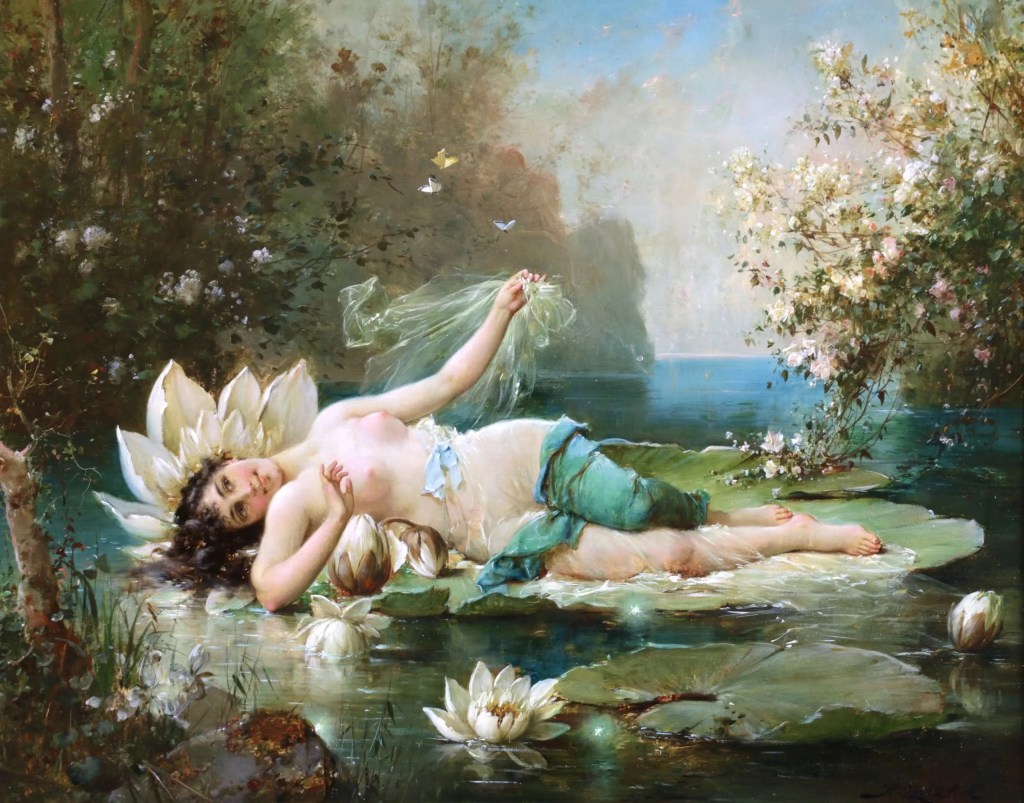
    Water Nymph, Hans Zatzka

    There are many ways a person can reflect the tangible version of their true essence, and just as many ways to conceal it.

    Perfume sits somewhere in between.

    It is one of the most subtle yet striking expressions of the self — visible and invisible, present yet intangible.

    Perfume is often defined as a mixture of fragrant essential oils or aroma compounds, historically used for masking odors, healing, rituals, or even status signaling.

    Today, it feels more like an accessory. Sometimes a refined field of interest, sometimes simply an identity in the form of a spray. But it is never only about notes and compositions.

    We carry two kinds of scent.
    One that we construct — something we choose, apply, and project.
    And another that exists without our intervention — something biological, innate, entirely our own.

    I won’t go into the anthropological or biological depth of it. But it does raise a quieter question: How true do we remain to our raw existence through what we choose to smell like?

    Modern life already distances us from that rawness. Artificial food, synthetic fabrics, constant stress — all of it interferes with something that was once more instinctive, more unfiltered.

    Of course, hygiene is essential. That is not the question here.
    The question is something else.

    Isn’t perfume almost too personal?

    It begins with something natural — herbs, spices, flowers — reduced, distilled, transformed. And then it becomes something we carry on our skin, in our hair, on our coat.

    One spray.
    Tiny particles enter the air, reach the senses, and settle somewhere between memory and instinct. They can revive something, signal something, suggest where you belong or simply where you are going.

    That is a lot for something so unseen.

    I tend to see anything personal — anything that reflects my own taste — as something almost intimate. Even when it is something as simple as a scent.

    If I am drawn to something, I don’t arrive there casually. I try, I eliminate, I return.
    And when I finally find something that feels right, it feels earned.

    Lately, I’ve found myself observing people in perfume sections — the way they test, compare, return to the same strip again. There is a certain kind of attention there, almost like tasting wine or olive oil. A quiet expertise, or maybe just a refined curiosity.

    And I find myself wondering — should something experienced with that much sensitivity really belong to everyone’s perception equally?

    Because when that scent finally settles on me, it feels contained — almost like it belongs within a boundary I cannot quite define. And yet, with a single movement, it dissolves into the air, becoming something anyone can perceive.

    Sometimes that feels like a quiet injustice to the process itself. And I ask myself — does this make me selfish?

    Or am I simply assigning too much meaning to something that was never meant to be this private?

    We engage so many of our senses, consciously or not, to arrive at what we like.
    Maybe we use scent just to reset ourselves, to strengthen our very presence in a certain place, or to maintain a certain emotional state.

    But then another question follows:
    How much of something that can shape my emotional state should belong only to me, and how much of it should spill into the world?

    Scent carries a certain kind of power. And even the same scent settles differently on every person. Quiet, but persistent.

    So, what do we actually mean when we wear a perfume?

    Is it an open declaration of who we are, or a controlled version of it?
    Something we leave behind freely, letting it linger in every space we pass through?

    Or something more contained — something that requires proximity, even permission?

    Should what we choose to smell like remain everywhere we briefly exist, in every person we unknowingly pass?

    Or is it enough, simply, to have a sensory existence at all?

    Maybe it is not even that deep anymore.
    Maybe it is just a habit — a gesture, a routine, a background presence, like music in a film.

    Or maybe it is simply our way of saying we were here — in the language of scented particles, or more precisely in a language no one sees, but somehow remembers.

    Leave a comment

  • Saturn’s Return or Being Welcomed to True Adulthood

    Saturn’s Return or Being Welcomed to True Adulthood

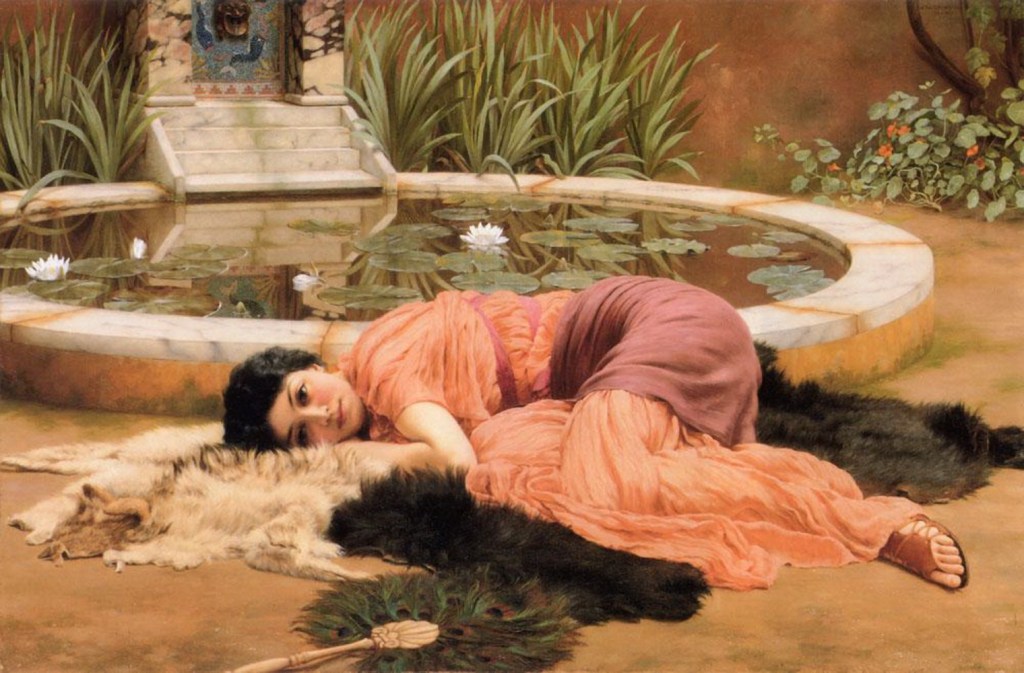
    Dolce Far Niente, 1904, John William Godward

    I am currently somewhere between 29 and 30 years old — somewhere between what I used to call “not yet” and what others confidently name “adulthood.” For the first time, I understand why this age is considered a threshold.

    From a psychological point of view, these years feel like the first real moment when our biological existence begins to support the idea of being an adult. 

    From an astrological perspective, it is often described as a time of harvesting — reaping what has been sown so far. Retrospectively, I realize I started this blog right at the beginning of that phase. This space became one of Saturn’s quiet gifts; a way to keep track of who I am becoming, and who I have the potential to become.

    Up until last year, I was crying, thinking I had failed to build the adulthood I imagined. I felt crushed under the weight of not being able to manage my own ordinariness. 

    But this year, something shifted. Not dramatically, not all at once — but enough for me to start taking pride in what I could build out of the rubble left in my hands.

    When I look back, I see a pattern — as if the universe tested me theme by theme, until it made me free of almost every fear.

    I grew up in a deeply loving family, and my biggest anxiety was always the idea of losing one of my parents. I thought about it so often that at some point it almost felt like I was rehearsing it. And then — it happened.

    It was like the universe said to me: “Don’t waste your energy in vain. Here you go — your self-fulfilling prophecy!”

    I was faced with one of my greatest fears — with pain, with emptiness. But also, unexpectedly, with a strange sense of clarity and a new kind of freedom. Life did not end. I did not collapse in the way I had imagined.

    I continued. One strength added.

    I have always been someone who values depth over quantity, someone who lets only a few people inside her walls. And still, those few managed to betray me.

    And yet — life went on.

    I used to believe in control. In plans, in cause and effect, in carefully constructed paths. I was certain that if I did not pursue an academic career, my life would fall apart. 

    I built a castle out of my ambitions —me and my illusory arrogance, hand-in-hand— within the walls I had built around myself. Then, one by one, those plans failed. 

    Again, I found myself facing the ruins. Not gently, but clearly enough. The universe reminded me that my plans are small in such a vast system. And what remained was not ruin, but space.

    My tests have always been a little harsh and intense. Otherwise, a stubborn, know-it-all spaghetti would probably never have understood how things actually work. 

    It took me 29 years to realize that my “now” is simultaneously my past, my present, and my future. 

    I used to say, almost like a philosopher, that life does not owe us anything.

    It took me 29 years to realize that I do not owe the world a perfectly constructed version of myself either.

    My mind has never been linear. Thoughts scatter — one somewhere in the distance, another right in front of me, another just out of reach. For years, I tried to collect them, organize them, and convert them into some meaningful strings. This was my way to refine my place in this world. 

    Now, I am learning something else: not everything needs to be perfectly articulated to be real. There is a certain relief in allowing things to remain a little unfinished, a little unclear.

    I have always believed that I could handle everything. This year, I admitted something different: just because I can, does not mean I should. Or want to.

    I am learning not to go with the flow, perhaps, but at least no longer to resist it.

    There was a time when I believed that if I had not achieved everything by the age of 25, life would somehow be over.
    Last year, I felt crushed by my perception of reality. This year, I see things differently. Not as success or failure — but as endurance.

    I feel like it is time to shine, but not with something fragile.
    Not like a butterfly emerging from a cocoon, but something else entirely.
    Something formed under pressure, layer by layer. Something like granitic gneiss. Shaped, compressed, transformed — and still here.

    I feel, for the first time, the quiet strength of building an identity.

    A lot has changed, and it will keep changing. But something has settled. The more I try to understand why I exist, the more that question expands into a void I cannot fully grasp. And maybe that is not a problem to solve anymore.

    Sometimes my mind feels scattered, almost absurd — like those self-help books placed next to tomato paste on supermarket shelves. And somehow, that feels accurate.

    I try to embrace it all, and none of it, with the awareness that we are all just a reflected digestion of our experiences.

    Good or bad, right or wrong, successful or not — this is a life.

    And it is mine.

    If you happen to stumble across this corner and experience similar things, or if you have adulting tips for me, I am one comment or e-mail (hello@betweeneverywhereandnowhere.com) away.

    Leave a comment