Have you ever listened to the French composer Maurice Ravel? Because this post is a pure, unapologetic appreciation of his art.
I know there are hundreds of analyses, critiques, and historical readings of any work of art. But I always find myself stepping aside from all of that—away from the academy, away from “what it really means”—and instead focusing on what the piece does to me. What it awakens in my mind. What it places in front of my eyes. What it opens in my imagination.
And for this reason, I love Ravel, and the universe he creates—what I call the Ravelverse.
Take his most renowned work, La Valse, for example. It is often described as a “waltz on the edge of collapse,” a dance dissolving into chaos. But whenever I listen to it—or watch it performed live—the notes do something entirely different to me. They teleport me directly into Ravelverse.
There, I am dressed in elegant clothes, standing in a place so calm it almost feels unreal. A calm so perfect that I cannot fully comprehend it. Everything is suspended in a soft, almost weightless illusion of beauty. And just when I start surrendering to that peace, to that constructed serenity, the percussion arrives.
It doesn’t enter gently. It grabs me by the neck and throws me back into something like reality—raw, sudden, almost painfully tangible. Something soft yet disturbing at the same time. And I love that instability.
Because in that universe, there is nothing you can hold onto. The notes, the harmony, the percussion, the contrabass—they all continuously pull you in and out of reality, illusion, and whatever lies in between. You are never allowed to stay in one place for too long.
On the other hand, Daphnis et Chloé carries the same vibration of Ravelverse, but it moves differently.
Again, you are teleported into a dreamlike space, dressed in your most elegant, unreal version of yourself. But this time, nothing breaks the illusion. Nothing throws you out of it.
It stays intact.
And something begins to chase you.
Not violently. Not suddenly. But persistently.
You are running, escaping, moving through landscapes that feel too beautiful to be stable. And yet that thing—whatever we choose to call it—keeps coming closer. Not loud enough to be named, not clear enough to be understood. But always there. Always approaching.
In La Valse, the illusion collapses and forces you out of itself.
In Daphnis et Chloé, the illusion holds and you are the one trying to escape.
Then suddenly, you wake up.
At least you think you do.
Because you realize it was only a dream. But it is not over—because you have woken up inside another layer of it. This is the kind of illusion that does not end when the music stops. It leaves something behind. A weight that stays with you for hours, as if part of it refuses to let go.
And all his works… I still cannot believe what I hear is also what I see so vividly in front of me. How sound becomes a space. How it takes me away from reality and then suddenly drops me back into the chair I am sitting on, as if nothing happened.
I love watching how the orchestra reflects a kind of quiet dominance when they perform Ravel—an elegant control, as if they are not just playing the instruments but negotiating with them. I love the intensity Ravelverse brings to everyone and everything it touches. I love the way it feels both familiar and completely strange at the same time.
And I don’t think there will ever be a time in the near future when I will get enough of it.
Some places you visit once and leave behind.
Ravelverse is definitely not one of them.
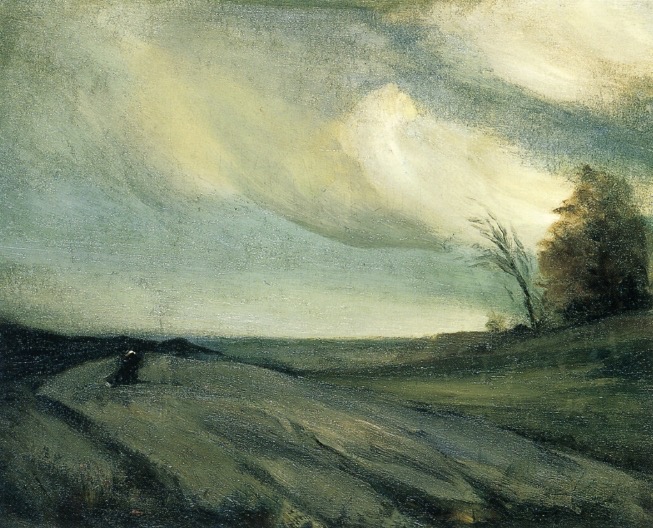
Artwork: The March Wind, Robert Henri


Leave a Reply