Category: On Health

  • The Importance of Balance in Eating

    The Importance of Balance in Eating

    Do you live to eat, or do you eat to live?
    Or, perhaps, that isn’t even the real question.

    When we look closely at our daily rhythms, we notice something simple yet profound: food quietly accompanies the most significant moments of our lives.

    We celebrate achievements with dinners.
    We mourn losses with hot tea in quiet rooms.
    We reconnect with friends over coffee.
    We try to refocus by grabbing a snack “just to reset.”

    Food becomes an anchor, something around which conversations unfold, relationships deepen, and emotions settle. It is far more than a biological necessity; it’s a social script we all instinctively follow.

    Once we recognize this, eating stops being merely “fuel for our bodies.” Feeling full is only the most primitive part of the experience.

    Beyond that, eating carries emotional, cultural, psychological, and even spiritual meaning. Why else do we crave certain foods on stressful days, or why does a particular smell transport us instantly back to childhood?

    In these moments, balance becomes more than portion control. It becomes a form of self-care, a way of regulating our moods and honoring the rituals that shape our days.

    This understanding is not new. Throughout history, many scholars, thinkers, and even prophets have emphasized moderation as a foundation of well-being.

    Avicenna, for example, believed that regulating, and at times even reducing, food intake could help treat a range of illnesses.¹ His broader view suggested that an overloaded body burdens the mind, while moderation creates clarity and vitality.

    Interestingly, this ancient wisdom aligns with how many of us intuitively feel after eating too heavily: slow, foggy, less alert. It also resonates with today’s movement toward eating with intention rather than impulse.

    A similar idea appears not only in philosophy, but also in the evolution of gastronomy.

    In the 1970s, a group of French chefs, trained in the classical kitchens of Fernand Point, began shaping what would soon be known as nouvelle cuisine. They noticed that diners no longer wanted the heavy, elaborate dishes their parents and grandparents had enjoyed. Instead, people were asking for food that felt lighter, healthier, and more surprising, without losing depth, or flavor. The result was a quiet revolution: a cuisine designed not to overwhelm the body, but to leave it clear, energized, and awake.

    Modern science expands on these ideas through what we now call the gut–brain axis. Research shows that eating is influenced by far more than physiological hunger. Sensory cues, like the smell of freshly baked bread, can trigger appetite even when we are full. Emotional states also play a role: stress can shut down hunger or amplify cravings for sweet or salty foods. Hedonic mechanisms, habitual behaviors, sensory cues, and psychological factors all shape not only what we eat, but why we eat it.² Eating is not just a bodily act; it is a psychological and sensory conversation happening beneath our awareness.

    We can even see this dialogue between body and mind in the subtle signals our physiology sends us.

    Morgengabe (c. 1920), Brynolf Wennerberg

    And I notice this balance most clearly in my own body. When I eat in a way that is too one-sided, I feel a quiet heaviness, almost like something in me hasn’t quite settled. I’ve always been naturally distant from animal-based foods, simply because of my taste. But when my nails start breaking more easily, I take it as a gentle reminder to shift my intake and add a little more protein-rich food.

    The same happens with sugar. If I see small bumps on my skin that weren’t there before, I know I’ve been leaning too much on sweet comfort and I give refined sugar a pause. Our bodies speak long before they struggle. Often, they are not trying to control us, they are trying to guide us back to a way of eating that matches our lifestyle, rhythm, and even our genetics. In this sense, the body doesn’t betray us, it mirrors us. Its shape, energy, and appetite simply reflect the life we are living.

    Modern life complicates this search for balance even further. We live in a world overflowing with food stimuli: oversized portions in restaurants, carefully curated “food porn” images on social media, 24-hour markets offering instant gratification. Even our emotions get intertwined with eating, we reward ourselves after a long day, soothe boredom with snacks, or signal a moment of pause with a warm drink.

    These habits are not inherently harmful. But they do require awareness if we want to eat in a way that nourishes rather than numbs.

    Perhaps this is why the proverb “a man is known by the company he keeps” can be reimagined as “a man is known by the food he chooses to eat.” Our food choices often reflect our internal state, whether we are seeking comfort, routine, excitement, or grounding.

    What we take into our bodies doesn’t simply disappear; it becomes part of us. It enters our bloodstream and ultimately reaches our mind, shaping our mood, energy, and clarity. In this sense, eating is not just a physical act but an act of becoming.

    Balance, then, is not a strict discipline or a rigid rulebook. It is a relationship- one we learn, unlearn, and relearn throughout life. It means paying attention to why we reach for certain foods, noticing how they make us feel, and choosing nourishment that supports both our body and our mind.

    Sometimes balance means savoring a meal slowly. Other times it means stopping before fullness becomes discomfort. And often, it means sharing a humble dish with a friend simply because connection is part of nourishment too.

    Maybe the real question isn’t whether we live to eat or eat to live. Maybe it is how consciously we choose to nourish our lives – physically, emotionally, and spiritually – through the simple yet profound act of eating.

    Header: Kvinne kjerner smør (ca. 1920) – Gustav Wentzel

    💌hello@betweeneverywhereandnowhere.com

    Leave a comment

  • Living with Dust-Mite Allergy:                                How I Manage Dust-Mite Allergy on a Budget

    Living with Dust-Mite Allergy: How I Manage Dust-Mite Allergy on a Budget

    Do you have a dust-mite allergy? Are you constantly sneezing, itching, or feeling tired in your own home? You might be living with a dust-mite allergy—just like I was. So, welcome to the club!

    Golden Rule: Don’t fight your immune system; work with it instead.

    That mindset shift was the starting point. Then came the real work: reshaping my environment, especially my bedroom, to support healing instead of irritation. Here’s how I did it, step-by-step, without blowing my budget.

    P.S. I paid for all the products mentioned here myself, so this isn’t an ad.

    🛏️ Step 1. Clean Up Where You Sleep Most

    When you find out your own home is making you sick, the first reaction is confusion. “How can the place I rest be the culprit?” I thought the same until I discovered that dust mites love the same things I do: warmth, softness, and still fabrics.

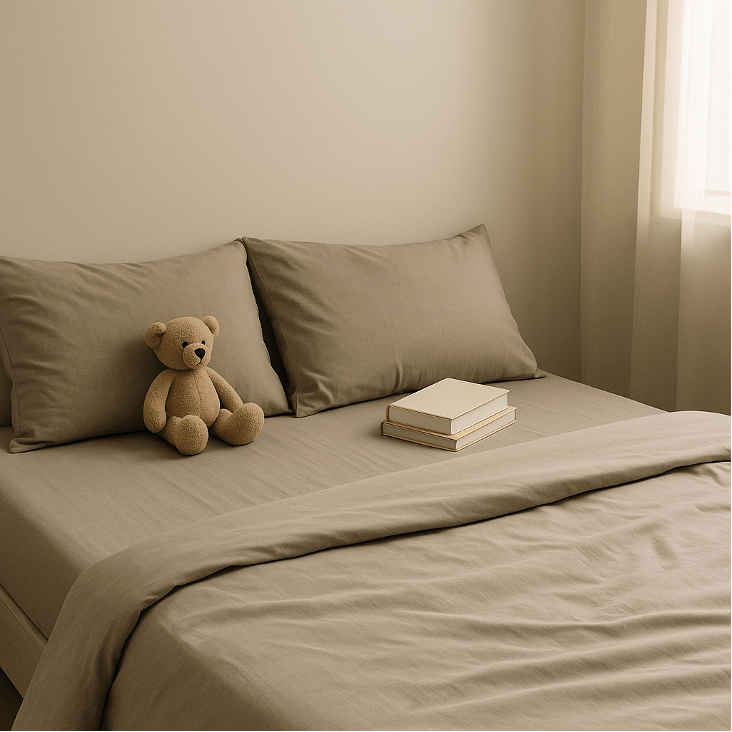
    Research by Adnan Custovic highlights indoor allergens as major allergy and asthma triggers, so your bedroom seems to be the main battlefield. Take it easy. Just take a look around and identify the potential allergens. I examined mine as if it were a crime scene: the bed, the curtains, the wool carpet, the books stacked on my desk, and even the plush toy I’d never thrown away. All of these had quietly collected dust.

    So, I made a simple rule for all my belongings:
    Easy to clean. Hard for dust to settle.

    This filter guided every decision and became my first act of self-protection.

    🛌 Step 2. Upgrade Your Bed Without Buying a New One

    Buying a new mattress is usually the first advice you hear. But honestly, I didn’t want to put a big chunk of my budget into just one thing, as this allergy calls for a more holistic approach.So, I worked with what I had. I aired out my mattress for a few days. Then, I sprayed it with anti-mite spray.

    Anti-mite spray

    And zipped it into a high-quality, tightly-woven anti-mite cover from Velfont

    Velfont anti-mite cover

    Instant upgrade—no new mattress needed. That cover was my biggest investment, and I still think it’s money well spent.

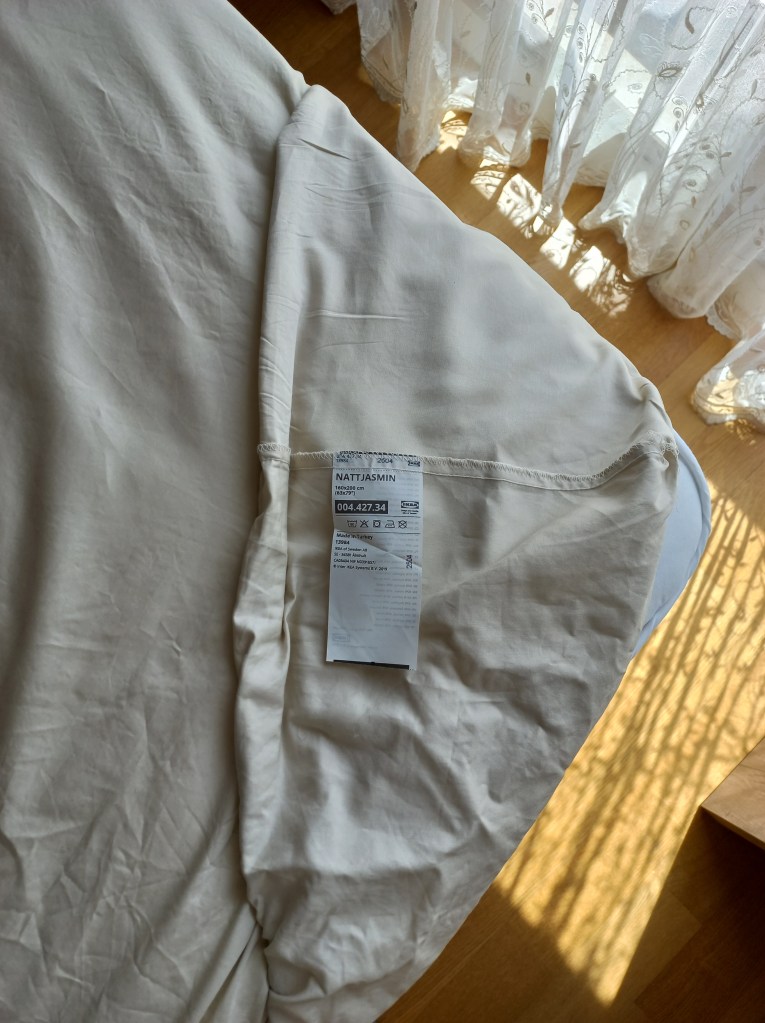
    For sheets, I chose Ikea’s Luktjasmin duvet cover and Nattjasmin fitted sheet—soft, affordable, and with a thread count of 310. Why does that matter? Because fabrics with thread counts between 200 and 600 block dust-mite allergens effectively.

    Ikea Nattjasmin Fitted Sheet

    I also looked for breathable, gentle fabrics like organic cotton, bamboo, or Tencel—easy to wash regularly at high temperatures.

    Ikea Luktjasmin Duvet Cover

    Healing doesn’t have to be complicated, but it has to be intentional.

    💧 Step 3. Washable Pillows Are the Key

    At first, I thought anti-mite pillows were the solution. But real power comes from washing—and washing well.

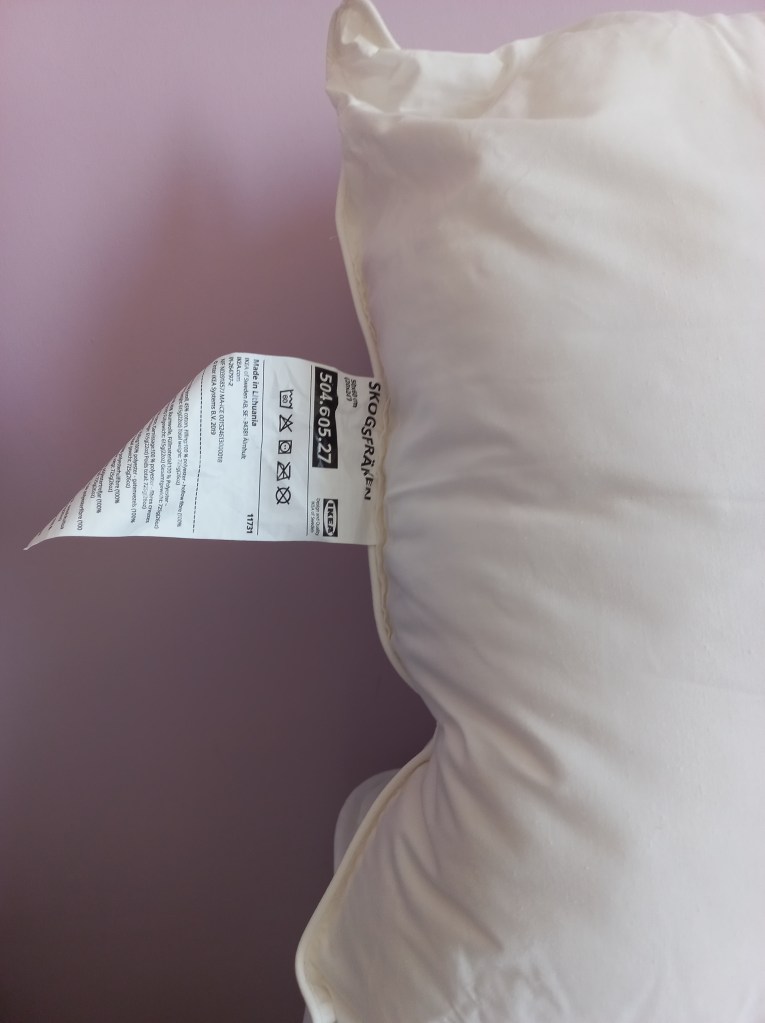
    I switched my existing pillows to Ikea’s Skogsfräken pillows with Ängskorn pillow protectors, all washable at 60°C. That temperature is a secret weapon against dust mites. Washing bedding weekly at this heat has become a little ritual I actually enjoy.

    Ikea Skogsfräken Pillow

    Knowing my pillows are fresh and allergen-free gives me peace at night. It’s simple, but for me, it’s a cornerstone of daily allergy management.

    Pillow Procter and Pillow

    🧹 Step 4. Clean Surfaces Save Your Skin

    I loved having a cozy, book-filled desk—it felt like my safe haven. But honestly, it was a nightmare for my allergy. Papers, books, plants, decorative ornaments, even my laptop collected dust fast. I was lucky that my bookcase is outside my bedroom. May God protect you if you have one in your room! 🙈

    Desk with books on it

    Minimalism was tough for a natural collector like me. But health comes first. I moved my books into a storage case and kept only my laptop and mouse on the desk.

    A desk with laptop on it
    Storage case filled with books

    Every day, I wipe the surface with a damp microfiber cloth. This little ritual feels calming, like I’m protecting myself without turning my home into a sterile lab. It’s a balance, and it works.

    🪟 Step 5. Cut Out Hidden Triggers

    Heavy curtains and thick carpets add warmth and style—but for dust-mite allergy sufferers, they can be silent troublemakers. I learned this the hard way, after realizing these cozy fabrics quietly collected dust and allergens.

    So, I swapped heavy curtains for lighter, easy-to-clean ones. Cleaning became easier and more effective. I gave up on carpets altogether in my bedroom. But if you can’t part with yours, make a strict rule: vacuum daily with a HEPA-filter vacuum.

    I use the Miele Guard L1 Allergy, and it’s a game changer! Finally, I feel like I’m fighting back, not just reacting. 💪🏻

    Miele Vacuum Cleaner

    I also spray anti-mite treatment on mattresses and carpets every few months. Small, simple steps that help keep symptoms at bay, especially in tough seasons.

    👚 Step 6: Seal Off Allergens in Clothing

    Wool and fuzzy clothes feel comforting, especially in colder months. But for me, they were secret carriers of dust mites—and all the itch and irritation that follow.

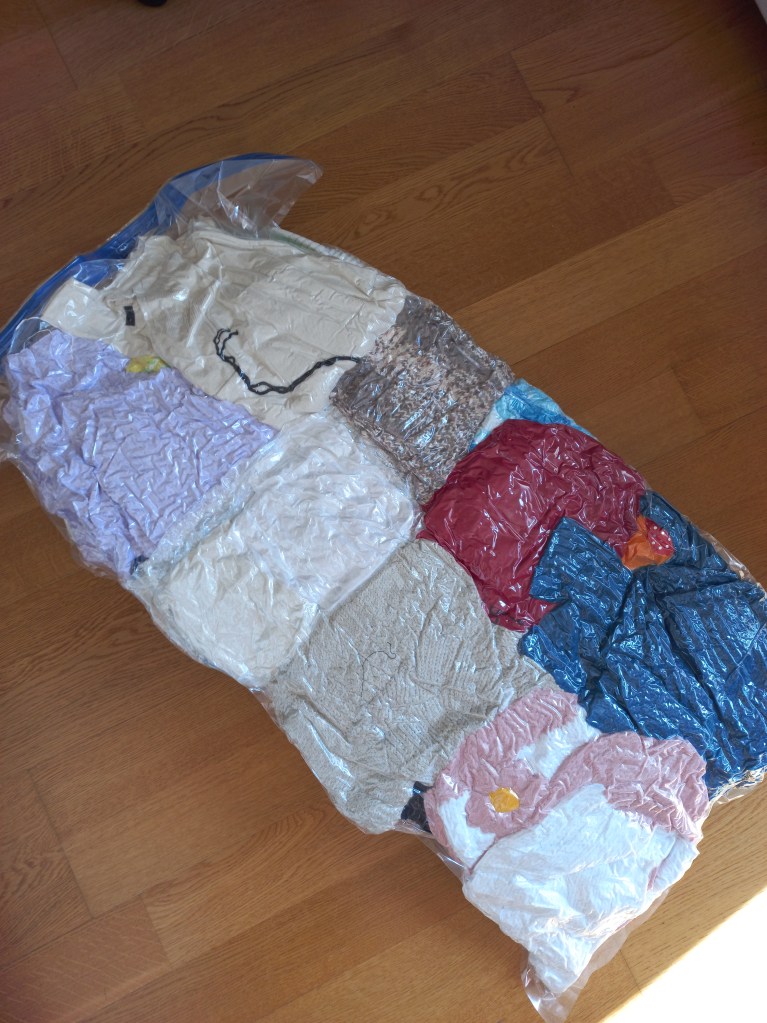
    Vacuum-sealed bags became my best friends for storing these clothes.

    Even my nightwear has its own zipped sanctuary. It might sound over the top, but these small habits make a real difference.

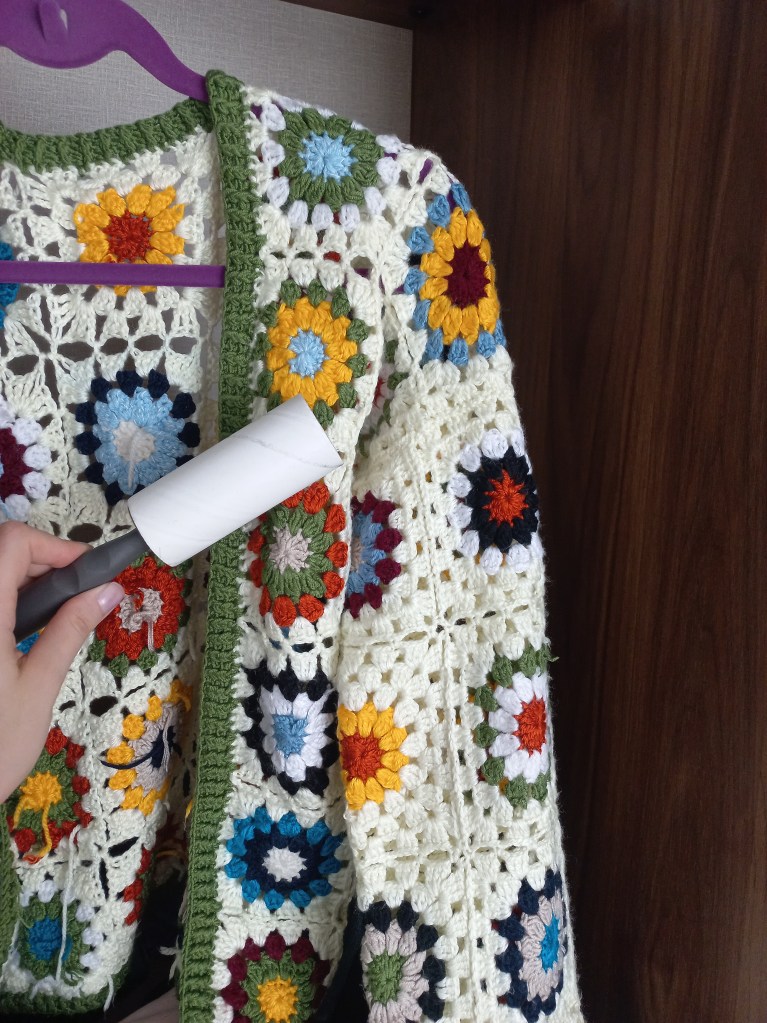
    Also, you may use a lint roller before and after wearing your clothes.

    I want my bed to be a safe, allergen-free zone, not a trap.

    🧤 Step 7. Gear Up for Cleaning

    Cleaning feels like a battlefield with dust-mite allergy. Every sweep stirs up microscopic enemies ready to irritate skin and lungs.

    A hand with glove

    My mask and gloves became non-negotiable armor. I wear a medical-grade mask that filters invisible irritants and nitrile gloves to protect my hands from allergens and harsh cleaning agents.

    At first, it felt awkward—like prepping for surgery. But now, it’s a self-care ritual disguised as a chore. And honestly? That mindset shift makes all the difference.

    🧼 Step 8. Cleaning Strategy That Works

    Cleaning became a carefully choreographed routine. My best allies: a bagged vacuum with HEPA filter and microfiber cloths.

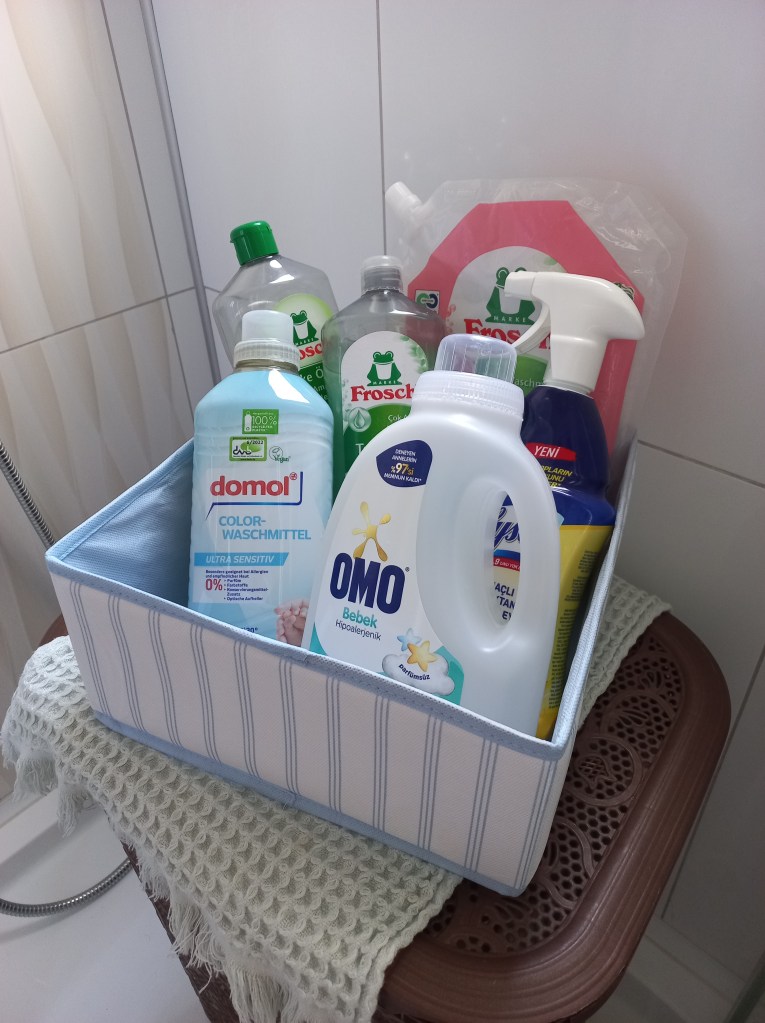
    I vacuum the floors, walls, and furniture daily if I can, otherwise weekly with focus. Laundry is key, too—I wash everything at or above 60°C with hypoallergenic detergents like Frosch, Domol, or Omo Sensitive. Adding anti-mite additives helps, too.

    A bag of detergents

    Here’s a surprise: dust mites can jump from dirty to clean clothes during washing. So, I separate laundry carefully—a small habit that matters.

    🌿Step 9. Care for Your Skin Barrier, and Eyes

    With dust-mite allergy, skin feels like the frontline soldier—rawsensitivesometimes angry.

    Heavy creams suffocated my skin. So, I switched to gentle products focused on calming and protecting the skin barrier.

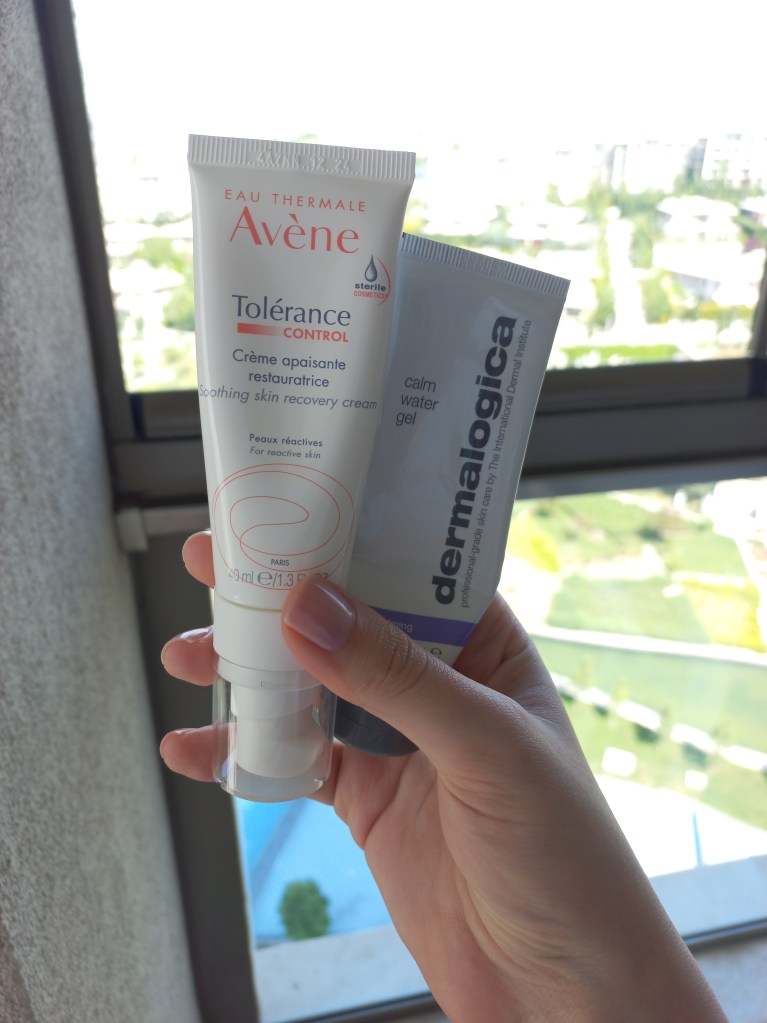
    Avène Tolérance Control and Dermalogica Calm Water Gel became my trusted companions, soothing redness and itch.

    A hand holding skincare products

    For body care, Excipial Lipo 4% Urea Cream and Avène XeraCalm A.D. Cleansing Oil have been lifesavers.

    When flare-ups hit, Bepanthol Sensiderm Itch Relief Cream is my go-to emergency balm.

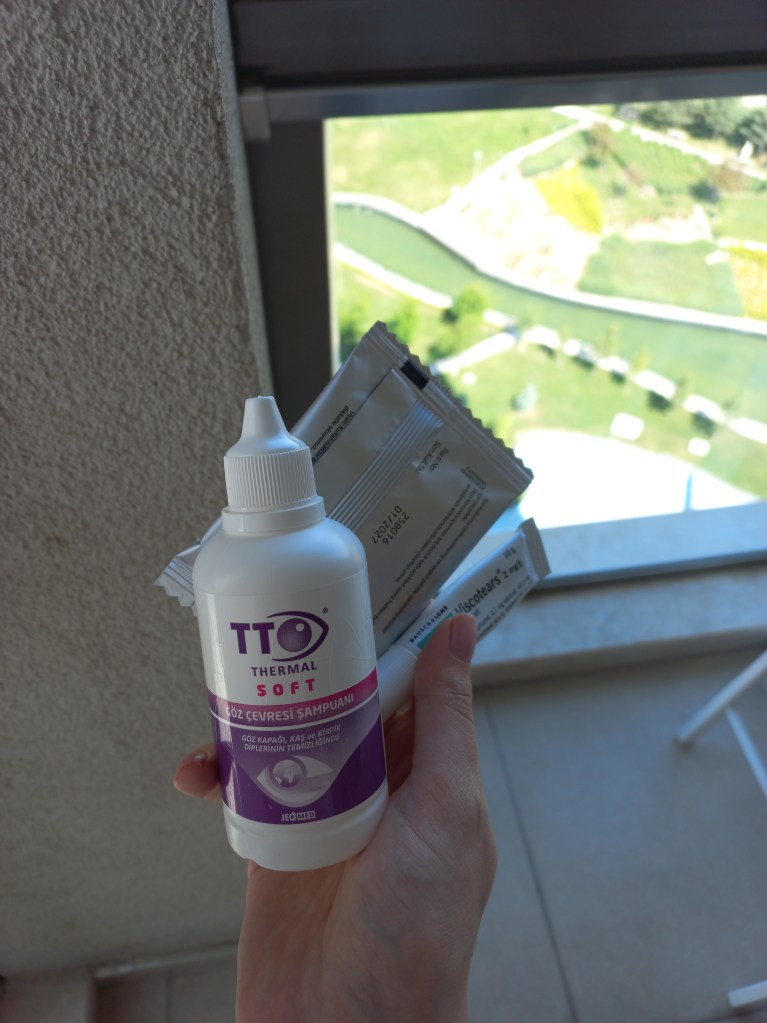
    If your eyes are extremely sensitive to environmental conditions and to make-up, you may use Eye Contour Shampooand Eye Drops after consulting your ophthalmologist or pharmacist.

    A hand holding eye-care products

    Remember, this isn’t about perfection. It’s about respect for your skin’s limits and treating it gently, especially when vulnerable.

    Long Story Short: Small, Intentional Changes Matter

    Living with dust-mite allergy isn’t about drastic measures or turning your home into a sterile lab. It’s about mindset and small, thoughtful changes that add up.

    Start with your bedroom—the place you rest most. Clear obvious dust traps, but don’t stress about perfection. Choose fabrics and materials that help, not hurt. Protect your skin with gentle care. And give yourself patience as you find what works.

    This journey taught me managing allergies is deeply personal. If you truly want to make a change, your brain certainly finds a way to adapt.

    I wanted to share this two-part series because I haven’t found a single source that covers all the aspects. But remember, what works for one person might not work for another. Listen to your body and doctor. Trust your instincts and create routines that fit your life, not the other way around.

    Also, here I’d like to share a Dust-Mite Management Checklist for you. I hope you find it useful. 💜

    I hope that sharing my experience will bring you some clarity and comfort. What has worked for managing your allergy? I’d love to hear about your experience in the comments! 👩🏻

    I’d like to add some articles you may want to read further:

    1.  https://www.jacionline.org/article/S0091-6749(03)01283-1/pdf
    2. https://onlinelibrary.wiley.com/doi/full/10.1111/cea.12450
    3. https://pmc.ncbi.nlm.nih.gov/articles/PMC11450438/
    4. https://pmc.ncbi.nlm.nih.gov/articles/PMC6474366/
    5. https://pmc.ncbi.nlm.nih.gov/articles/PMC6378489/

    For extensive and reliable search of allergy-friendly products: https://www.allergyuk.org/our-services/allergyuk-products/

    💌hello@betweeneverywhereandnowhere.com
    3 responses to “Living with Dust-Mite Allergy: How I Manage Dust-Mite Allergy on a Budget”

    1. Wilma S. Avatar
      Wilma S.

      Thanks!! I was also diagnosed with a dust mite allergy. This checklist is super helpful!

      Like

      1. betweeneverywhereandnowhere Avatar

        I’m so glad to hear it! Wishing you relief and calm days ahead.💜

        Like

    2. What I Learned from Margareta Magnusson’s Döstädning – Between Everywhere and Nowhere Avatar

      […] was the first feeling that overwhelmed me. It was exactly one week after finishing writing my affordable allergy guide when I randomly bumped into this book at a bookstore. It was resting on the lowest shelf, quiet, […]

      Like

    Leave a comment

  • It’s Not Your Skin; It’s Your Immune System!

    (My year-long allergy story that looked like a skincare problem)

    Thought your skin was the problem? I did too—until an allergy test changed everything.

    For almost a year, I struggled with rednessitchiness, and uneven skin texture—especially around my mouth, on my neck, and on my arms. Being obsessed with skincare (hello, skincare junkies 👋), I tried dozens of products, routines, and miracle ingredients.
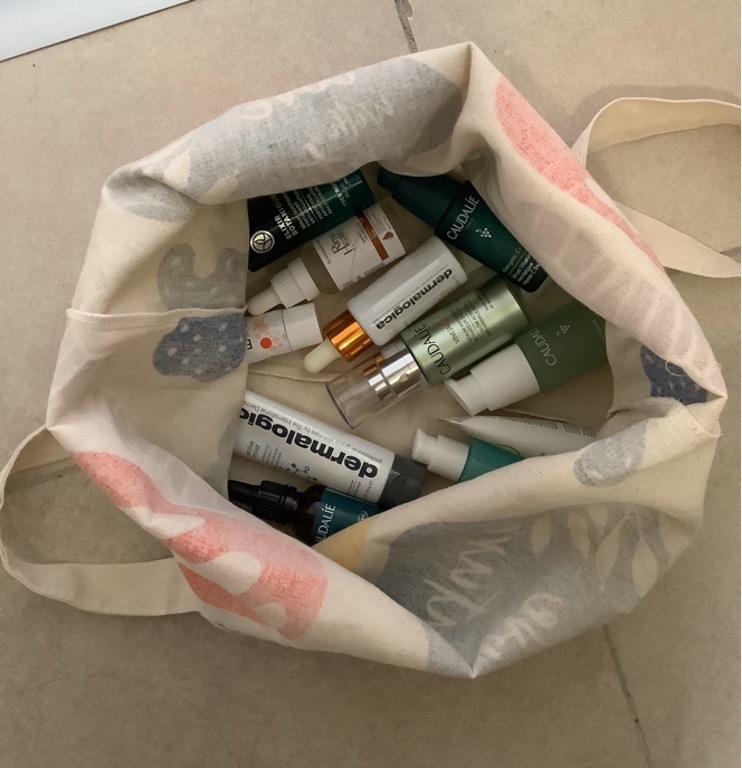
    Guess what? They worked for a microsecond… then boom—back to square one. Only my bank account truly transformed (and not in a good way).

    A bag of failed skincare routine.

    When skincare becomes a money pit (and a mini addiction)

    At first, I was honestly thrilled about trying new skincare products regularly. I loved researching, buying, testing. But somewhere along the way, I realized this was turning into an addiction. I became fixated on clearing up my skin. I wasn’t just chasing a healthy glow—I was desperate to fix something that felt deeper. And nothing worked. Nothing!

    Dermatologist #1: “Your skin is healthy, just sensitive.”

    I finally saw a dermatologist. To my surprise, he said my skin was actually quite healthy—but prone to sensitivity and rashes. He told me to stop using actives like vitamin C and salicylic acid and diagnosed me with keratosis pilaris on my arms. His prescription? A gentle cleanser, moisturizersunscreen, and 0.025% tretinoin for closed comedones.

    My prescribed products.

    Spoiler alert: Five months on tretinoin = nothing changed.
    (Backstory: I was also on Accutane as a teen for 8 months—so I wasn’t new to hardcore routines.)

    Dermatologist #2: “You’re doing great!”

    Me: Are we seeing the same skin?

    After the follow-up, I heard the words “you’re improving!” but… I wasn’t. My skin felt even flakieritchier, and more irritated. I switched doctors—same result.
    At this point, I felt lost. My loyal companions—red patchesitchy bumps, and emotional burnout—were still with me.

    The day everything changed: red, bumpy arms and legs

    One day I woke up to a nightmare: my arms, legs, and stomach were covered in red, itchy bumps. It felt like something was hugging me with needles. I ran to my GP, who looked once and said:

    “This is an allergy.”
    Wait, what? Allergy? I explained the whole saga. She listened carefully, then prescribed me 5 mg of levocetirizine dihydrochloride (an antihistamine).

    My prescribed antihistamine.

    And I’m not exaggerating when I say:

     All the redness, bumps, and itching just… vanished.

    It wasn’t my skin. It was my immune system.

    That moment changed everything.
    I immediately made an appointment with an allergist/immunologist. After ruling out other causes, my blood tests revealed I was allergic to:

    • Dust mites
    • Insects
    • Household dust

    A screenshot from my blood tests.

    Mystery solved.

    Living with dust mite allergy: a new chapter begins

    Now I’m learning to live in harmony with my immune system, not against it. I’ve changed how I clean my home, adjusted my skincare routine to be allergy-friendly, and most importantly—I stopped blaming my skin for a job that belonged to my immune system all along.

    Final thoughts: Please don’t ignore your body

    If you’ve read this far, thank you—you’re a real one 💛
    I wanted to share this because sometimes, what seems like a skin condition, dental or ophthalmologic problem might be something deeper. It might be your immune system trying to talk to you. This journey cost me a year, hundreds of euros, and a lot of mental exhaustion. Don’t wait that long.

    If you feel like something’s off, don’t ignore it. Whether it’s through a dermatologistGP, or allergy test, please advocate for your own health.

    And if accessing professional care isn’t financially possible right now, speak to a trusted pharmacist or look for online consultations — many professionals offer accessible services. But whatever you do, don’t ignore it.

    Also, to the healthcare professionals trying their best out there: thank you, endlessly.

    💬 Your turn:
    If you’ve had a similar story, or any tips to share, I’d love to hear from you!
    Got questions? Let me know—maybe my trial-and-error-filled journey can save you a little time (and money). 🤓

    💌hello@betweeneverywhereandnowhere.com

    Leave a comment