
Warm.
When I first started reading this book, this was the first feeling that overwhelmed me. It was exactly one week after finishing writing my affordable allergy guide when I randomly bumped into this book at a bookstore. It was resting on the lowest shelf, quiet, humble… But somehow it blinked at me. As if it whispered: You might need me.
Döstädning, literally Death Cleaning, or the gentle art of Swedish death cleaning.
You might say: Wait, this is about death, and you started your writing with warm!?
Ja, absolut.
We often associate death with someone we love, with flesh and bone. But death doesn’t only visit people, or animals. A habit can die. A routine can die. A mindset, a place, a phase can come to its end. As the author says:
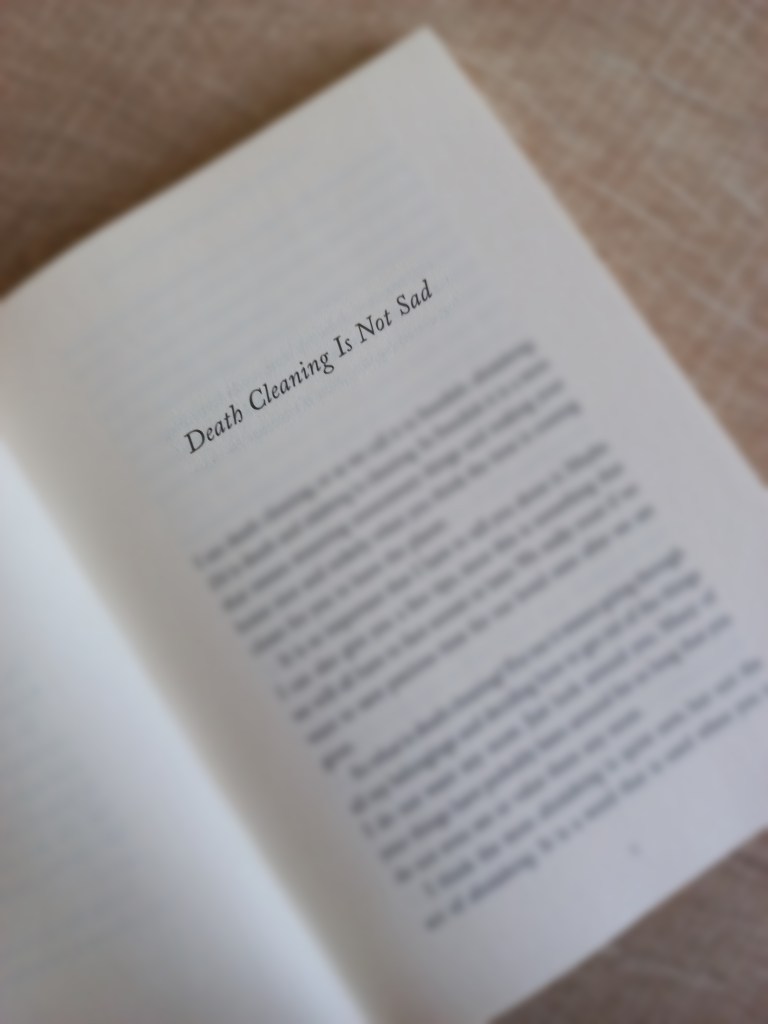
This visual excerpt from Döstädning by Margareta Magnusson is used solely for personal reflection. The text content has been intentionally blurred. All rights reserved.
That’s how I read this book.
Döstädning is the Swedish practice of cleaning, particularly when you feel your journey on this planet is approaching its expiration date.
But it’s not dark. It’s filled with kindness. The whole idea is about not leaving a material burden to your loved ones, knowing your absence will already be heavy enough.
As someone who knows it’s impossible to experience or know everything, I have always sought out people who could inspire me, give me more will to live or offer life advice, or simply chat about a new knitting trend, for example. This book by Margareta Magnusson has given me that energy. Reading this book was like receiving life advice from a wise person you have trusted for years while enjoying coffee together on a relaxed Sunday morning.
It’s not loud or moralistic. It’s humble, like the shelf it came from.
When My Body Screamed What My Soul Couldn’t Say
As I mentioned before, I was recently diagnosed with an allergy. It may sound dramatic, or odd, but I always look for a meaning in the things that happen to me. In my case, nothing should happen in vain.
If you resist transforming yourself after something significant happens, what would be the point of the suffering?
So yes, while reading this book, I couldn’t stop thinking about my situation.
And then I remembered something my high school philosophy teacher once said:
‘At first, our soul gets ill. It tries to find a way. If it can’t, it starts screaming through the body.‘
I think this is exactly what happened to me. And this book gently held my hand during that realization.
I was (maybe still am) a hardcore hoarder. I used to keep even the plastic packaging of a bookmark I bought during my trip to Norway. Why? Because I attached so many meanings to a tiny piece of plastic. But the truth is: it wasn’t about the packaging. It was about the version of me who bought that bookmark. I wasn’t keeping the object; I was freezing the moment.
I hoarded and hoarded. Until my body finally gave me a pathological message: ‘You must stop, now.‘
And I had to accept the challenge.
What started as an obligation turned into a quiet awakening. I saw how easy it could be to let go, when necessary or when your soul is finally ready.
When survival becomes your reason, your mind finds the way. It always does.
More Than a Book Recommendation
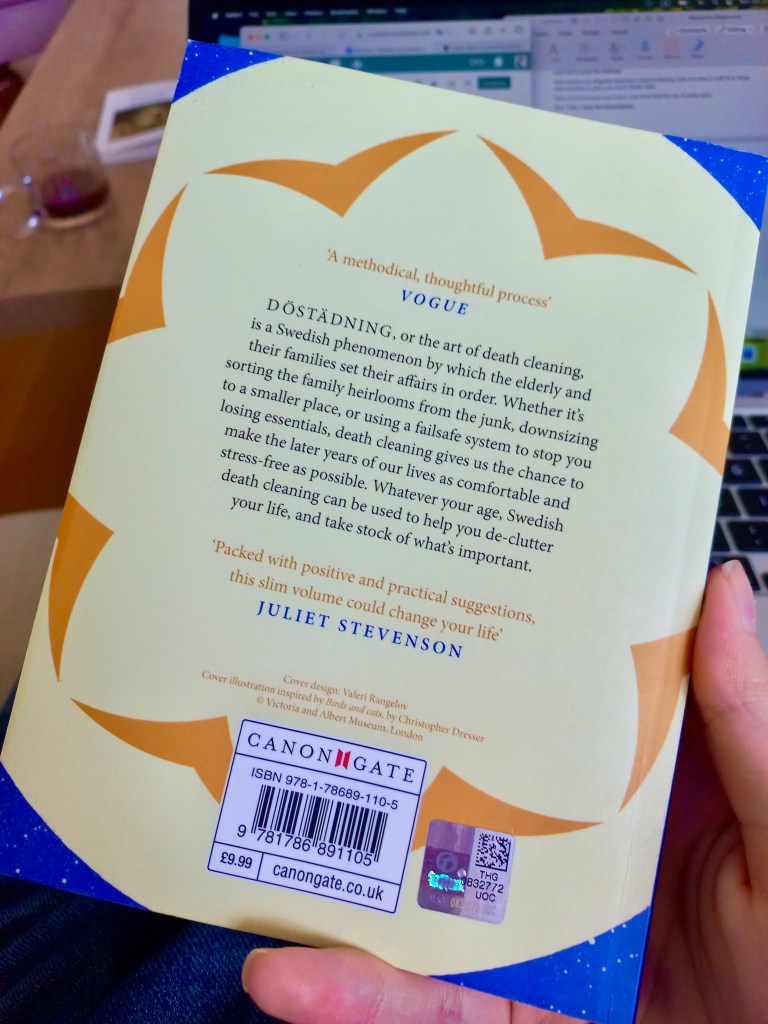
All book cover photos were personally taken for non-commercial, review purposes. All rights belong to the publisher and author.
If you’re looking for warm and honest advice about hoarding, material attachments, or even just feeling ‘off’ in your space, but don’t know where to start, I genuinely recommend this book. Not as a manual. As a conversation.
Of course, maybe you’re content with your hoarding habits, or you have the philosophy of ‘après moi, le déluge.‘
Totally fair.
But even with that mindset, would you be open to a different way of seeing things?
Would you let a serene, kind Swedish woman tell you about a few things over coffee? Then you may want to welcome this book into your home, until the time comes to part with it, of course. 📚
💌hello@betweeneverywhereandnowhere.com
 Between Everywhere and Nowhere
Leave a comment